The Innocent Looking Boxing
For 18 months, I worked in my home office without a second thought about the boxing around the pipes. It was just part of the room—background detail you stop noticing after a while.
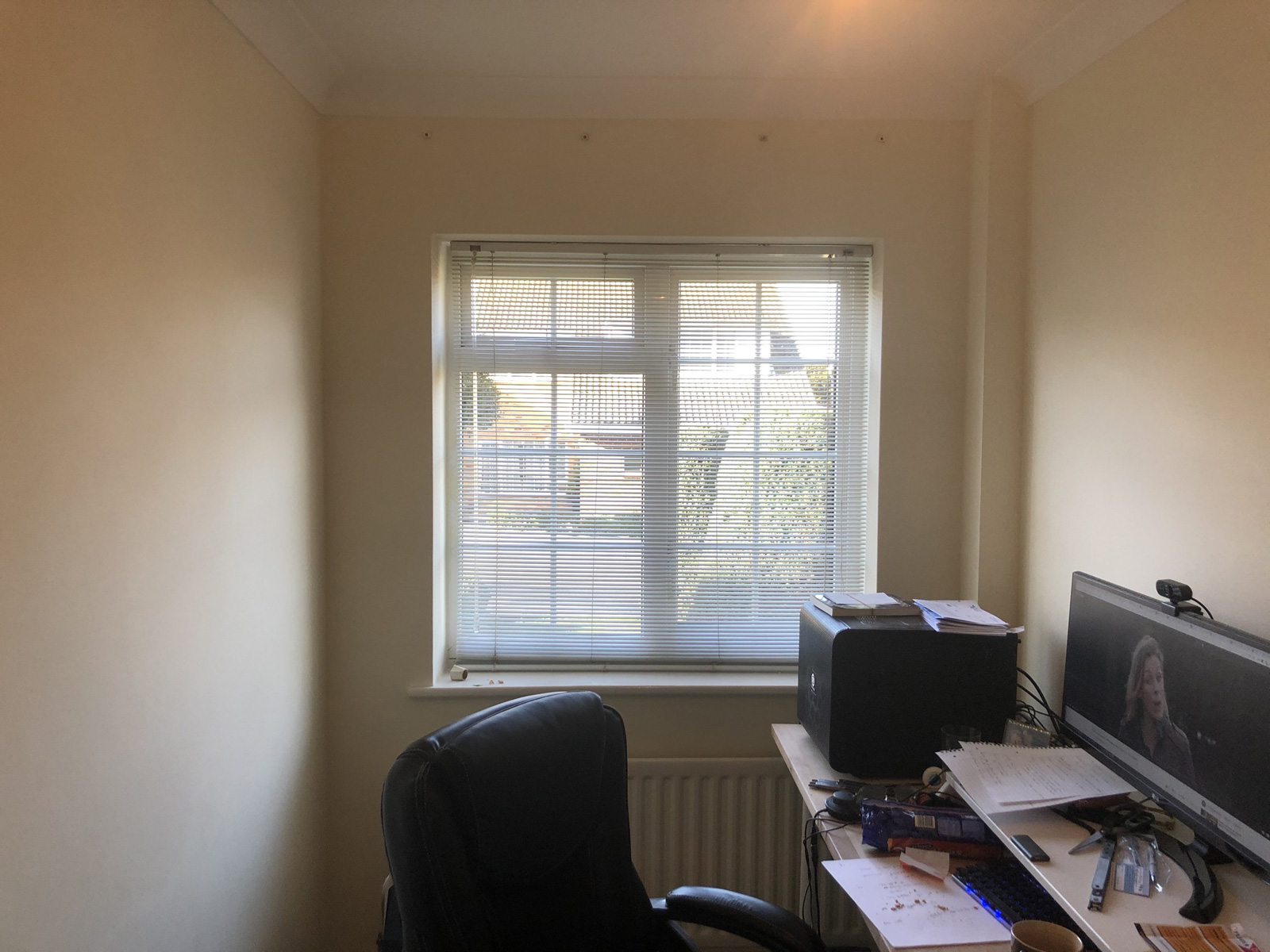
March 2021 - My office in normal use. The asbestos boxing is visible but completely unrecognized as a hazard
That's the insidious thing about asbestos insulating board (AIB) in older homes. It doesn't announce itself. It just sits there, quietly aging, until the day you decide to do some renovation work.
The Discovery: It Wasn't Plasterboard
September 2022. We were planning a complete central heating replacement and needed to remove the boxing around the pipes in our office. Standard renovation work. Or so I thought.
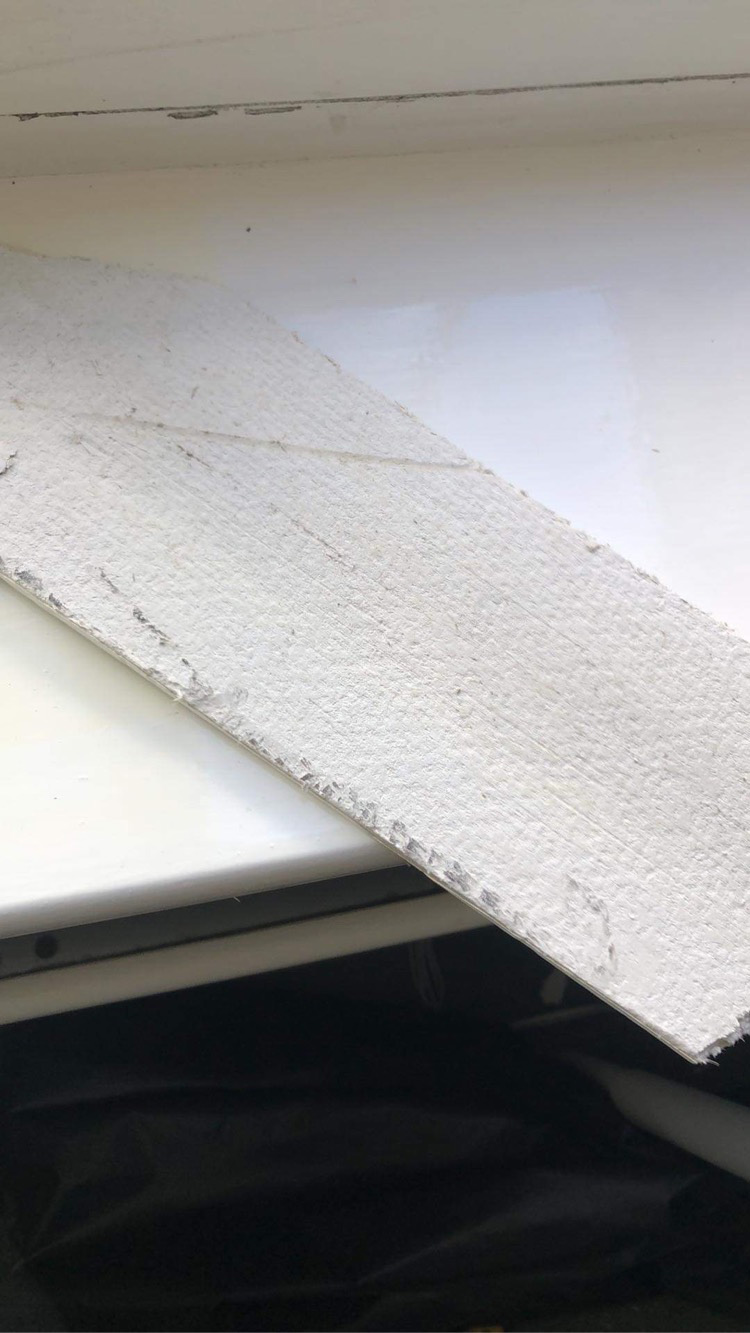
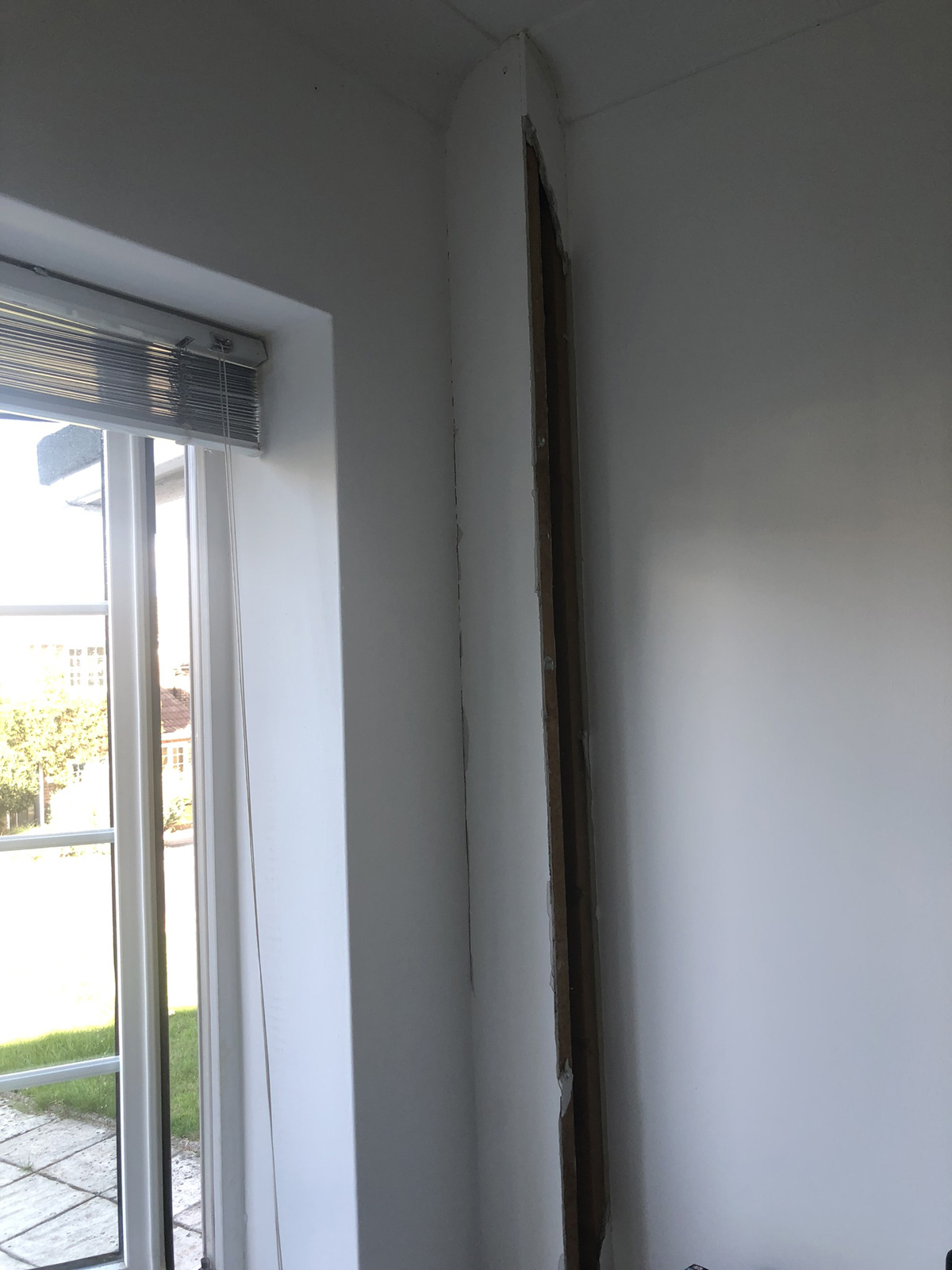
The boxing looked like plasterboard—nothing remarkable about it. I used a hammer and wide thin bolster to pry at the nails, expecting it to come away cleanly. Instead, I physically snapped a piece off.
Then I saw the back.
All the plasterboard I'd dealt with before had smooth backs. This had texture. That single detail—texture on the back—raised immediate suspicion. This might not be plasterboard at all.
The Visual Identifier
The texture on the back is what gave it away. Every piece of plasterboard I'd handled had a smooth back surface. This textured back was different—and that difference mattered.
Getting Confirmation
I immediately sent a photo to my dad for a second opinion. Then I showed it to our 90+ year old neighbor through the window—he'd had the same issue in his property and had it tested.
His response: "That matches what I had—it was asbestos."
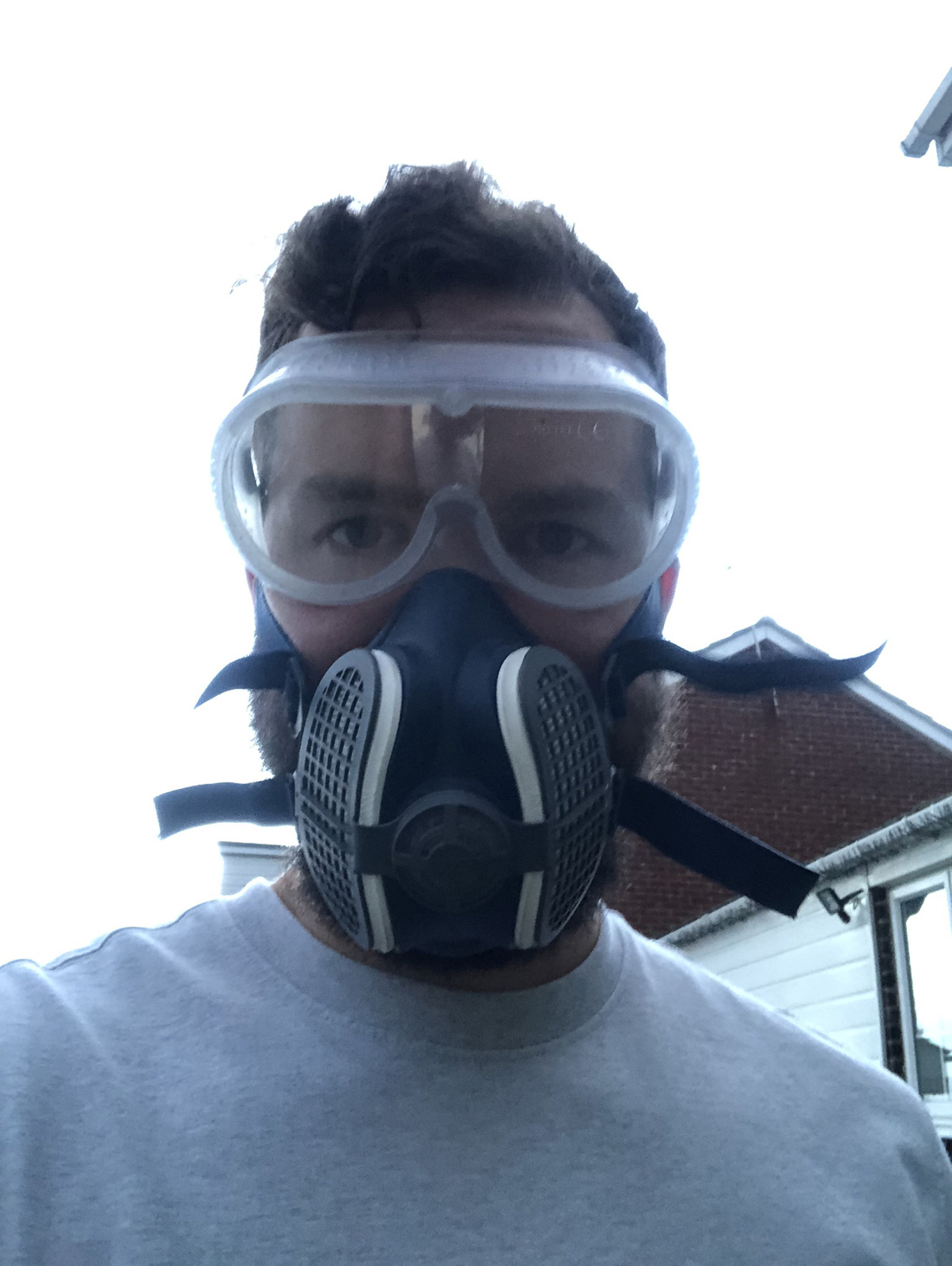
This wasn't formal testing, just visual confirmation, but it was enough to proceed with extreme caution. I contacted a local asbestos removal company the same day and sent photos.
Their response: "From the image, it was very likely to be asbestos." Their advice: leave the room.
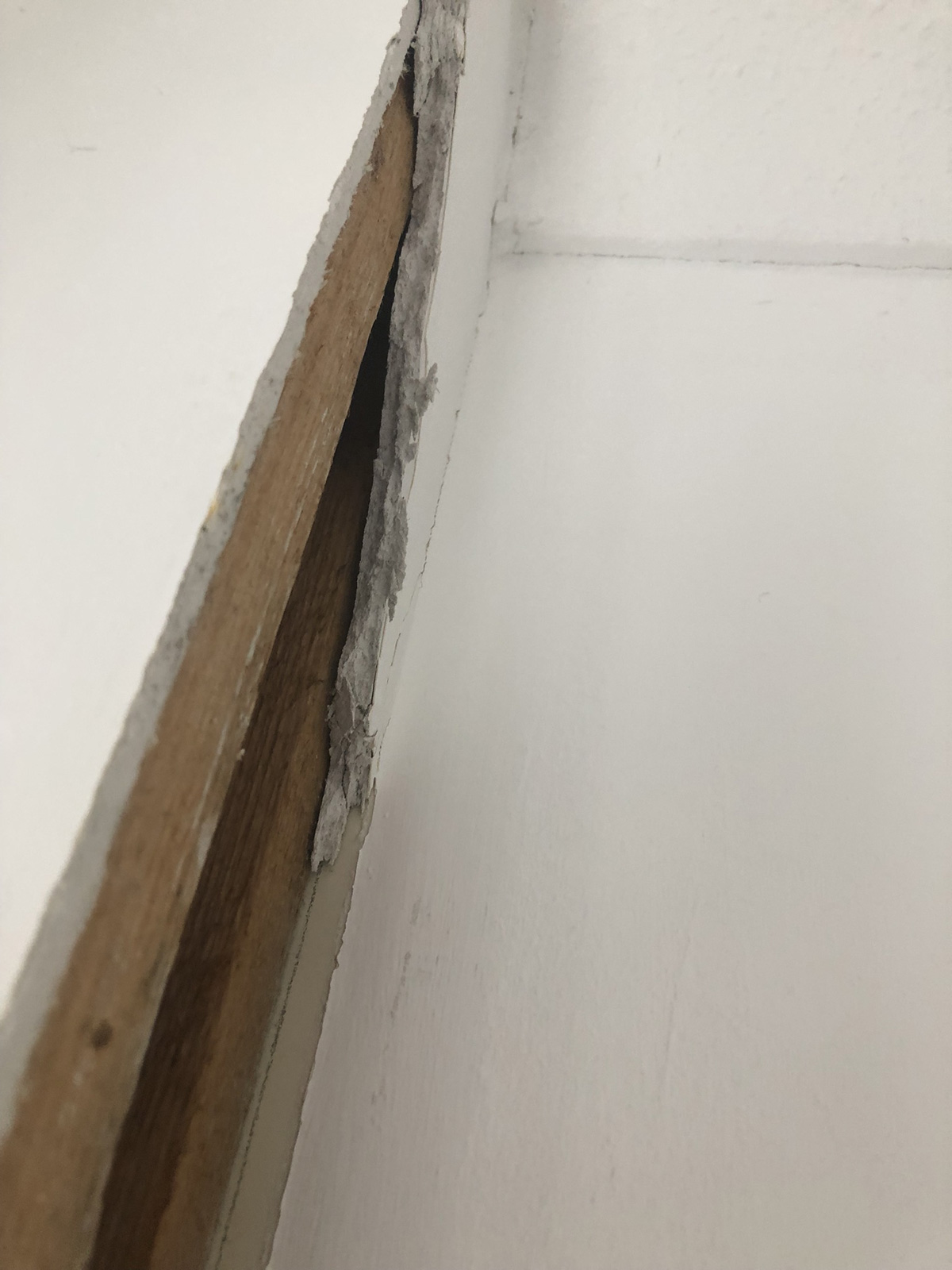
Based on the neighbor's experience and the company's visual assessment, we treated it as confirmed: AIB (Asbestos Insulating Board) around three pipe drops through the concrete base in our small downstairs office.
Finding Professional Removal
We found the removal company through an online search—a regional company, not strictly local but not national either. They provided a quote: £1,500 per room.
For comparison, we got an alternative quote: £1,360 ex-VAT (£1,632 inc VAT). We chose the first company—£132 cheaper and they responded quickly.
Here's the strategic decision we made: we have multiple rooms in the house with the same issue (dining room, kitchen, stack pipe), but we only removed it from the office. The others remain undisturbed because they're in good condition and we have no plans to disturb them.
Our approach: Only remove where renovation work requires disturbing it. Undisturbed asbestos in good condition poses minimal risk, and we're not letting fear drive unnecessary £1,500-per-room expenses.
The Removal Process
The Setup
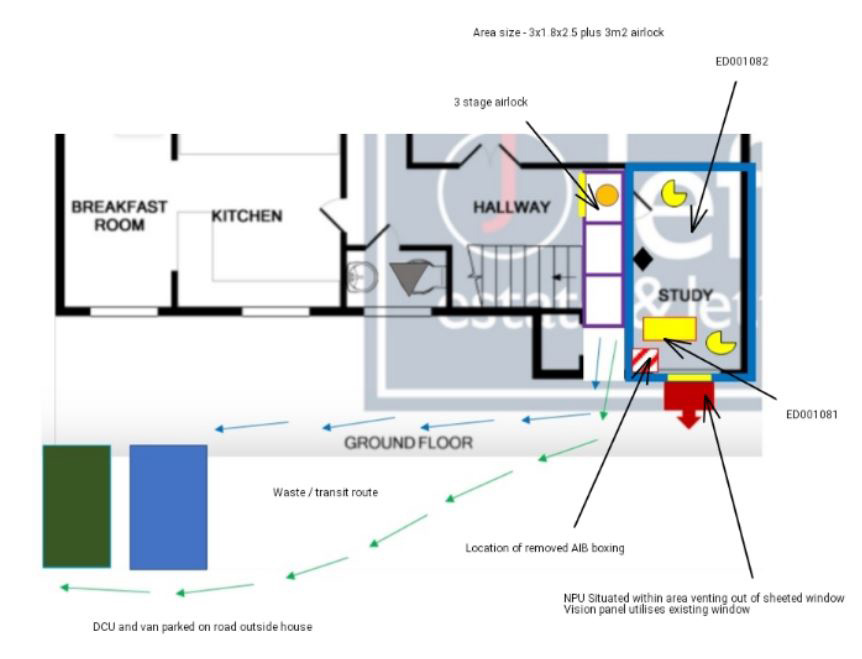
The professional removal involved extensive setup documented in their site plan:
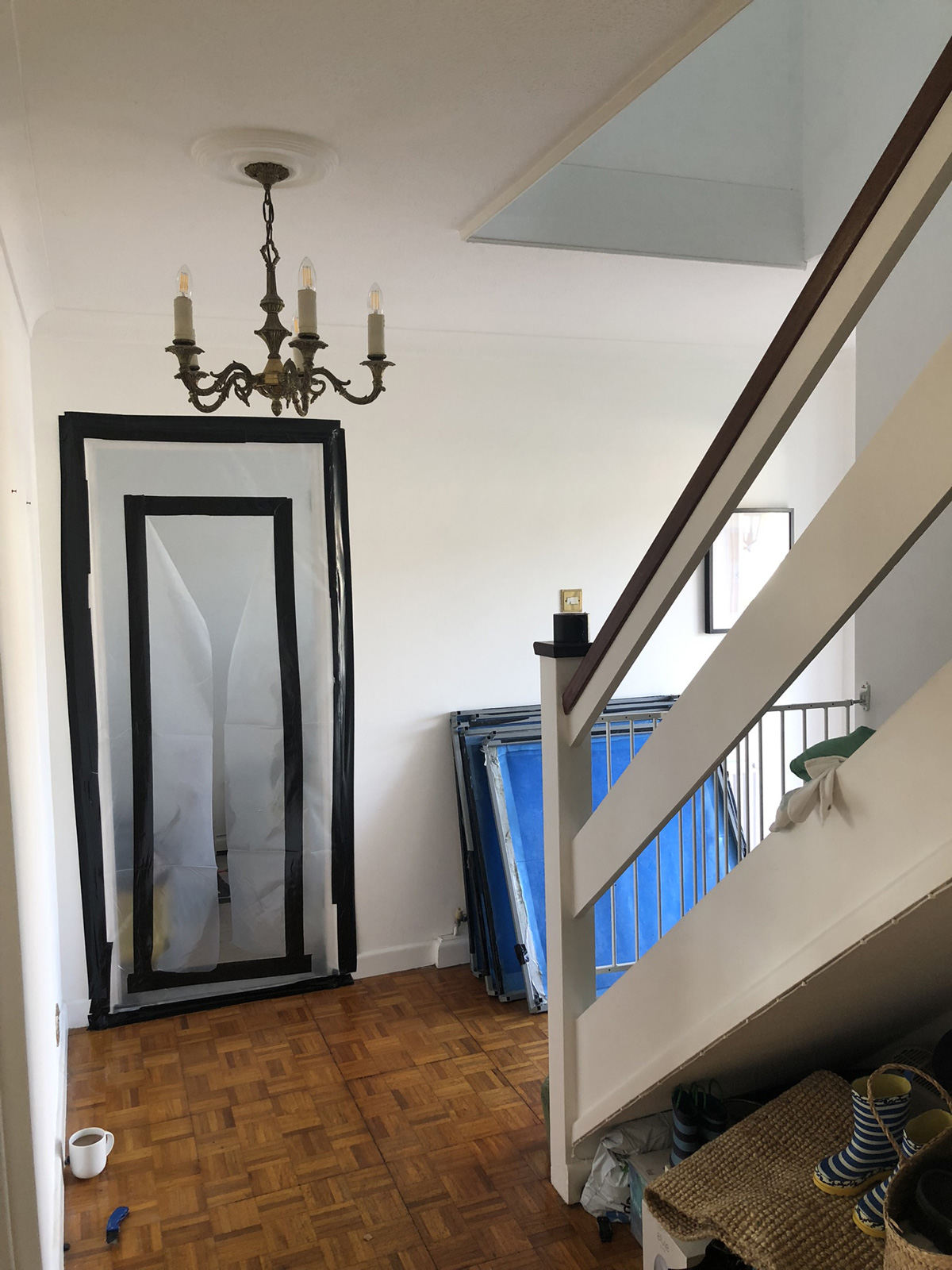
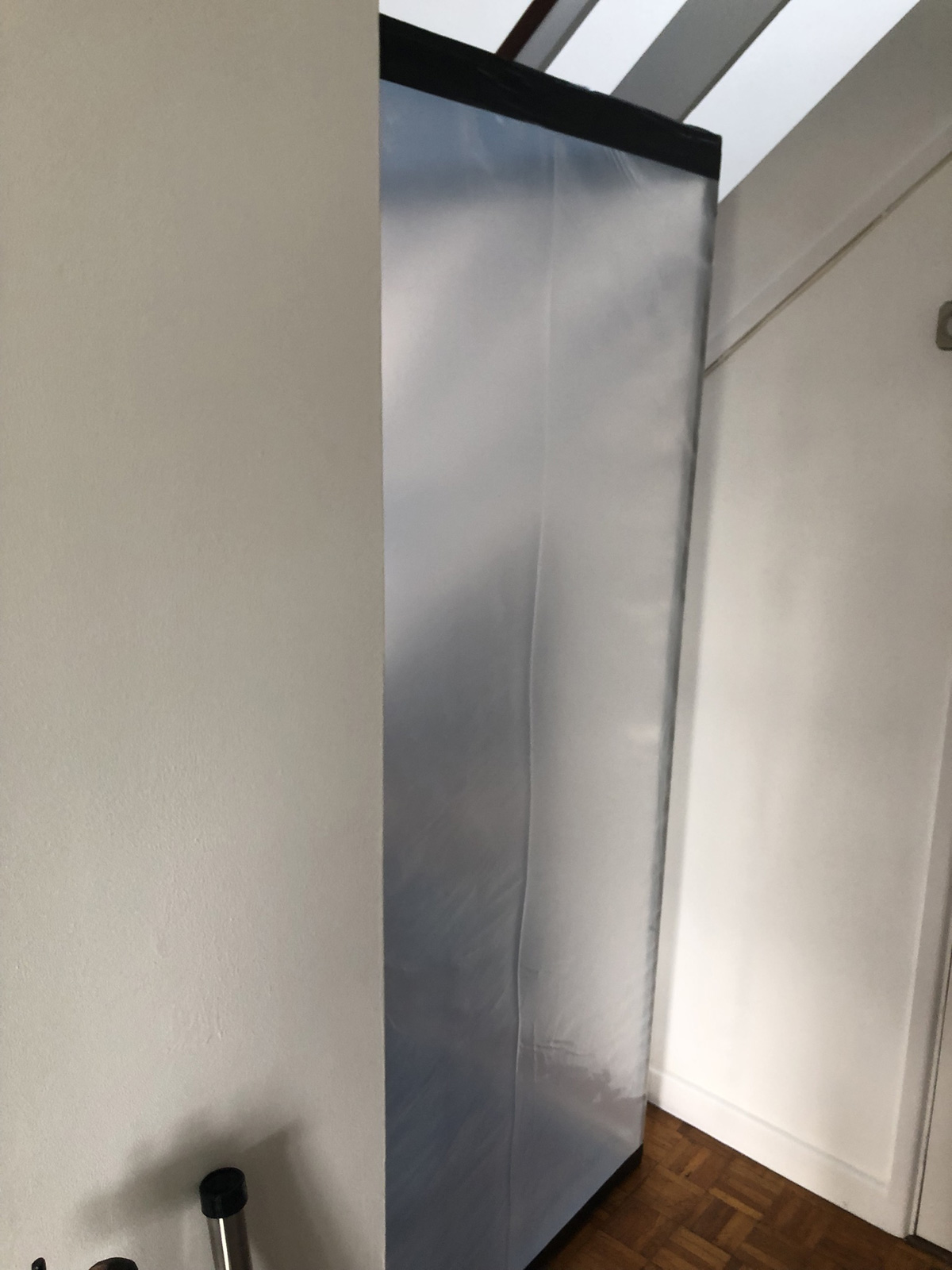
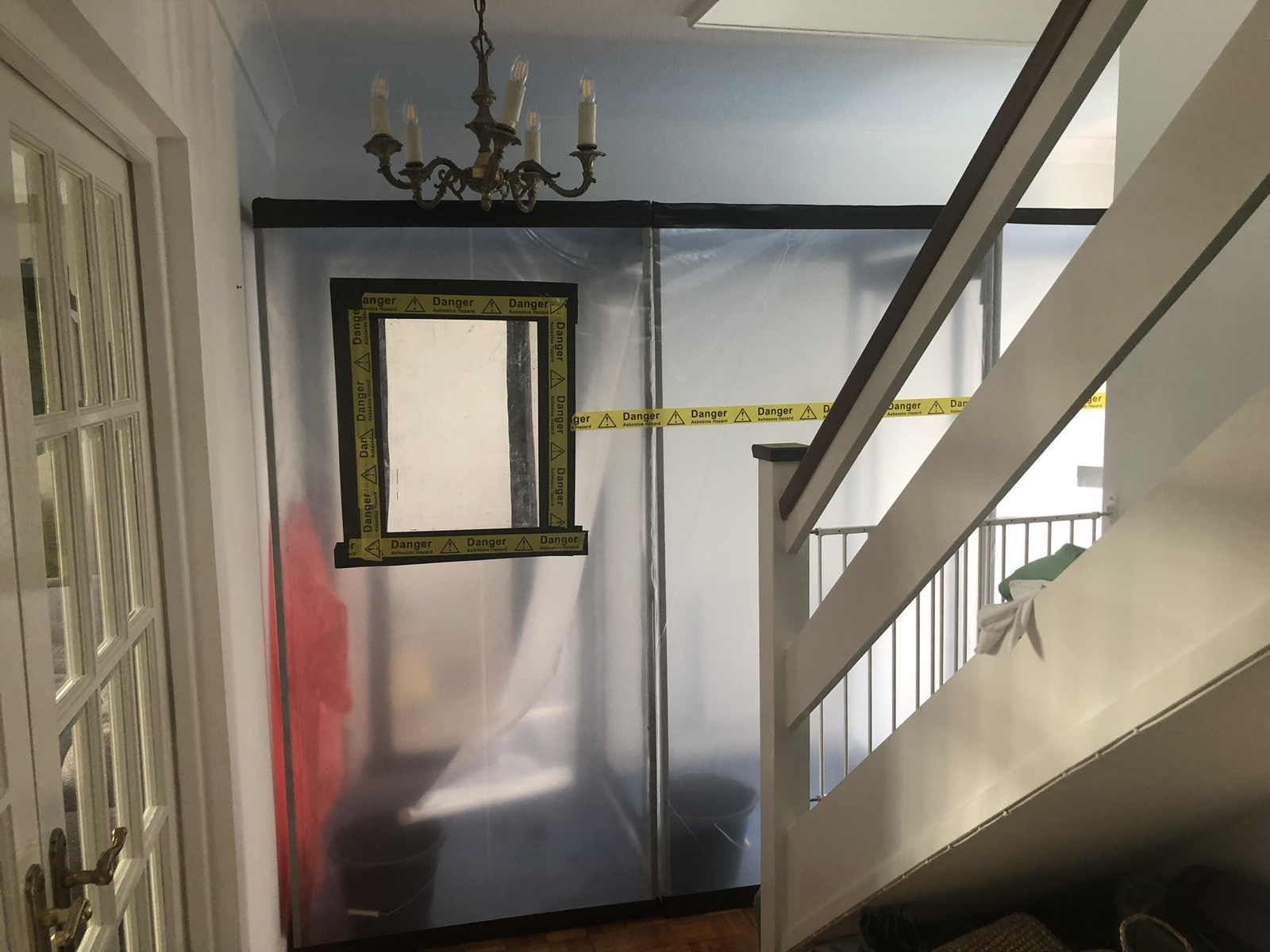
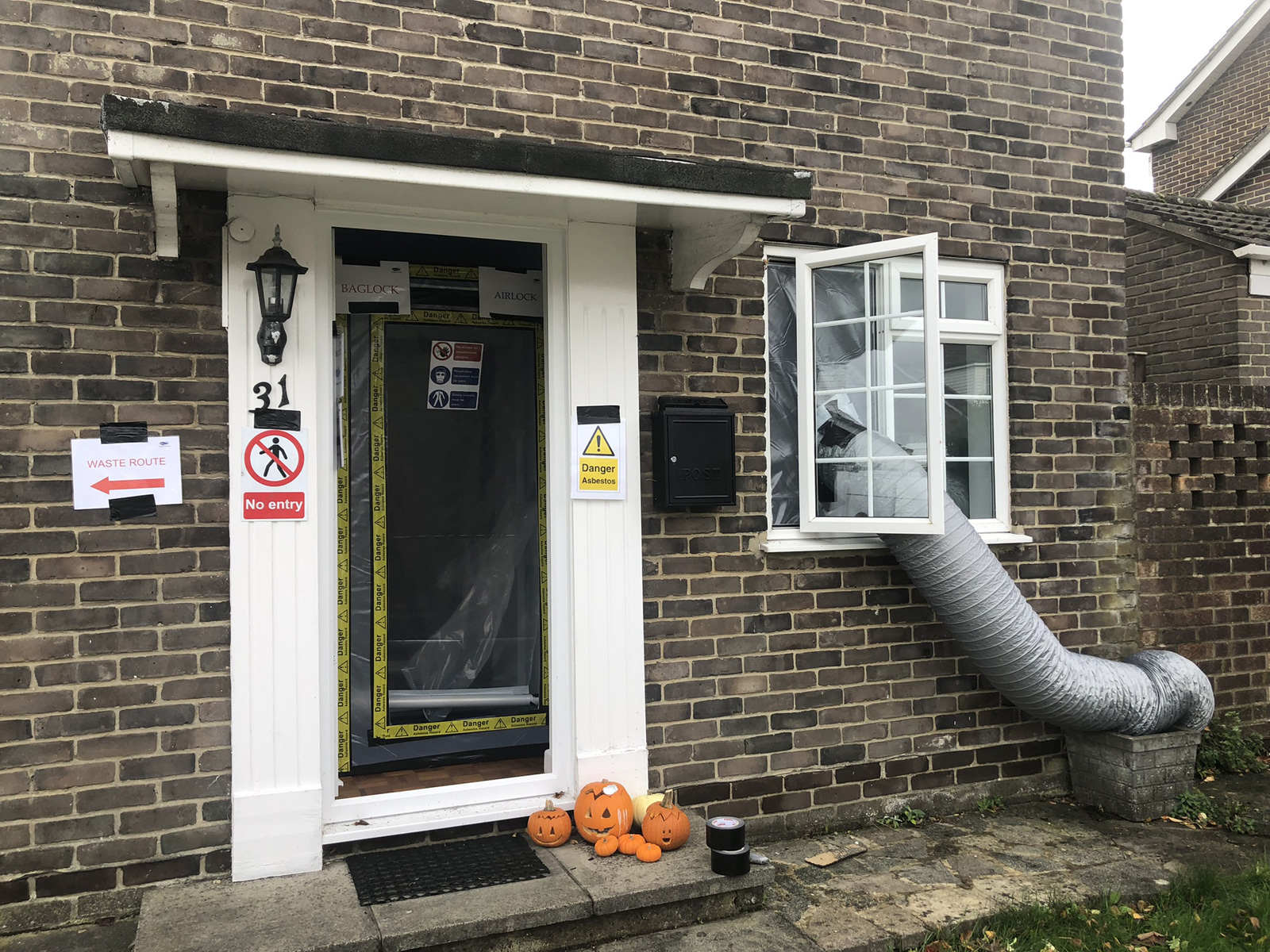
- Three-stage plastic airlock installed
- Forced ventilation system with NPU (negative pressure unit)
- NPU venting out sheeted window
- DCU (decontamination unit) and van parked outside
- Vision panel utilizing existing window
- Waste/transit route clearly marked
The Containment Build
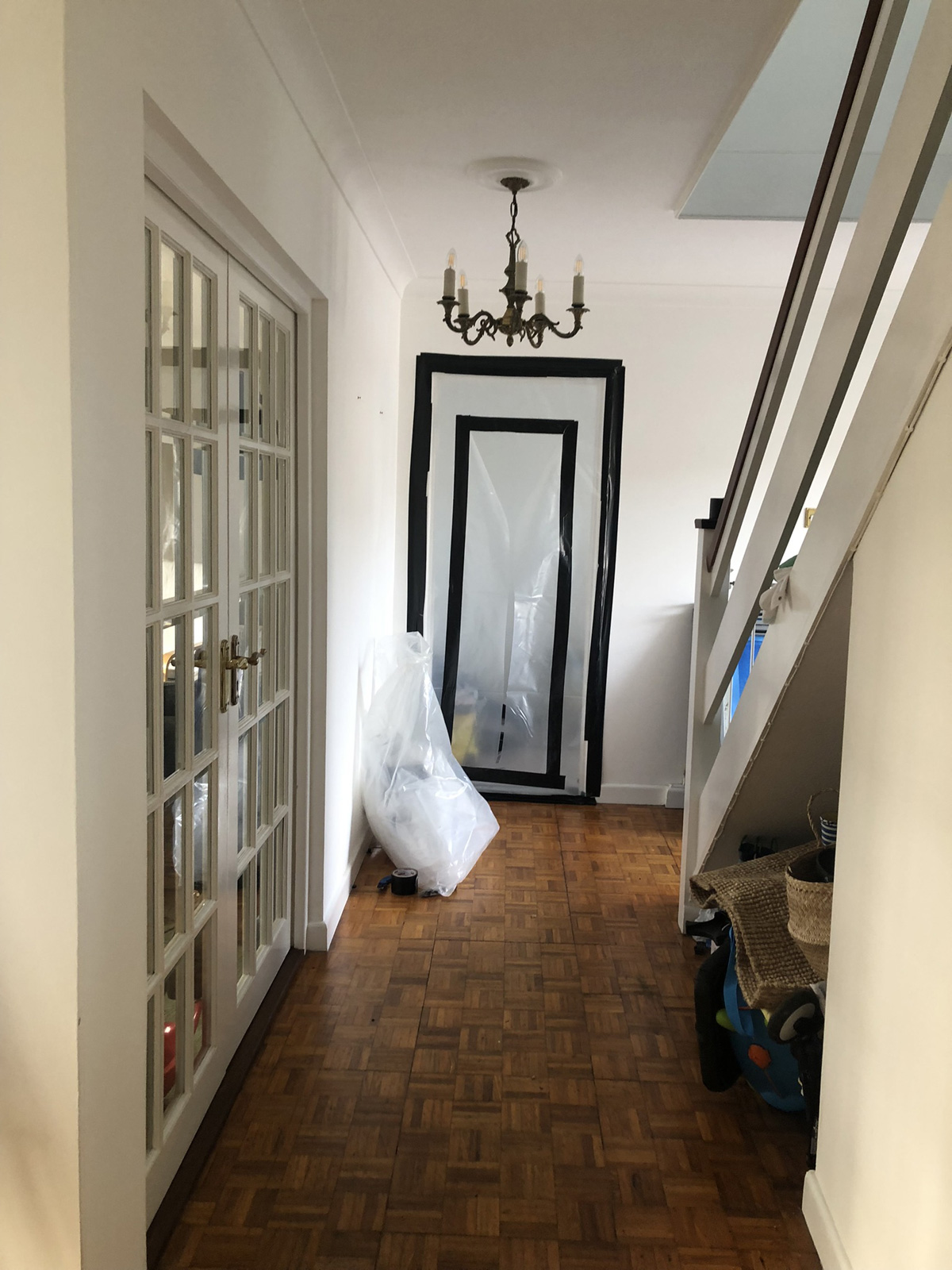
Here's how the three-chamber containment system was built, step by step:
The Confusing First Day
Here's where it got weird. The first guy who arrived showed up with NO PPE, drank coffee in the room, and ripped up the carpet.
His claim: "The asbestos had settled."
My reaction went through stages:
- Initially worried about my own exposure from breaking the boxing
- Then "equal parts relieved"—maybe it's not as dangerous as I thought?
- Then questioning: "What's with all the expense? Is this all performative?"
Looking back, the resolution is clear: some people are reckless. That doesn't mean the danger isn't real. Better safe than sorry. I didn't question them about the inconsistency—I just hoped they weren't contaminating the hallway.
The Formal Removal
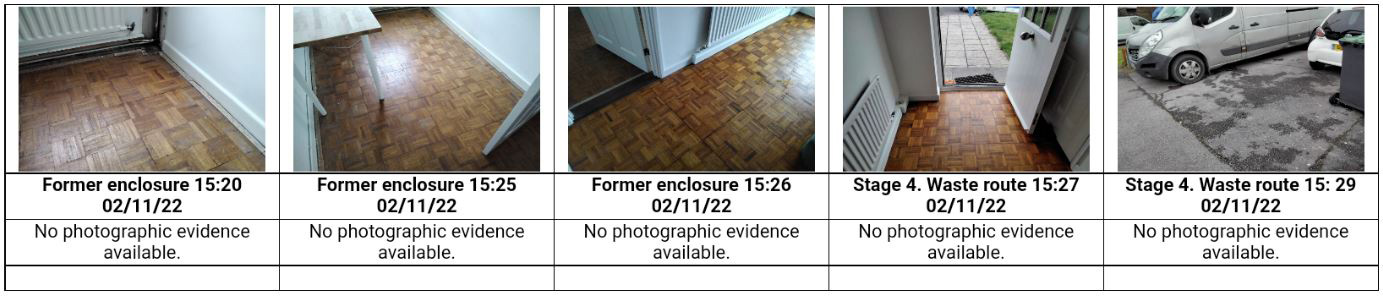
The later crew followed proper protocol with full airlock and ventilation systems. They arrived mid-morning and were packed up and gone by 5pm—a single day for the actual removal. An independent inspector was on-site measuring fibers throughout the process.
The Four-Stage Certification Process
This is where the professional removal proved its value. The certification isn't optional or performative—it's required for legal safety sign-off. Each stage has specific checks and documentation.
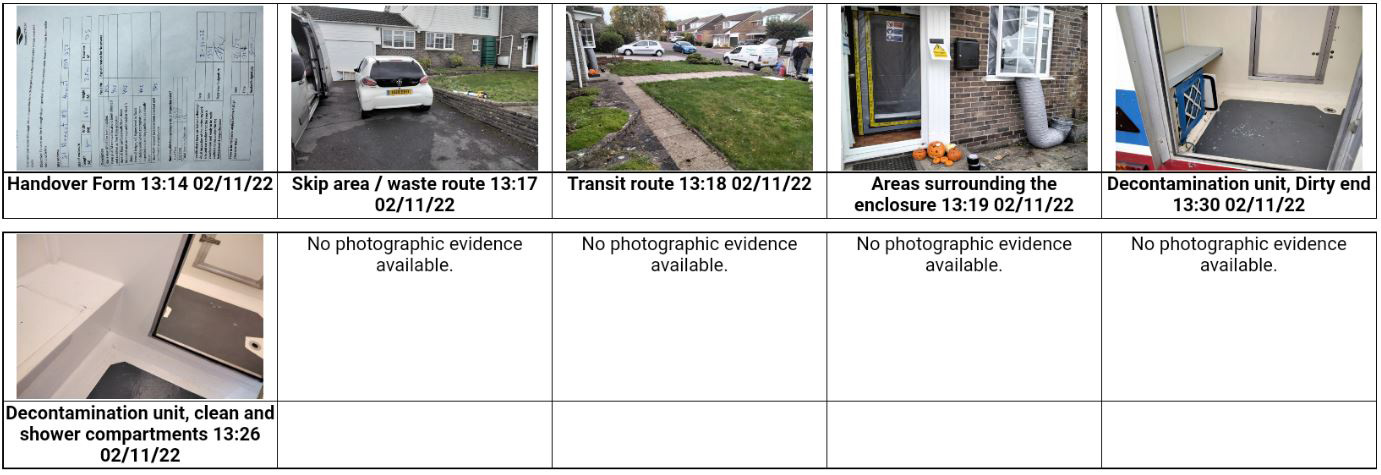
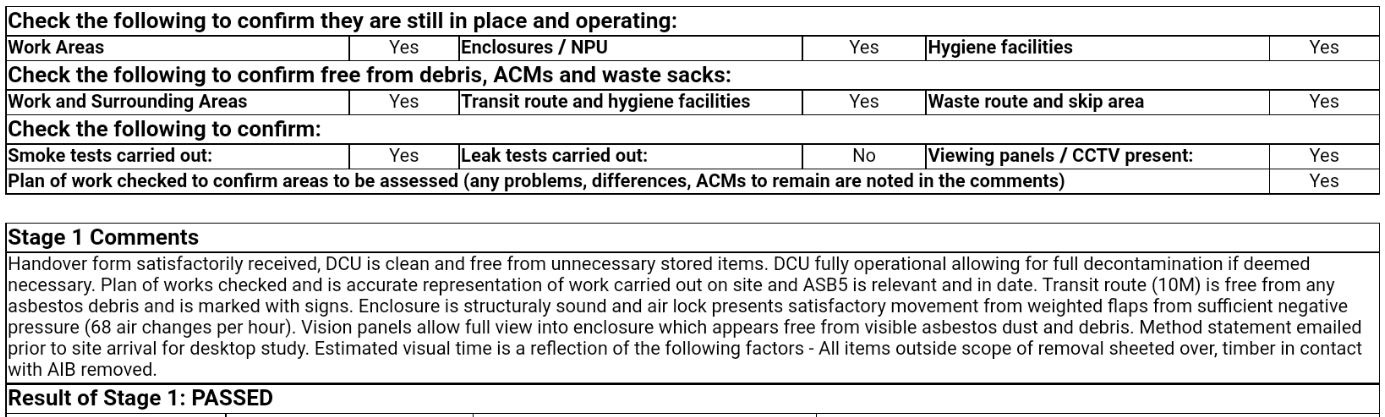
Stage 1: Preliminary Check of Site and Job Condition
Visual inspection before removal begins, documenting the area condition and assessing the job requirements.
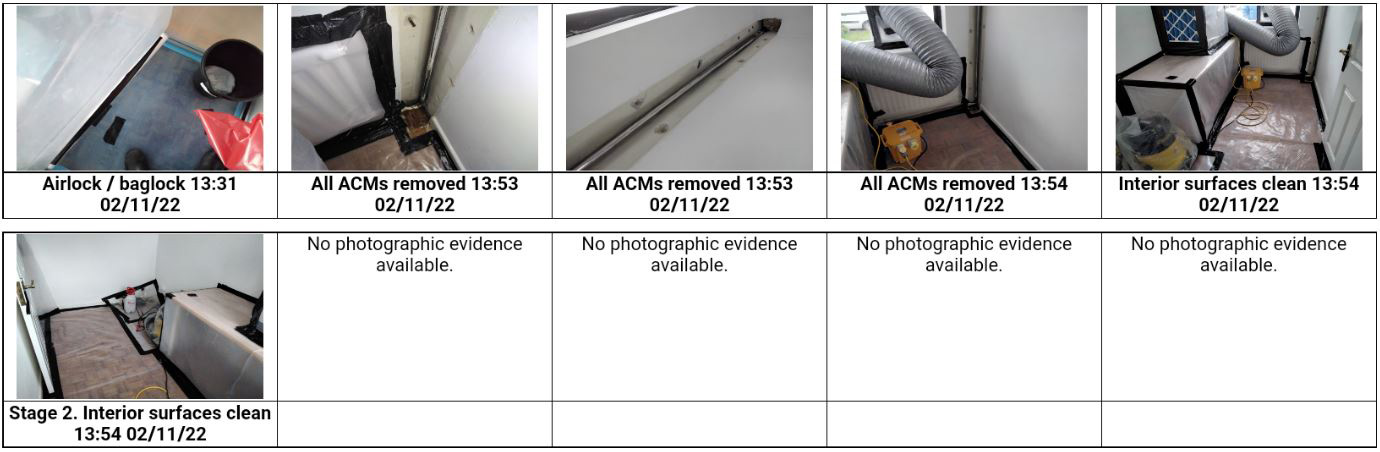
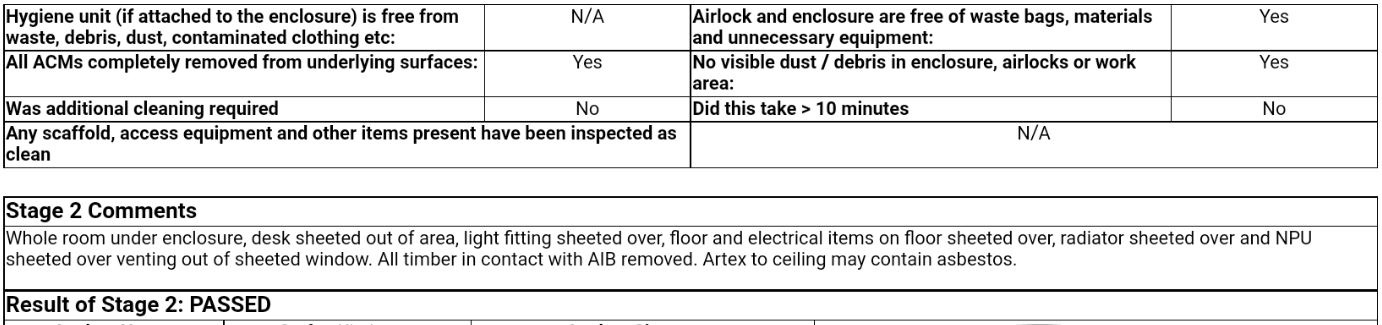
Stage 2: Thorough Visual Inspection
Post-removal visual inspection checking for any remaining material and verifying surface cleanliness.
Stage 3: Clearance Air Monitoring
Independent testing of air samples—three samples taken and tested with laboratory analysis. This is the crucial independent verification. The removal company doesn't mark their own homework.
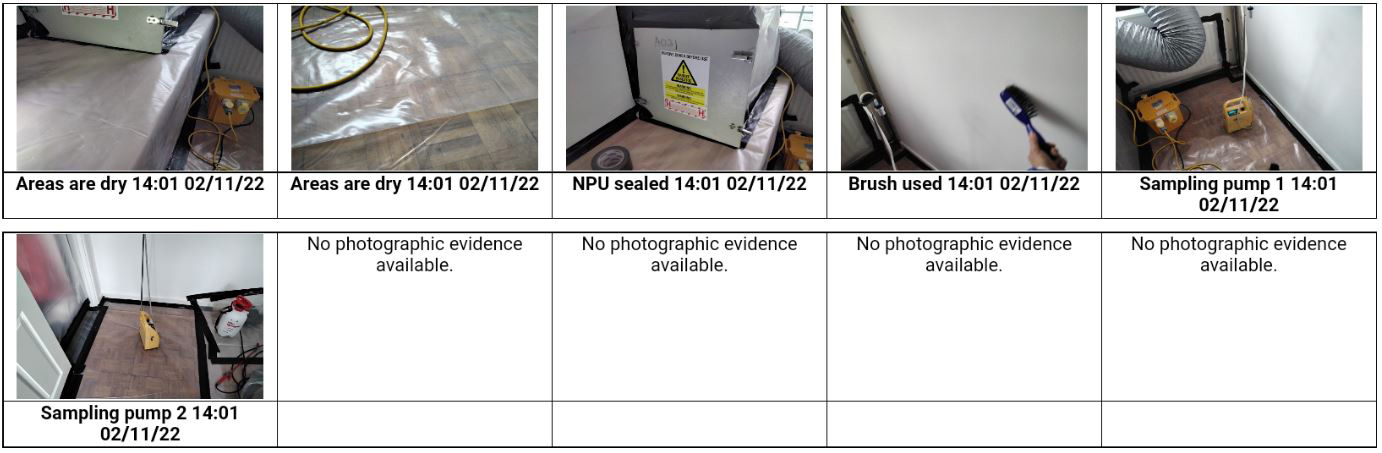
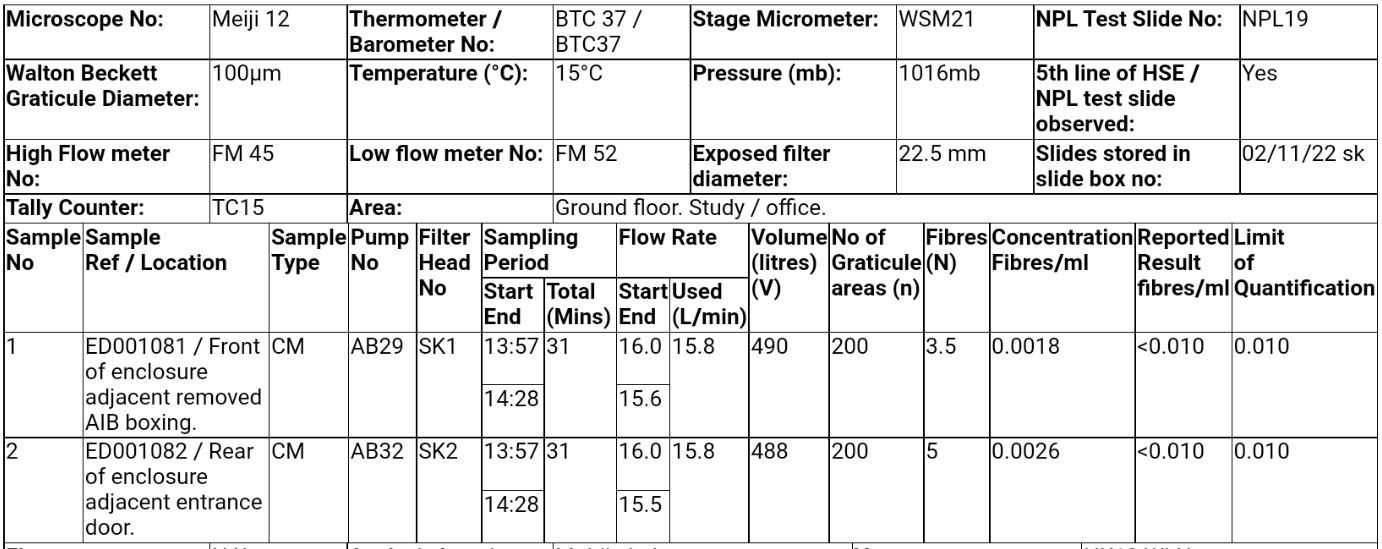
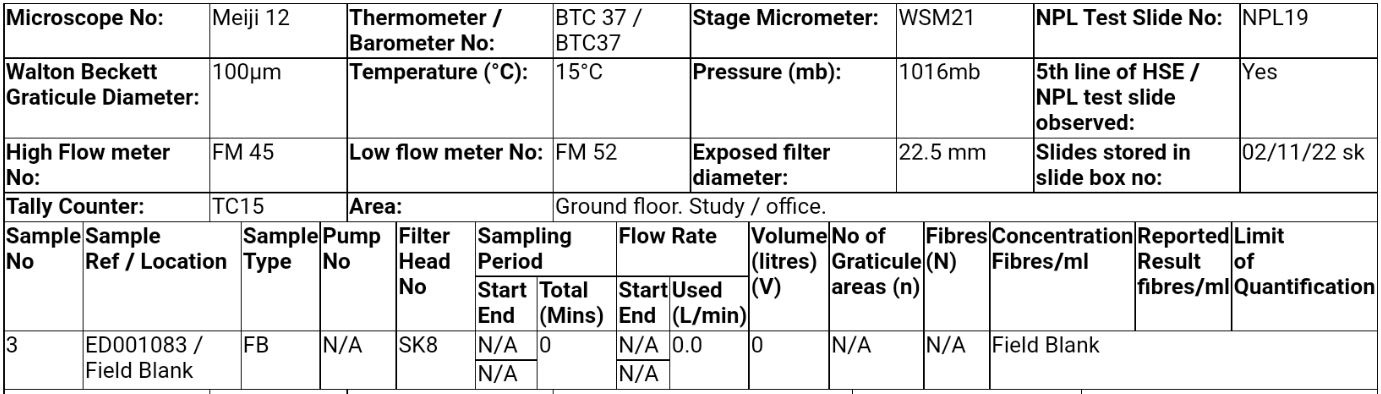
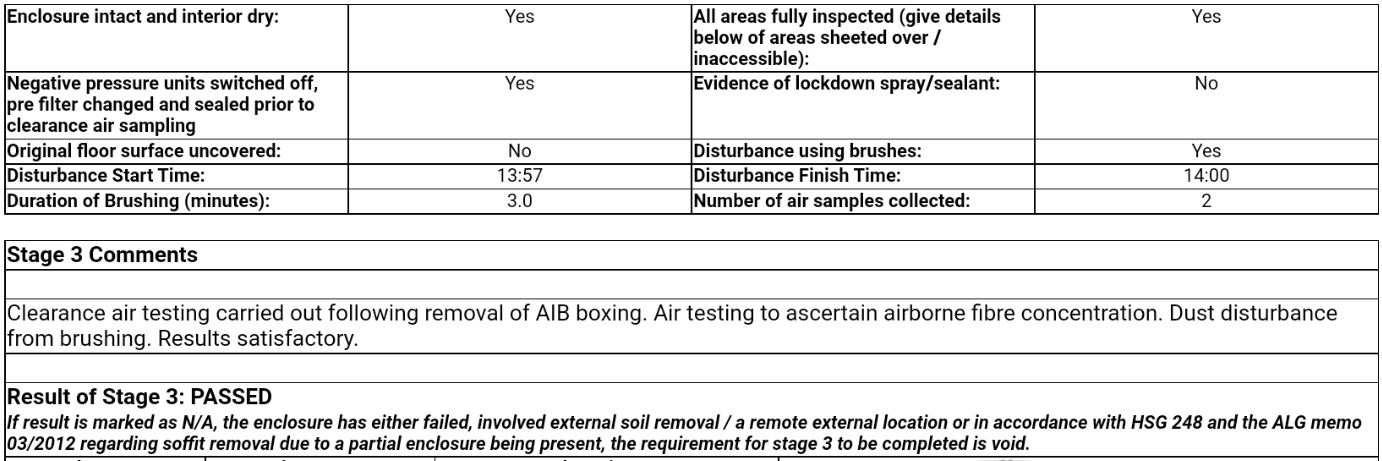
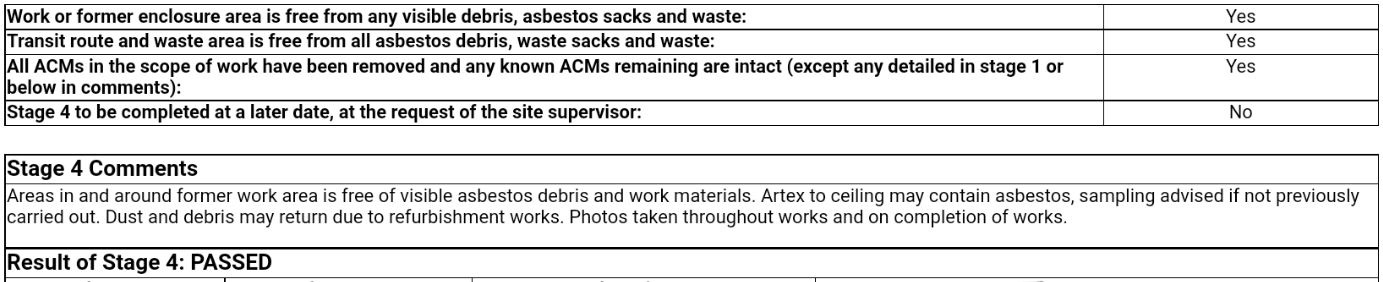
Stage 4: Assessment of Site for Reoccupation
Final clearance decision reviewing all stages with professional sign-off required before the space can be reoccupied.
The Final Clearance Certificate

The words you want to see: "Following stages 1-4 this area is now classed as: SATISFACTORY FOR REOCCUPATION"
This four-stage process proves the professional removal was worth the cost. Each stage has specific checks, independent testing verifies the work, and you get legal documentation that the space is safe.
The Chair Cleaning Failure
Here's why we wouldn't use this company again, despite the thorough removal process.
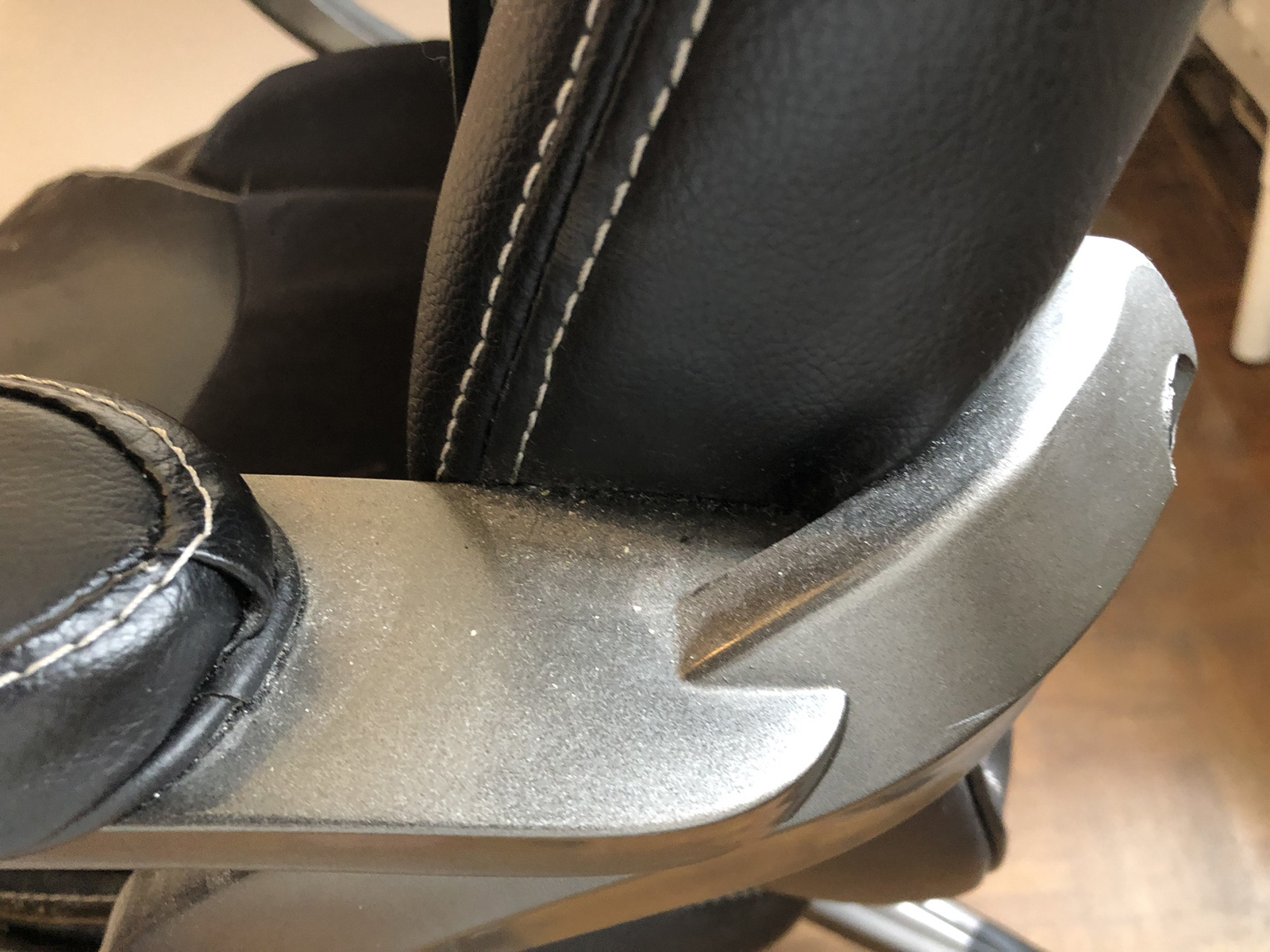
The company claimed our office chair didn't need to be disposed of—they could clean it. After their first cleaning attempt, there was still dust visible between the arm rests and chair back.
We called them back to rectify it. Their response made them dismissive, acting like we were "making a big deal out of dust."
The problem: It's dust on a chair exposed to asbestos. Being dismissive about asbestos dust is unacceptable. This showed they couldn't be trusted with thorough work.
The Other Rooms: Pragmatic Risk Management
As mentioned, we have other rooms with suspected AIB boxing:
- Dining room: Will further encapsulate in boxing (extra protection layer)
- Stack pipe: Won't get touched (no renovation plans)
- Kitchen: Will remove during future kitchen renovation
Our strategy: Leave it alone until renovation requires disturbing it. Undisturbed asbestos in good condition poses minimal risk. We're not letting fear drive unnecessary £1,500-per-room expenses.
Do we worry day-to-day? No. We focus on not disturbing it. This is pragmatic risk management, not denial.
The Main Lesson: Test Before You Touch
What I Did Wrong
- Assumed it was plasterboard based on appearance
- Broke it without testing
- Only got suspicious AFTER breaking it
- Contaminated the room before knowing what it was
What You Should Do
- Get samples tested BEFORE touching "innocent looking boxing"
- Buy testing kits proactively, not reactively
- Give yourself time to plan and budget properly
- Remember: visual identification alone isn't enough
- Don't let being reactive create unnecessary stress and rushed decisions
The Cost of Getting It Wrong
- £1,500 for one room (could have been avoided with proactive testing)
- Stress and worry during salvage operation
- Two weeks working from dining room
- Items disposed that might have been saved
- Most importantly: potential health exposure
What Surprised Me
In the same corner, we had two different boxing sections:
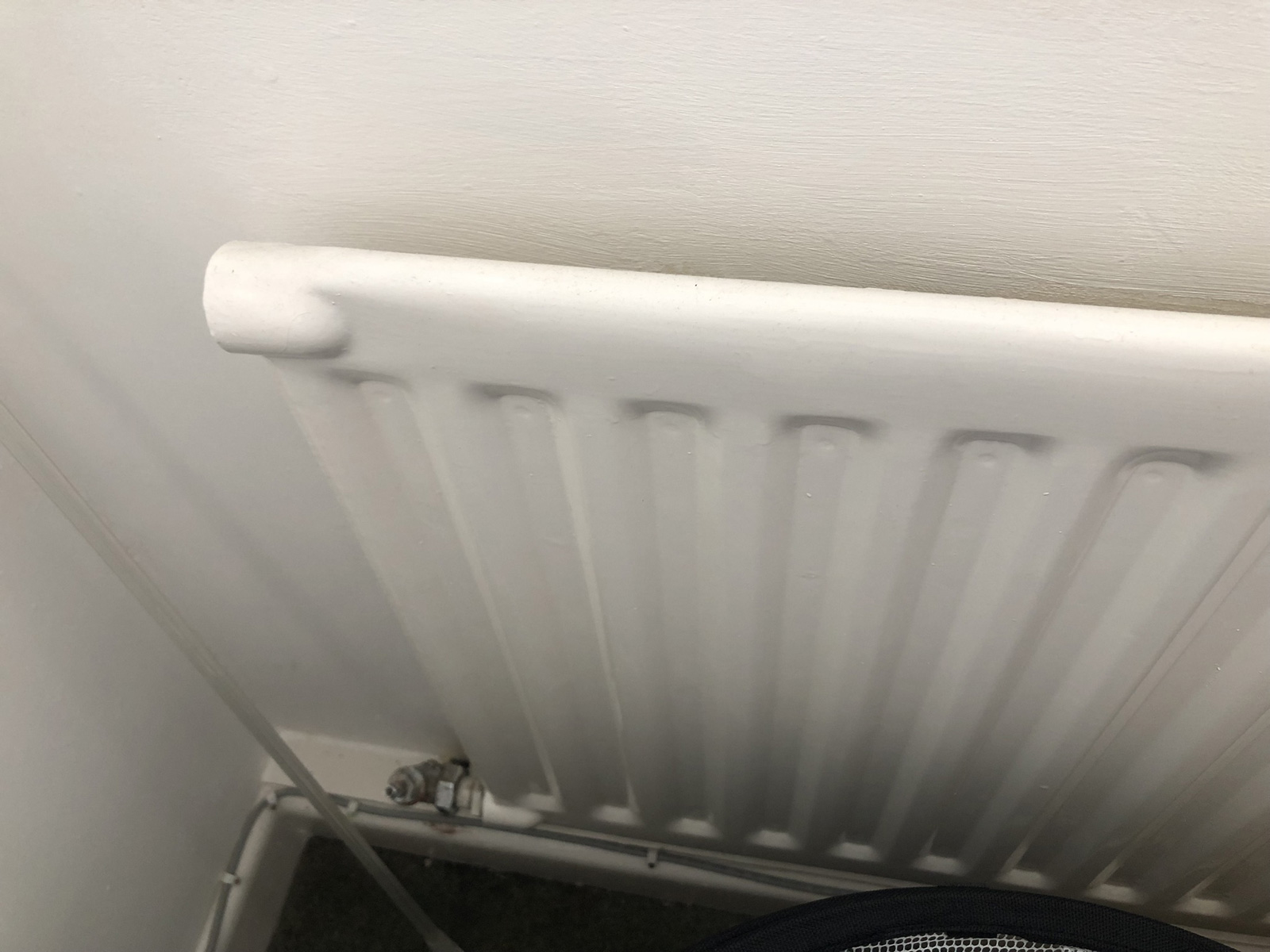
- Horizontal boxing (below radiator): Wood—safe
- Vertical boxing (pipe drop): AIB—danger
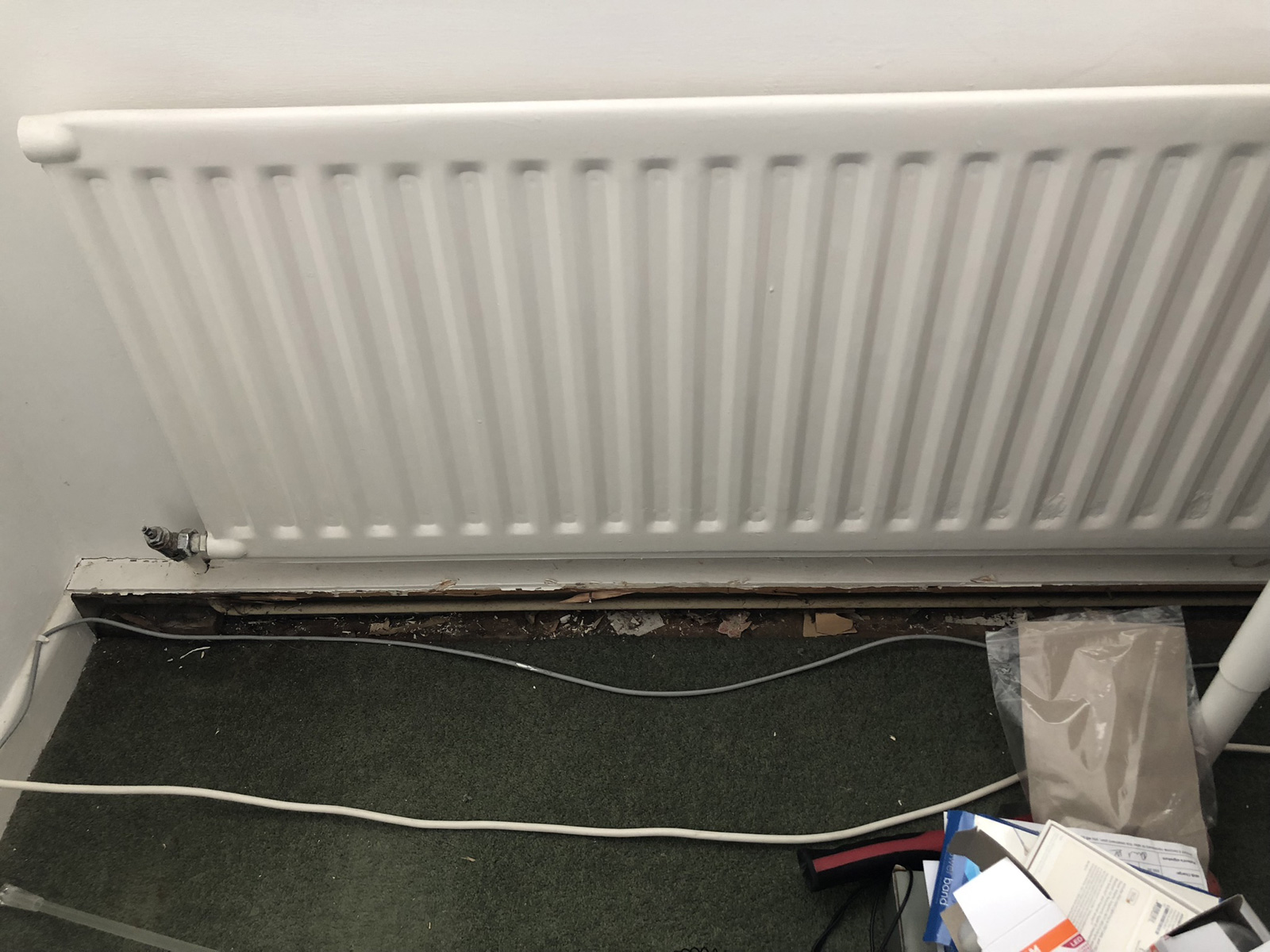
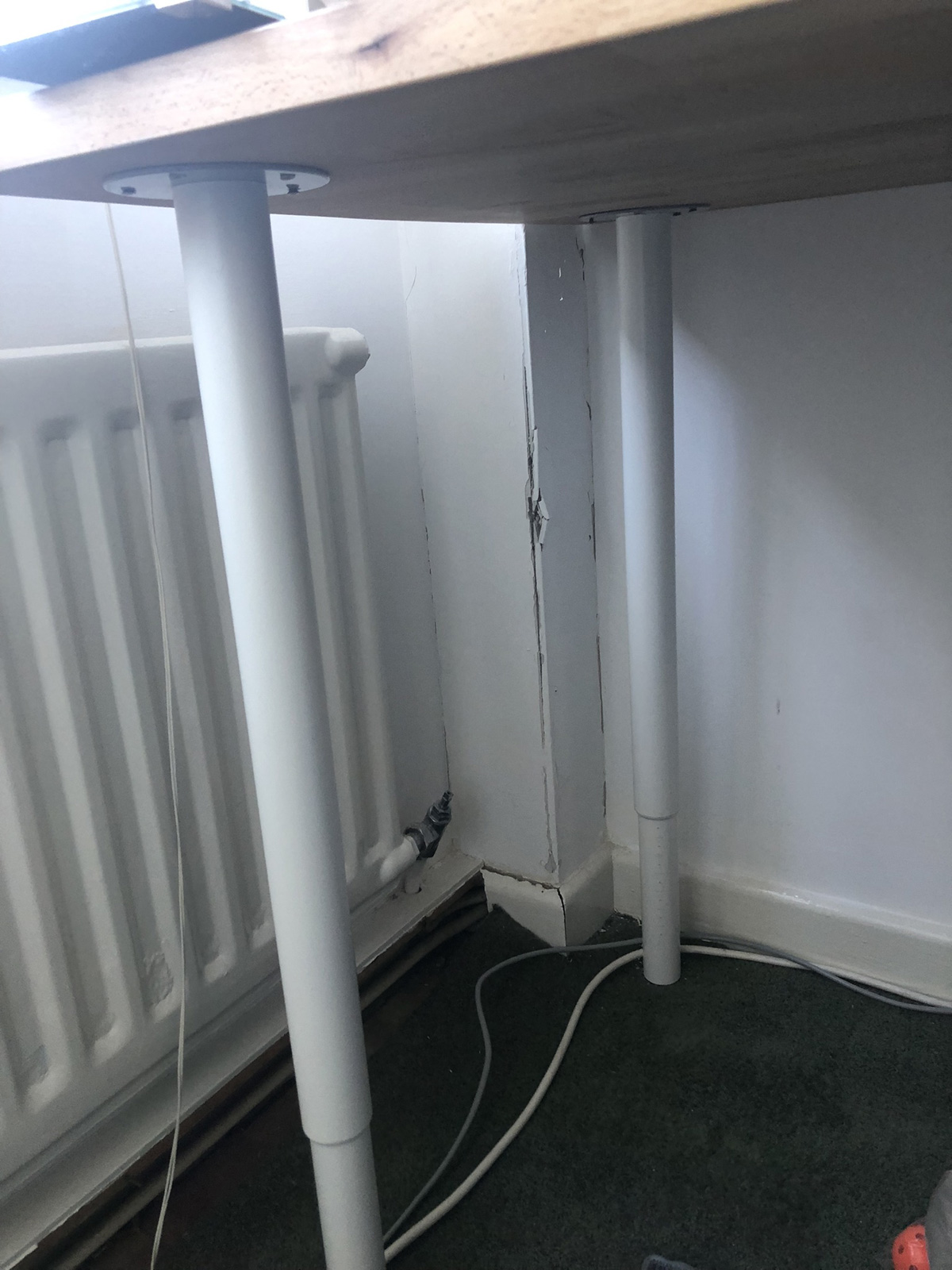
Easy to assume both were the same material. This is why testing EVERY section matters—don't assume consistency.
The £1,500 Question: Was It Worth It?
Could we have done it cheaper? Possibly. Could we have done it ourselves? Legally yes, practically no.
The "legally yes" needs explaining. The HSE classifies removing AIB (Asbestos Insulating Board) as part of a refurbishment project as Notifiable Non-Licensed Work (NNLW). This means:
- You CAN do it yourself without a license
- You MUST notify the HSE 14 days before starting
- You need proper training, equipment, and disposal arrangements
- You're responsible for safe containment and air testing
For us? The equipment costs (NPU, three-stage airlock, disposal bags), training requirements, and independent air testing would have eaten most of the £1,500 anyway. And we'd still be responsible for containment and safe work practices without professional experience.
The £132 savings versus the alternative company was minimal. But what you're paying for is:
- Professional equipment (three-stage airlock, NPU, proper disposal)
- Training and expertise
- Independent testing and certification
- Legal documentation for safety and resale
- Insurance and liability coverage
Would I use the same company again? NO—the chair cleaning failure proved they couldn't be trusted with thorough work.
But would I skip professional removal? Also no. This isn't a DIY project or a corner to cut. The four-stage certification and independent testing proved the process was necessary.
Conclusion
The texture on the back—that's all it took to raise suspicion. But suspicion should come BEFORE breaking it, not after.
Test before you touch. It's cheaper than the £1,500 lesson I learned.
If you own a 1970s home and are planning any renovation work, invest in testing kits proactively. "Innocent looking boxing" can hide expensive and dangerous surprises. Give yourself time to plan, budget properly, and make informed decisions—not reactive, stressed ones.
The four-stage certification process is thorough and necessary. Not all removal companies are equal (our chair cleaning experience proved that). But professional removal with proper documentation is worth every penny for safety and peace of mind.
As for the other rooms? We're living with undisturbed asbestos pragmatically until renovation requires addressing it. That's manageable. Living with the knowledge you broke it first and contaminated the room? That's the stressful part worth avoiding.
The lesson: £1,500 and worth sharing so you don't repeat it.