Asbestos Salvage Operation: What We Saved and What We Threw Away
When we discovered asbestos in our office, my first thought wasn't about health risk—it was: "What do I do with my computer?" Here's the decision framework we used for contaminated items.
The moment you find asbestos, everything in that room becomes suspicious.
In September 2022, we discovered AIB (Asbestos Insulating Board) in our office while planning a radiator replacement. I'd just snapped off a piece thinking it was plasterboard. Dust had gone everywhere. And in that room was my entire work setup—desktop PC, monitor, keyboard, laptop, papers, books, years of accumulated tech.
Now I had to decide: What stays? What goes? What's safe to clean? What's too risky?
Our Decision Framework
SAVE
- Hard surfaces (metal, plastic, glass)
- High replacement cost
- Can be cleaned thoroughly
- Visual inspection possible
DISPOSE
- Soft materials (fabric, foam, carpet)
- Porous surfaces
- No way to verify cleanliness
- Mental burden too high
What We Saved
Hard Surface Electronics
Desktop PC
Metal and plastic case with hard surfaces throughout. Essential for work with £800-1000 replacement cost.
Cleaning: Sides removed, sprayed with compressed air outside, left out on dry breezy day. Still using daily 3 years later.
Monitor
Hard plastic casing and glass screen. High replacement cost.
Cleaning: Compressed air and cleaning wipes disposed in bag after use (not reused).
Laptop, Keyboard & Mouse
All hard plastic surfaces that could be cleaned effectively.
Cleaning: Blasted with compressed air, wiped with cleaning wipes. All items cleaned outside to minimize indoor contamination.
Books
Hard covers kept after cleaning. Open notepads (porous paper) were binned.
Safety Equipment Used
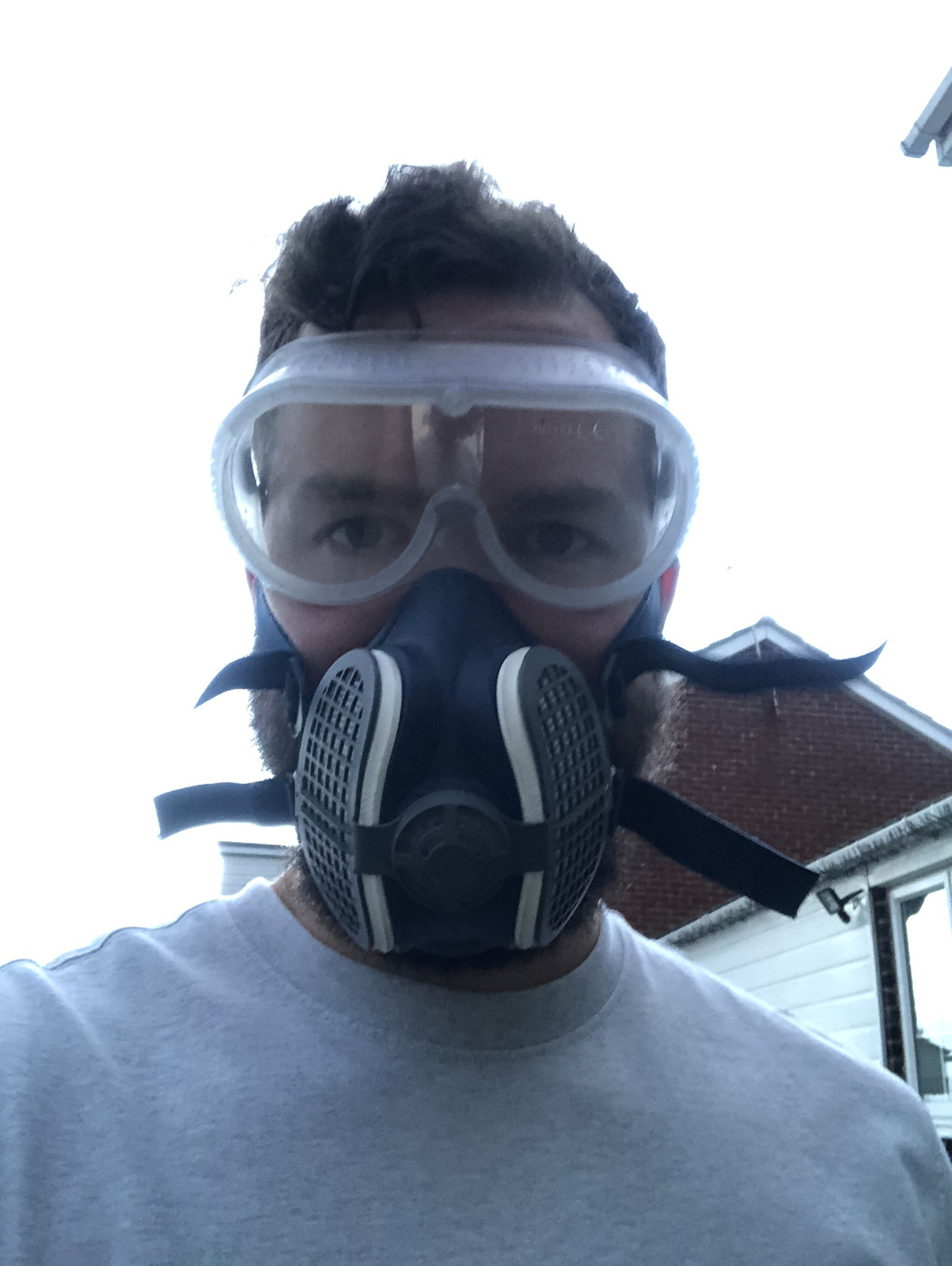
Safety goggles and FFP3-rated mask during salvage operation - minimum PPE for emergency salvage
- FFP3 loft insulation mask - Suitable for filtering asbestos
- Safety goggles - Eye protection
- Alternative option: GVS Filter Technology SPR406 Elipse Integra P3 Dust Half Mask Respirator (affiliate link) - Combined goggle and P3 mask
What We Disposed
Soft & Porous Materials
Laptop Rucksack
Fabric material throughout - impossible to clean thoroughly. No way to verify fiber removal from fabric.
Office Chair
Fabric seat and back with foam padding. Direct floor contact means high dust accumulation. Already needed replacement.
Old Green Carpet
Complete room coverage with high contamination risk. Already planning replacement—parquet flooring beneath.
Open Notepads
Porous paper that couldn't be effectively cleaned. Books with hard covers were kept.
Regrets?
Good backpack with laptop compartment and some open notepads—but better safe than sorry. The £1,500 professional removal handled everything else properly.
Our Cleaning Methodology
Window Evacuation
We chose to pass items through the window to outside rather than through the door to minimize contamination spread through the house.
- Desktop PC: Through window
- Monitor: Through window
- All saved items: Outside first
Outside Cleaning
All cleaning done outside to minimize indoor contamination:
- Compressed air (affiliate link) to blast dust off
- Cleaning wipes for surfaces
- Wipes disposed in bag (not reused)
- Items left outside on dry breezy day
Three Years Later: Still Using Everything
All salvaged items (desktop PC, monitor, laptop, keyboard, mouse, books) are still in daily use with no concerns. The thorough outdoor cleaning with FFP3 protection proved effective.
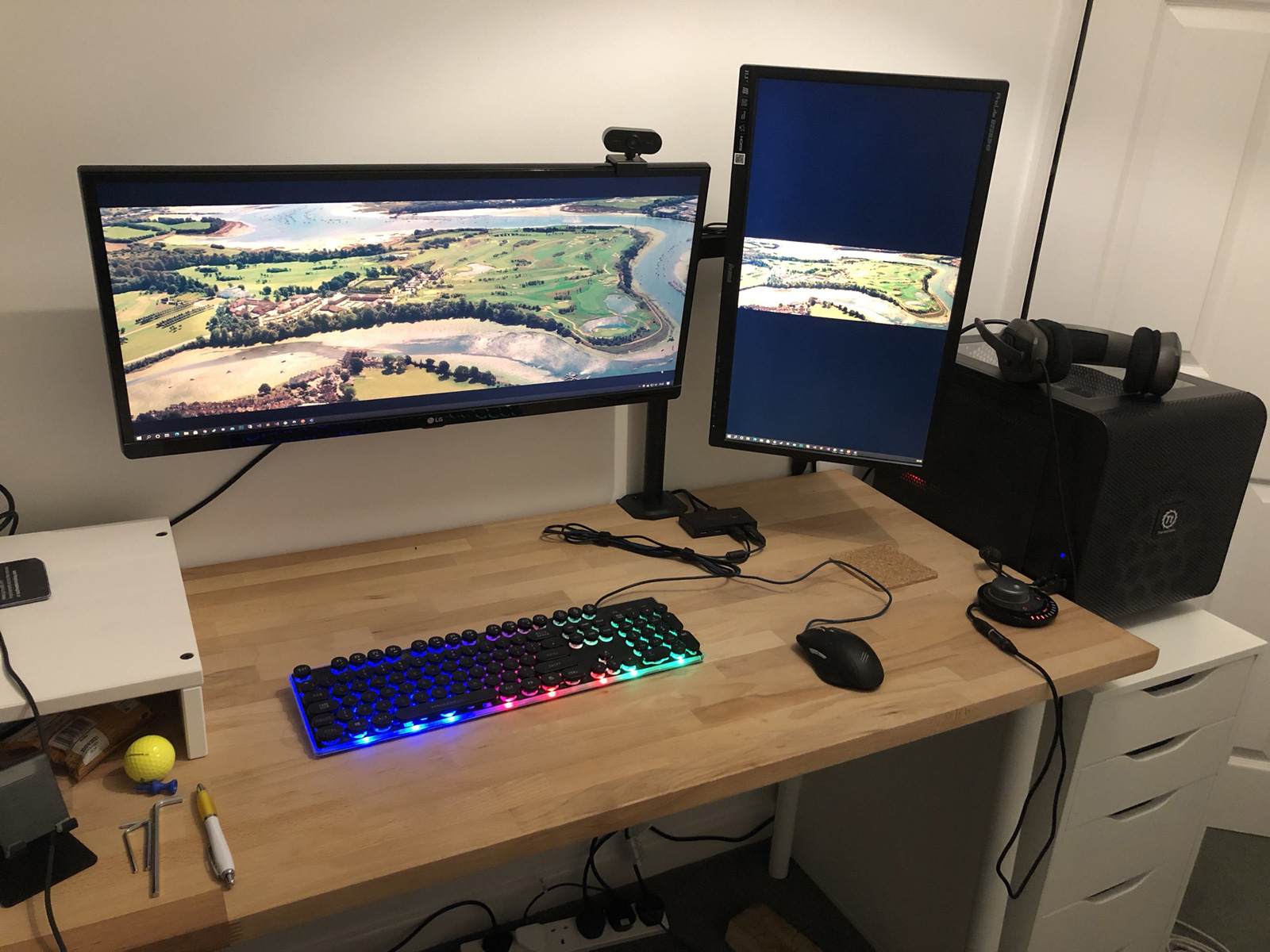
June 2021 - The same desktop PC, monitors, and desk shown here were salvaged in November 2022 after asbestos exposure. Still in daily use 3+ years later, proving the cleaning methodology works
The Psychological Journey
Initial Reaction: Relief
When we first confirmed asbestos, my thought was: "At least we know." Better to discover it during controlled radiator replacement than during an emergency repair, after decorating, or years later with more exposure.
The Doubt Phase
But then came the salvage decisions:
"Is the PC really safe to keep?"
"Should I dispose of everything just to be sure?"
"Am I putting my family at risk to save £1000 in electronics?"
"What if there are fibers I can't see?"
Every item passing through that window carried weight: Monitor (£300 replacement vs unknown risk), PC (£800 replacement vs what if), Keyboard (£20 replacement vs is it worth it?).
Resolution: Pragmatism Won
Eventually, we accepted a pragmatic approach:
- Hard surfaces: Clean thoroughly, use HEPA vacuum, visual inspection, accept residual uncertainty
- Porous materials: No way to verify cleanliness, not worth mental burden, replacement cost manageable
- Professional removal: Let experts handle contaminated space with three-stage airlock, independent testing, official clearance
The "SATISFACTORY FOR REOCCUPATION" certificate brought psychological closure.
Lessons for Others
If You Discover Asbestos Mid-Project
Stop Disturbing Material Immediately
Don't touch more. Don't try to "clean up". Leave room if dust is present.
Assess What's in the Room
Identify high-value items, irreplaceable items, soft vs hard surfaces, and contamination proximity.
Develop Salvage Criteria
Hard surfaces: generally salvageable. Soft/porous materials: generally dispose. Calculate value vs risk.
Use Proper PPE for Salvage
Minimum: Rated respirator mask + eye protection + gloves. Better: Full professional PPE. Never salvage without protection.
Choose Exit Route Carefully
Window to outside if possible. Avoid tracking through house. Consider contamination spread.
Clean Salvaged Items Thoroughly
HEPA vacuum, damp cloths (prevents dust spread), outside if possible, multiple cleaning passes.
Call Professionals for Room Cleanup
Don't attempt DIY asbestos removal. Use certified removal companies with proper disposal, independent testing, and clearance certificates.
What We'd Do Differently
If We Could Rewind
- Test before breaking anything - The obvious main lesson
- Remove valuable items preventively - Move PC and monitor before any exploratory work
- Have proper PPE available - Full face respirator, disposable coveralls in house
- Document everything - Photos before salvage, item lists, for insurance
What We Got Right
- Window evacuation strategy - Minimized spread through house
- Clear decision framework - Hard vs soft material distinction
- Professional removal - Didn't try DIY cleanup, got official clearance
The Bottom Line
Discovering asbestos mid-project is fundamentally a triage situation. You have minutes to hours to make salvage decisions before professionals seal off the room.
The Framework That Worked for Us:
- 1. Hard surfaces with high value → Save and clean
- 2. Soft materials with any risk → Dispose
- 3. Irreplaceable items → Salvage with extreme care
- 4. Easily replaceable items → Lean toward disposal
- 5. When in doubt → Dispose (mental burden isn't worth it)
Three years later, we'd make the same decisions: PC and monitor saved (worth it), soft materials disposed (no regrets), professional removal (best money spent).
The salvage operation cost us an afternoon of stress, some safety gear, and the items we chose to dispose of. But it saved us ~£1,000 in electronics and gave us a clear framework for decision-making under uncertainty.
Asbestos discovery is stressful enough. Having a decision framework helps.
And if you're reading this before starting any exploratory work in an older home: Test first, salvage never.