The Family Context
December 2022. Our daughter was 7 months old and unwell. Our son was a toddler at nursery. We'd just discovered asbestos in September, had it professionally removed in November, and now faced a complete pipework replacement before winter really set in.
This wasn't ideal timing—but it was necessary timing. The asbestos removal revealed that our Truwel pipes (from the 1970s copper shortage) needed complete replacement before we could upgrade the boiler. We had momentum, a plumber scheduled, and couldn't afford to delay.
Why December?
- Project momentum after asbestos removal
- Plumber availability (had scheduled time)
- Needed completion before boiler upgrade
- Delay might mean losing plumber
- Strategic sequencing: pipework → radiators → boiler
- Sometimes you just have to do it
So we did.
The Timeline: 5 Days Without Heating
The complete radiator installation took 5 days, with me doing the inhibitor flush afterward. The outdoor temperatures told the story of our timing luck (or lack thereof):
- First 2 days: Lows of 4°C, highs of 7°C (manageable)
- Last 2 days: Lows of -1°C, highs of 4°C (challenging)
As the work progressed, the weather got colder. Perfect.
Family Arrangements: Who Stayed Where
Wife + Daughter: Stayed at brother-in-law's house for the duration. Our daughter being sick and cooped up away from home while we worked wasn't ideal, but it was the right call. A 7-month-old in a cold, dusty house with strangers working wasn't an option.
Son + Me: We stayed at the house. He continued nursery Monday-Wednesday, which meant the plumber could work freely during those days. Thursday-Friday with a toddler home while work continued was more challenging, but manageable.
Missing my wife and daughter for 5 days was harder than the cold.
Temporary Heating: The £10 Facebook Marketplace Miracle
We had two temporary heaters that became essential survival equipment:
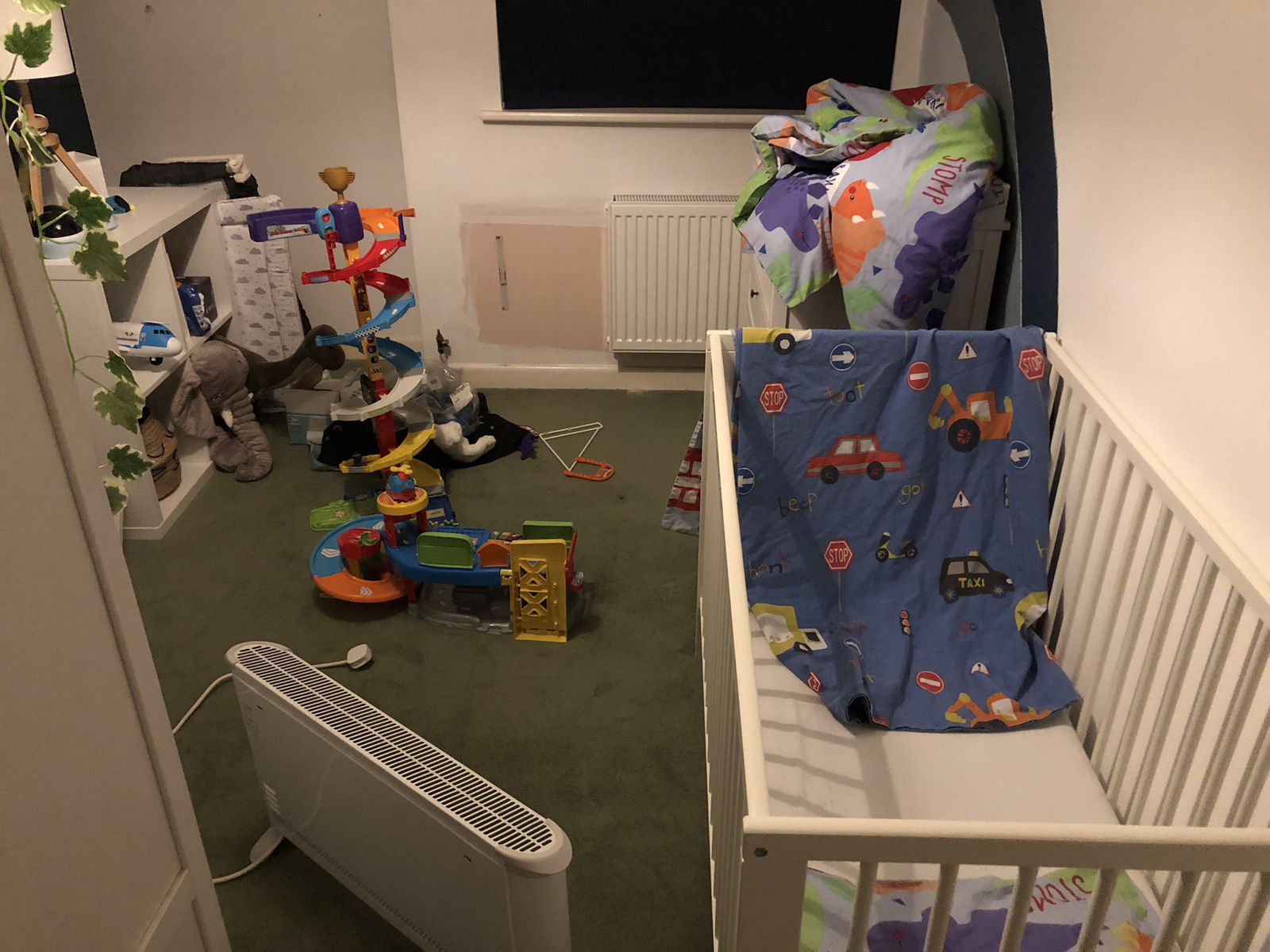
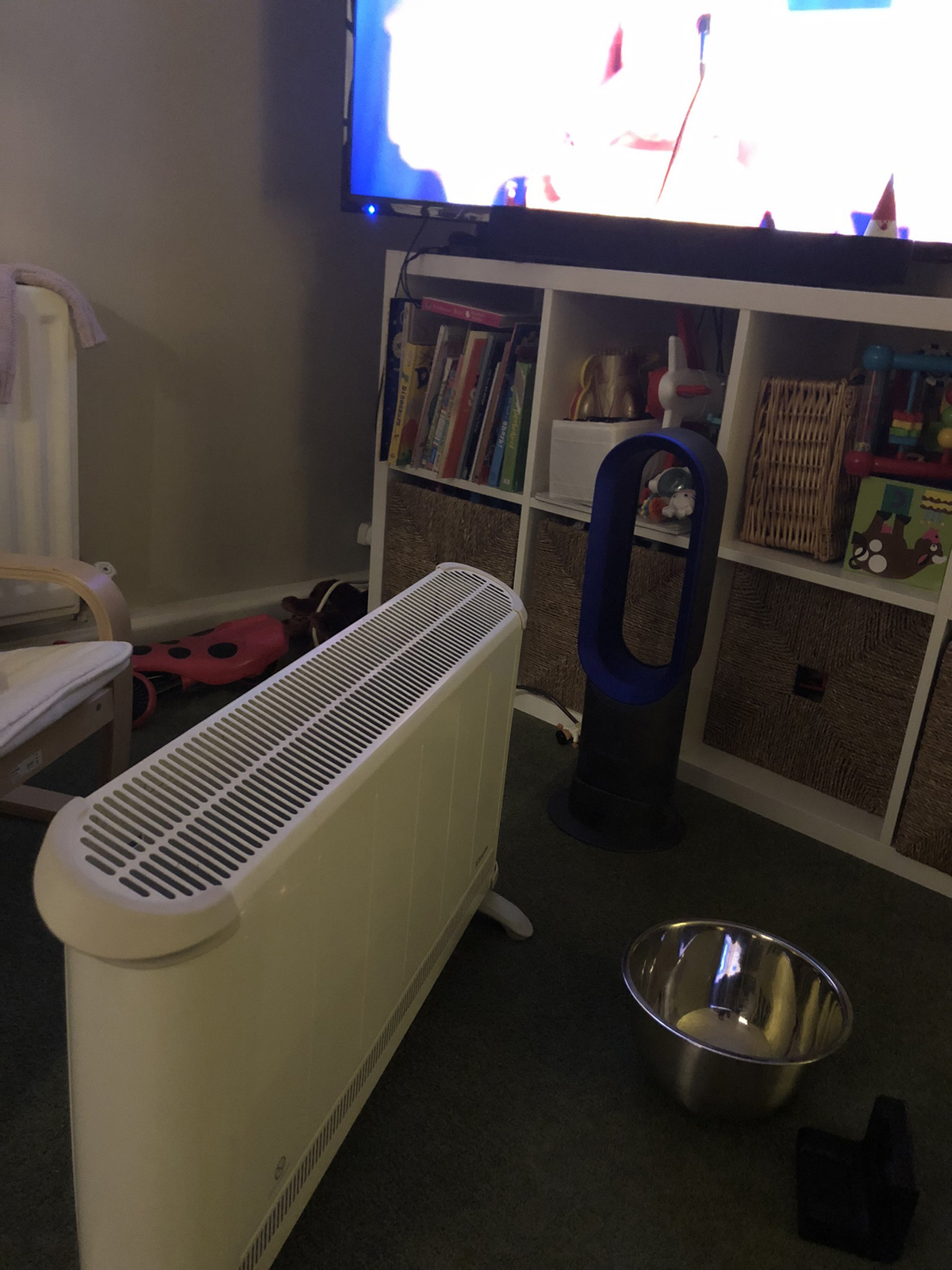
1. Electric Convection Heater (£10)
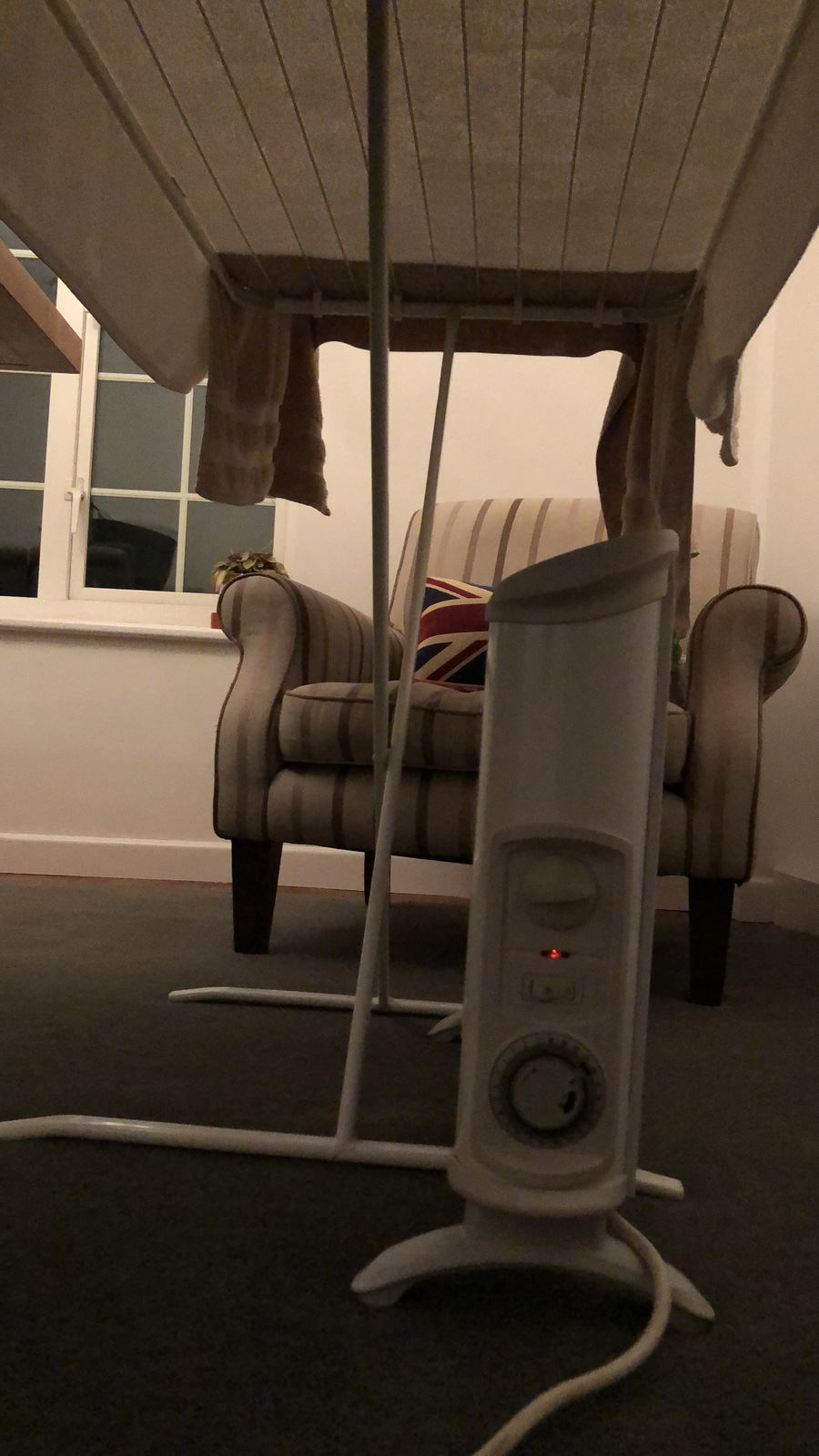
The hero of this story: a £10 electric convection heater from Facebook Marketplace. It had a thermostat, timer, and 1.5kW/3kW switch. Great for general room heating.
This heater lived in our son's bedroom, successfully bringing the temperature up before bedtime. We'd close windows in the evening after the plumber finished (they'd been open during the day for soldering smoke ventilation), and the convection heater would make the room comfortable.
2. Hoover 3000 Fan Heater (1960s Vintage)
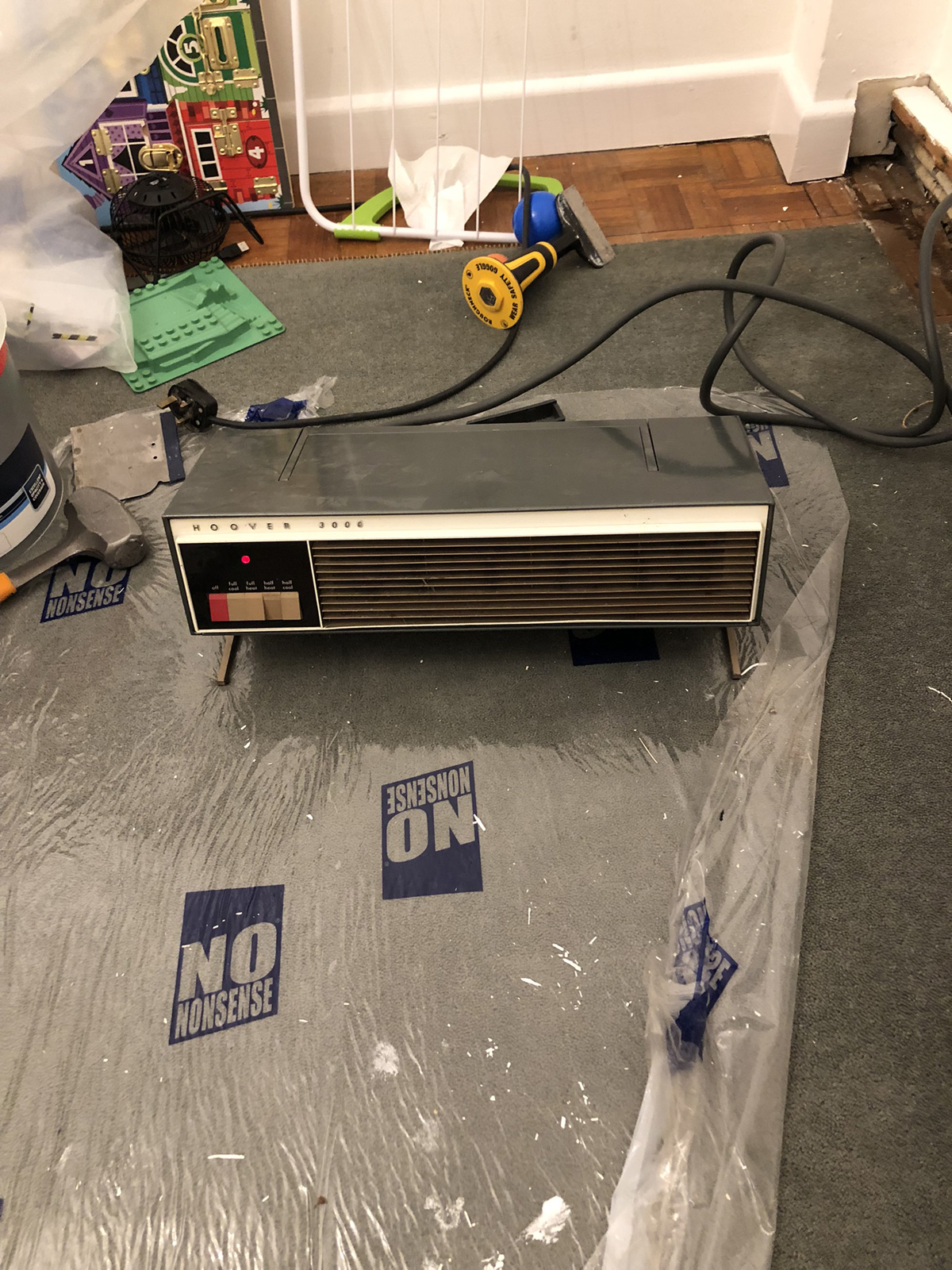
A 3kW fan heater from the 1960s. The directed heat was perfect for specific tasks—like blowing warm air into the bathroom whilst our son bathed, or drying him outside the bath.
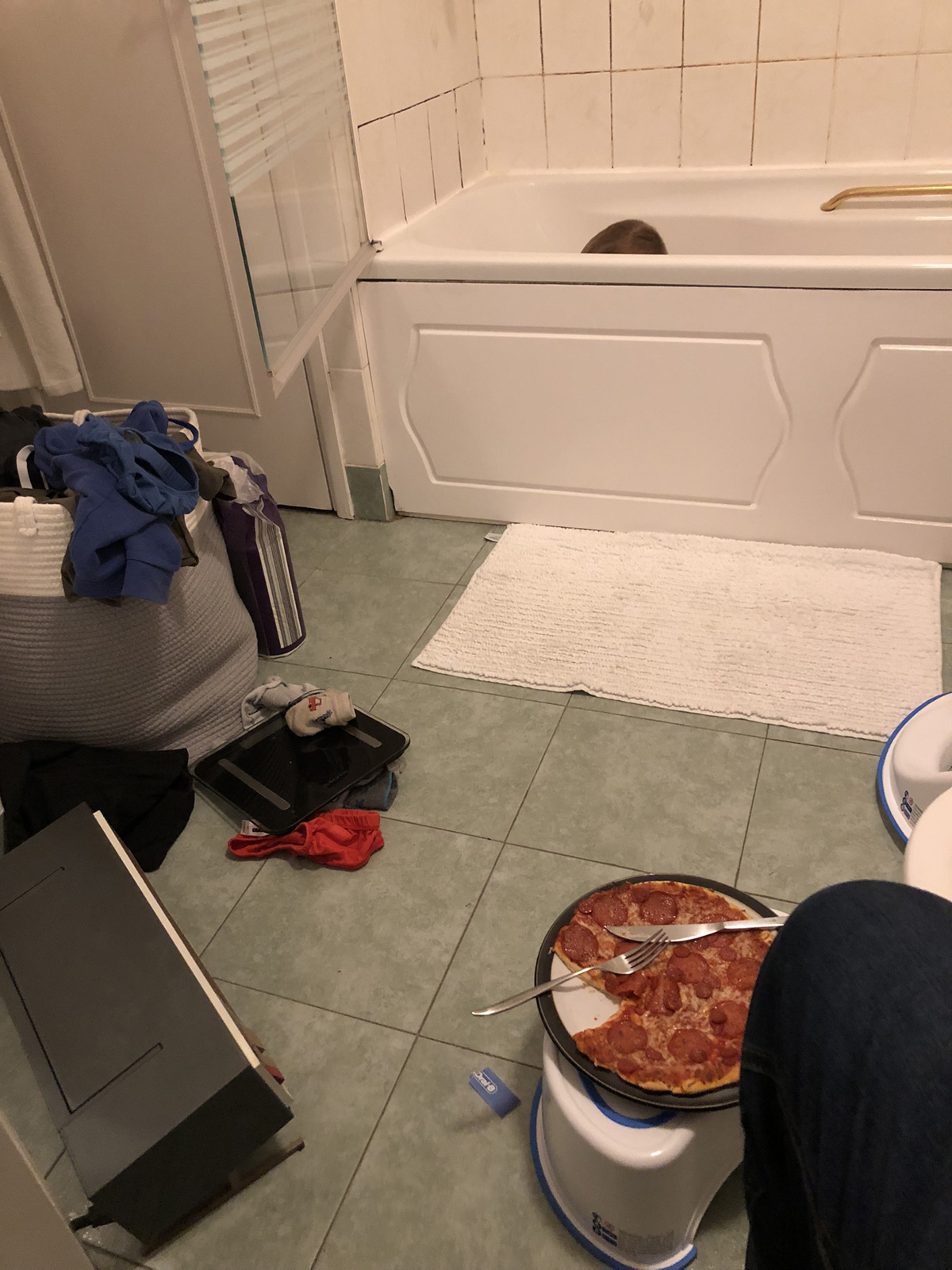
This is also the heater that appears in one memorable photo: pointing at the bath whilst I ate pizza sat on the toilet, keeping an eye on our son.
Hot Water Solutions
No central heating doesn't mean no hot water—if you plan ahead.
For Washing Dishes & Hands
Kettle boiled, filled the sink. Simple, effective, and what people did for generations. Not convenient, but perfectly manageable for 5 days.
For Baths
Our hot water cylinder with immersion element still worked. This was essential for our son's evening bath routine—maintaining some normality was important for him.
For Morning Showers
Electric shower (independent of central heating) meant I could wash in the morning whilst our son slept in his cot.
The Electric Shower Lesson
If you're planning heating work, an electric shower is invaluable. It's independent of your heating system, works regardless of boiler status, and saves the day when everything else is torn apart.
Windows Open for Ventilation: The Cold Reality
The plumber needed to solder copper pipes—lots of them. This meant windows open to let the soldering smoke escape. Even with targeted ventilation, this made the house very cold during work hours.
In the evening, we'd close the windows and run the heaters to bring temperatures back up. Our son's bedtime routine involved:
- Fan heater blowing warm air into bathroom whilst he bathed
- Convection heater running in bedroom to warm it up
- Bath, dry, and into warm bedroom
- Story time whilst room stayed comfortable
The Work Split: User Contribution
A critical detail: I hung all 10 radiators after the plumber taught me how to do the first one. This wasn't the original plan, but it evolved organically and helped progress.
The plumber would finish for the day, and I'd continue hanging radiators. Each one took 5-15 minutes once I understood the process: calculate bracket height, mark center and vertical, calculate bracket spacing, mark horizontal, fix brackets with spacers, install rubber bits, sit radiator.
Tools needed: drill, masonry bits, rawl plugs, long and short levels, pencil, screws, variety of spacers for uneven walls.
This work split meant the project progressed faster than if the plumber did everything. It also meant I was physically tired on top of solo parenting and managing a cold house.
Daily Routine Whilst Living Through It
Monday-Wednesday (Nursery Days): Son at nursery during work hours. Plumber worked freely. I worked from dining room (office still recovering from asbestos work). Maximum productivity days. Relatively manageable.
Thursday-Friday (Home Days): Son home with me. Plumber still working. Had to manage toddler curiosity ("helping"), keep him away from tools/work areas, and maintain some routine. More challenging days required flexibility and patience.
Sleep Arrangements: I still slept in my own bedroom (cold, but manageable with extra blankets). Son's bedroom had the convection heater warming it before bedtime. His sleep wasn't really affected—he was still napping at nursery anyway, so changes at home didn't disrupt his schedule much.
The Real Stress Factors
The cold was manageable. The real stress came from juggling multiple pressures:
1. Family Separation
- Missing wife and daughter
- Solo parenting toddler
- Maintaining routine for son
- Guilt about daughter being sick and away from home
2. Project Management
- Coordinating with plumber
- Making on-the-fly decisions
- Problem-solving (like the wet vac disaster on the landing)
- Trust issues around pipework routing
- Keeping project on track
3. Work Commitments
- Still needed to work remotely
- Calls from dining room with background noise
- Professional commitments don't stop for renovations
4. Physical Exhaustion
- Cold house drains energy
- Disrupted sleep
- Physical work hanging radiators
- Solo parenting on top of everything else
The wet vac disaster (black water spraying onto white landing walls) could have been a breaking point. I chose grace: "Don't worry, I'll repaint." I did repaint the landing wall myself later.
What Made It Survivable
Essential Elements
- £10 convection heater (focus heating where needed)
- Fan heater for directed heat
- Electric shower (independent hot water)
- Immersion heater (baths for son)
- Kettle (washing dishes/hands)
- Family arrangements (baby safe elsewhere)
- Nursery schedule (plumber worked freely Mon-Wed)
- Accepting imperfection (good enough for 5 days)
Practical Advice for Others Planning This
Before Work Starts
✅ Secure temporary heating upfront
Buy or borrow electric heaters BEFORE work starts. Test them. Budget for increased electricity. Facebook Marketplace can be a goldmine—our £10 convection heater with thermostat and timer was perfect.
✅ Arrange alternative accommodation for vulnerable family members
Babies, elderly, anyone unwell—get them somewhere warm. Even temporary (friends, family). Massively reduces stress. Worth the logistics.
✅ Verify your hot water backup systems
- Electric shower? Test it works.
- Immersion heater? Make sure it's functional.
- Kettle for dishes? Stock up on patience.
✅ Schedule around commitments
Nursery schedules, work commitments, partner availability. Coordinate everything before work starts. We used nursery Mon-Wed for maximum plumber productivity.
✅ Set realistic timeline expectations
Assume longer than quoted. Buffer for unexpected issues (like wet vac disasters). Don't book important events immediately after. Give yourself recovery time.
During Work
✅ Focus heating on essential areas
Don't try to heat the whole house. Prioritize bedrooms and living areas. Move heaters as needed. Accept that some rooms will be cold.
✅ Close windows in the evening
Ventilation during work is necessary. But close windows when work stops to retain heat overnight.
✅ Maintain basic routines for children
Bath time, bedtime stories, meals at regular times. Some normality helps children cope with disruption. Our son's sleep wasn't affected because we kept routines consistent.
✅ Accept the mess and disruption
Don't try to maintain normal standards. It's 5 days. Everything else can wait. Prioritize safety and basic comfort.
After Completion
✅ Plan recovery time
Cleanup takes time. Resettling takes energy. Family reunification needs space. Don't rush back to normal. We needed a few days to recover after my wife and daughter came home.
The Cost Reality
Temporary heating electricity costs: Higher than normal, but temporary. All costs were worth the comfort, especially with young children.
Total project costs:
- Plumber labor: £1,530
- Radiators: £682.03
- Gas valve: £170.20
- Sentinel products: £24.25
- Total: £2,406.48
The £10 heater and electricity costs were rounding errors compared to the main project expense.
Was It Worth It?
Short-term pain: 5 days of family separation, cold, stress, physical exhaustion, disruption.
Long-term gain: New pipework safe for combi boiler upgrade, new efficient radiators with TRVs and convector fins, foundation set for boiler replacement (completed January 2024), and energy savings beginning.
Would we do it again? Yes—but better prepared. More temporary heating, clearer communication with tradespeople, better family arrangements, and more realistic expectations.
For others considering this: It's doable but challenging. Proper planning is essential. Family support is critical. Temporary discomfort is worth long-term benefit. But don't underestimate the stress—especially the emotional toll of family separation.
The Final Thought
If we could survive it with a 7-month-old (unwell) and a toddler in December when temps dropped to -1°C overnight, you can too.
Just go in with eyes open. Plan thoroughly. Get temporary heating sorted BEFORE work starts. Arrange family away if possible. Accept that it will be hard.
And maybe buy a £10 Facebook Marketplace heater. That thing was worth its weight in gold.
Safety Note: Pipe Insulation
We added pipe insulation to exposed ground floor pipes as a safety precaution for our crawling children. Not heating-related, but practical for protecting curious toddlers from hard edges and hot pipes.
View Pipe Insulation on AmazonAs an Amazon Associate, I earn from qualifying purchases at no extra cost to you.