In late 2021, we faced a decision: Replace all our 1970s windows at once for around £7,000, or phase the work over several months?
Our 4-bed detached house still had its original double glazing from when it was built in 1970. Fifty-two years old. Cold draughts, wind noise you could hear from across rooms, early morning condensation. They were clearly underperforming.
But with a baby due in May 2022, cash flow mattered more than theoretical long-term savings. So we split the project into three phases: January, March, and November 2022.
That decision cost us £189 in inflation penalties—material prices spiked between phases. But it gave us breathing room when we needed it most, and taught us lessons about balancing immediate affordability against long-term cost protection.
The Starting Point: 52-Year-Old Windows
What We Were Dealing With
Our windows weren't single-glazed—they were early 1970s double-glazing technology. The kind where the concept existed but the execution was primitive by today's standards. Believed to be original to the house when it was built.
The problems we noticed:
- Sound insulation was terrible. Our house sits on a hill, and wind would hit the back constantly. You could hear it from inside the house. Traffic noise from the road carried through clearly.
- Condensation was immediate. Not between the panes—on the inside surface. Cold glass, warm air, moisture buildup overnight.
- Thermal performance was poor. We didn't know the U-values of the old vs. new windows (and honestly still don't), but you could feel the cold near them in winter.
We'd already completed loft insulation upgrades (50mm to 350mm) in early 2021. Windows were the logical next step: seal the building envelope before optimizing heat delivery through radiators and boiler.
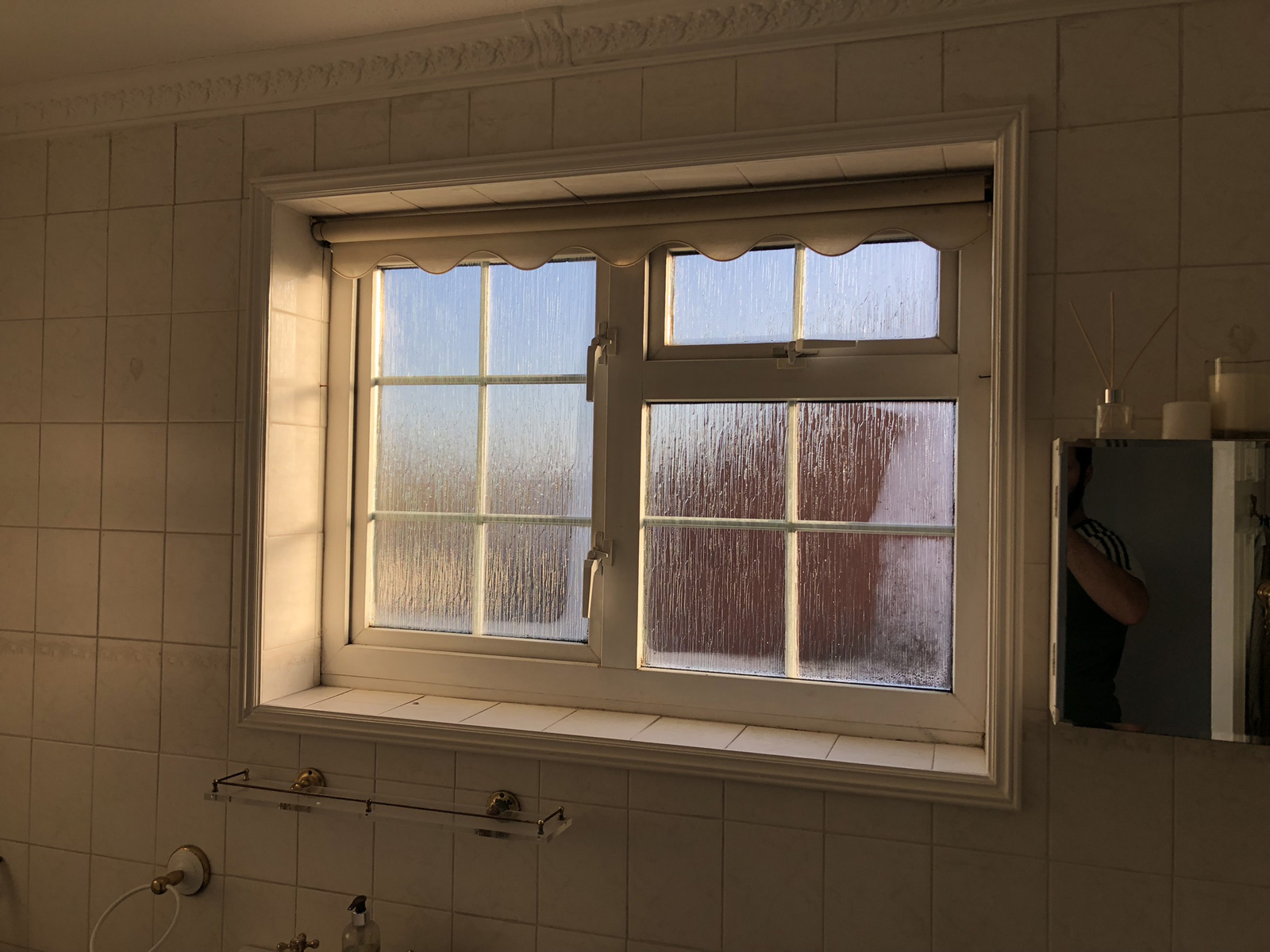
Original 1970s bathroom window - 52 years old and showing its age
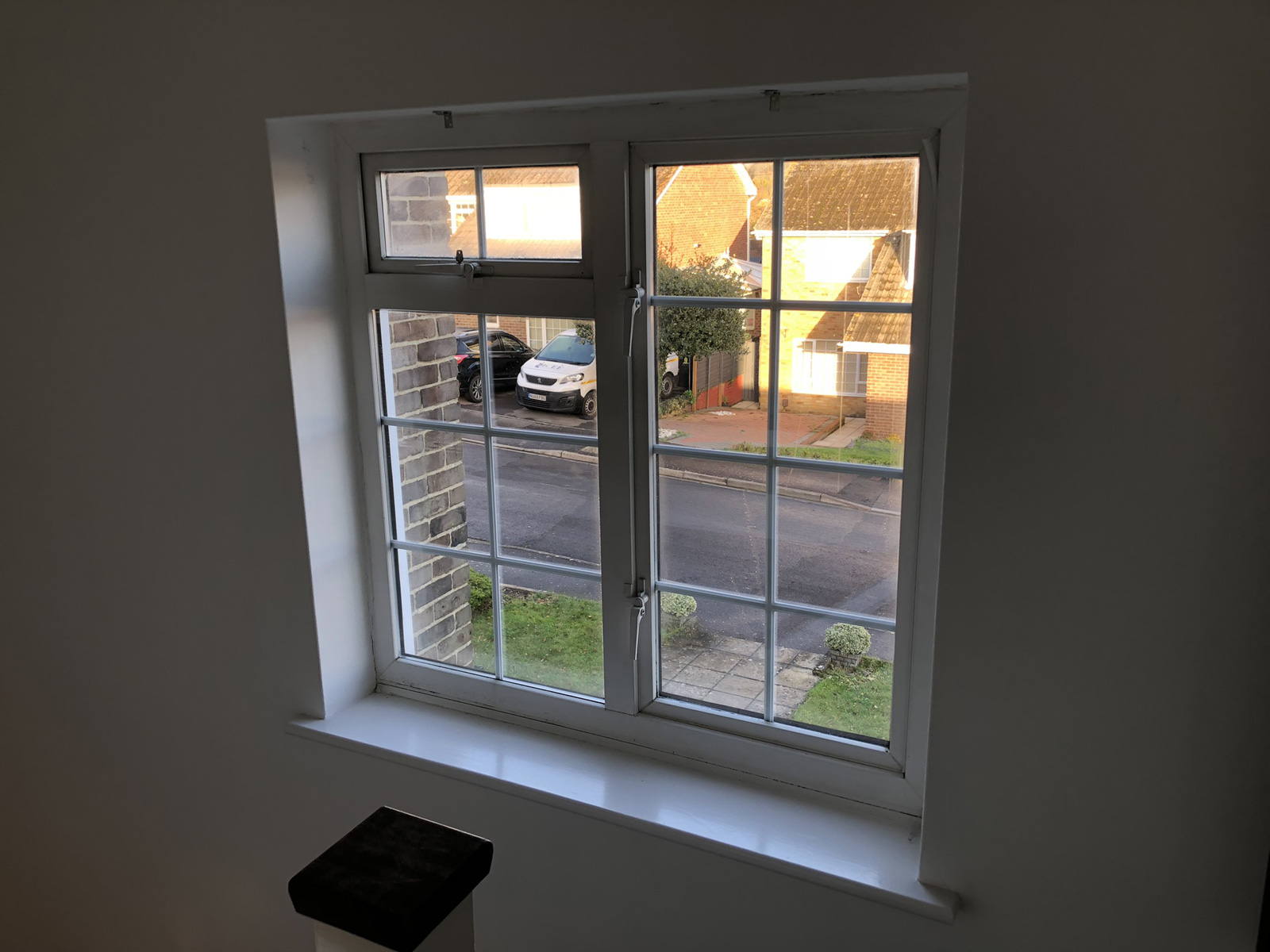
Landing window - part of the original 1970s installation
Strategic Sequencing Logic
1. Loft insulation (Jan 2021) → Retain heat before adding heat
2. Windows/doors (Jan-Nov 2022) → Reduce heat loss through envelope
3. Radiators (Dec 2022) → Better heat distribution with TRVs
4. Boiler upgrade (Jan 2024) → Efficient heating for well-insulated home
The question wasn't whether to replace them. It was how to afford it without derailing other plans.
The Budget Reality: £7,164
Seven thousand pounds. That's what it would cost to replace 7 windows and 2 doors across our home.
We were working from home, income was stable but not unlimited. A baby was due in May. Other home improvements were on the horizon—radiators needed replacing, the boiler was ancient and oversized.
The calculation:
If we did everything at once in January 2022:
- One large payment (~£7,000+)
- Immediate hit to savings
- Delays to radiator and boiler upgrades
- Financial stress during pregnancy
- Locked in January 2022 prices (avoiding inflation)
If we phased the work over 10 months:
- Manageable chunks spread across Jan, March, Nov
- Cash reserves maintained for baby expenses
- Budget room for unexpected costs (there are always unexpected costs)
- Risk: inflation might increase later phases
We knew phasing could cost more. But the cash flow breathing room felt worth it when you're preparing for a newborn.
Phase 1 (January 2022): Comfort Before Baby — £3,814
We had one priority: make the rooms where we'd spend the most time with a newborn comfortable before she arrived in May.
What We Replaced
Living room (where we'd spend daytime hours):
- Bay window: £1,480
- Side door: £740 (replacing a draughty door)
All three upstairs bedrooms (where baby would sleep):
- Daughter's bedroom window: £544 (H119cm × W118cm)
- Guest bedroom window: £670
- Master bedroom small window: £380
Phase 1 Total: £3,814
Why These Rooms First
The logic was simple: comfort where it matters most, when it matters most.
By May 2022, when our daughter arrived, every upstairs bedroom would be double-glazed with modern windows. No draughts, dramatically reduced noise (critical for baby sleep), warmer rooms requiring less heating.
The living room bay window and side door meant our main daytime space—where we'd spend hours with a newborn—would be comfortable and quiet.
Installation Experience
Duration: 2 days with 2 installers
They tackled upstairs first (all three bedrooms), then moved downstairs to the living room bay and side door. Systematic approach that minimized disruption—we could still use parts of the house while work progressed.
The installation went smoothly, though there were four minor issues that came up later (glass chip, loose pull knob, silicone finish, sticker residue). All handled excellently by the owner—more on that in the installer section.
Immediate Impact
The improvement was dramatic and immediate:
Sound insulation: "So much difference" doesn't quite capture it. Wind hitting the back of the house—which sits on a hill—went from constant background noise to barely noticeable. Traffic sounds that used to carry through clearly became muted.
Condensation: The next morning, there was condensation on the outside of the windows. That's a positive sign—it means the glass is cold on the outside because heat is staying inside. Internal condensation vanished almost immediately.
Thermal comfort: No more cold draughts near window frames. Rooms felt noticeably warmer even before adjusting heating.
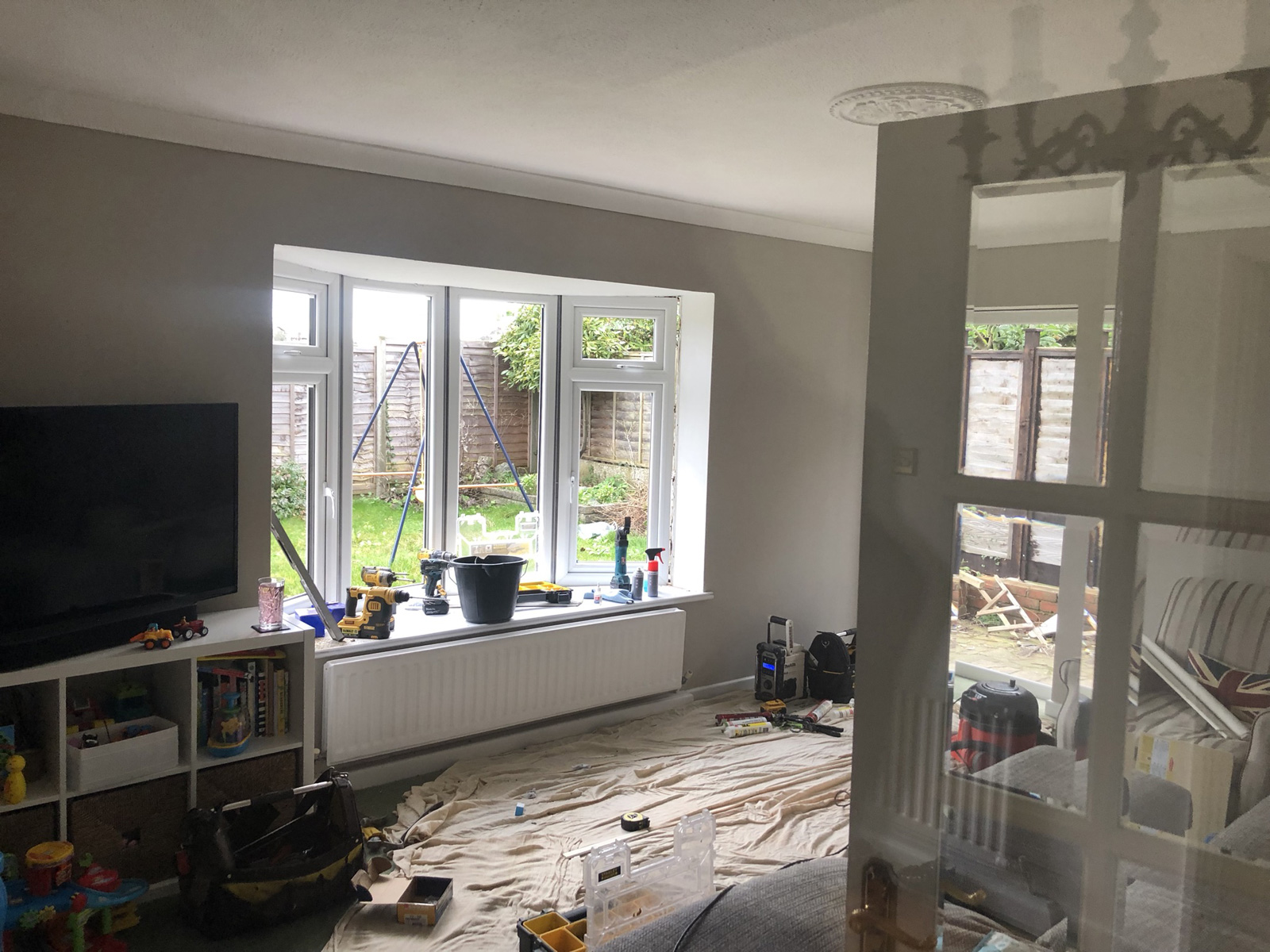
Phase 1 installation in progress - living room bay window and side door
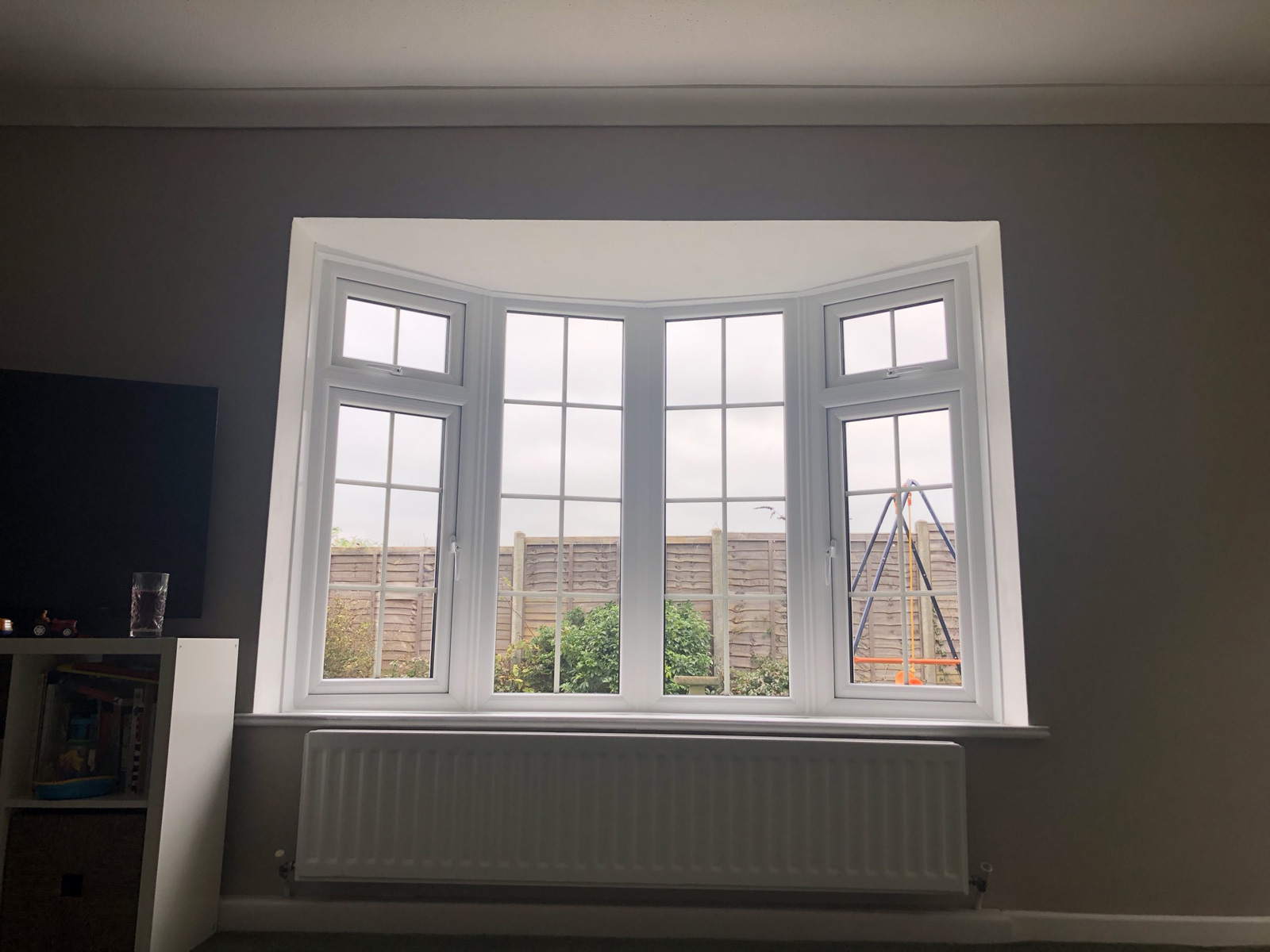
The completed bay window - a huge improvement in sound and thermal insulation
Phase 2 (March 2022): The Front Door — £1,250
Two months later, we replaced the front door. This wasn't about windows—it was about completing the thermal envelope at the main entry point.
What We Got
Rockdoor composite door: £1,250
- U-value: ≤1.4 W/m²K
- Security feature: Escutcheon fitted on inside (can unlock from inside without key—important for fire safety)
- Replaced old wooden door with significant draught issues
The Old Door Problem
The old wooden front door had two main draught sources:
- Letterbox: Just a hole through the door with only an external flap. No internal brushes or secondary barrier. You could place your hand near it in winter and feel cold air blowing in.
- Door gaps: Mainly around the lock edge where the door closed against the frame.
We'd temporarily mitigated this with ~£30 of measures: draught seal tape along the doorframe, a thermal curtain (installed by my father-in-law), and a wooden offcut trimmed to block the letterbox overnight. It worked well enough to tide us over until the Rockdoor replacement.
The new Rockdoor - secure, thermally efficient, and no more letterbox draughts
Phase 3 (November 2022): Complete Upstairs + Office — £2,100
Eight months after Phase 1, with our daughter now 6 months old, we completed the remaining upstairs windows and upgraded the office.
What We Replaced
- Office window: £733 (H119cm × W118cm—same size as daughter's bedroom)
- Bathroom window: (included in £2,100)
- Landing window: (included in £2,100)
Phase 3 Total: £2,100
Why These Rooms
Two priorities drove this phase:
1. Complete upstairs insulation before winter
By November, winter heating season was approaching. Finishing the bathroom and landing windows meant the entire upstairs floor was now fully double-glazed with modern windows. Heat would stay where we needed it most—in occupied bedrooms overnight.
2. Office comfort for remote work
We were working from home extensively. Upgrading the office window improved thermal efficiency and sound insulation in the space where we spent work hours. Quieter, warmer, more comfortable environment for focused work.
Installation Experience
Duration: 1 day
Much quicker than Phase 1—only three windows, smaller scope, same experienced team. In and out with minimal disruption.
The Inflation Penalty
Here's where phasing cost us:
Same window size, different price:
- Daughter's bedroom (January 2022): £544
- Office (November 2022): £733
- Increase: £189
Why? Material prices increased between rounds. Partly COVID-era supply chain disruptions, partly a requirement to add vents due to building regulation changes related to COVID ventilation guidance.
That £189 is the quantifiable penalty for phasing. There may have been other increases on the bathroom and landing windows too, but without identical comparison points, we can't isolate them.
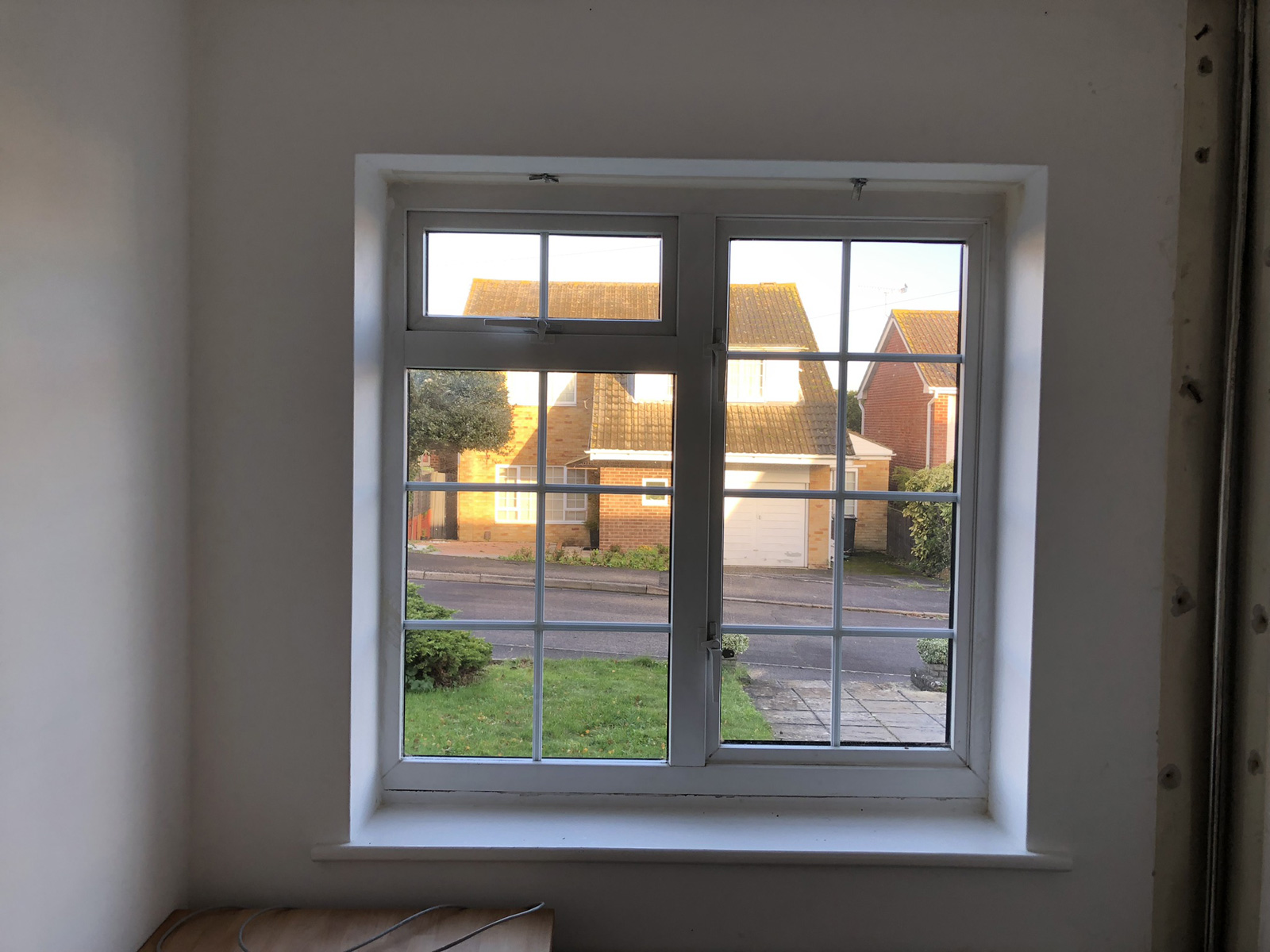
Office window before - same size as daughter's bedroom but cost £189 more due to inflation
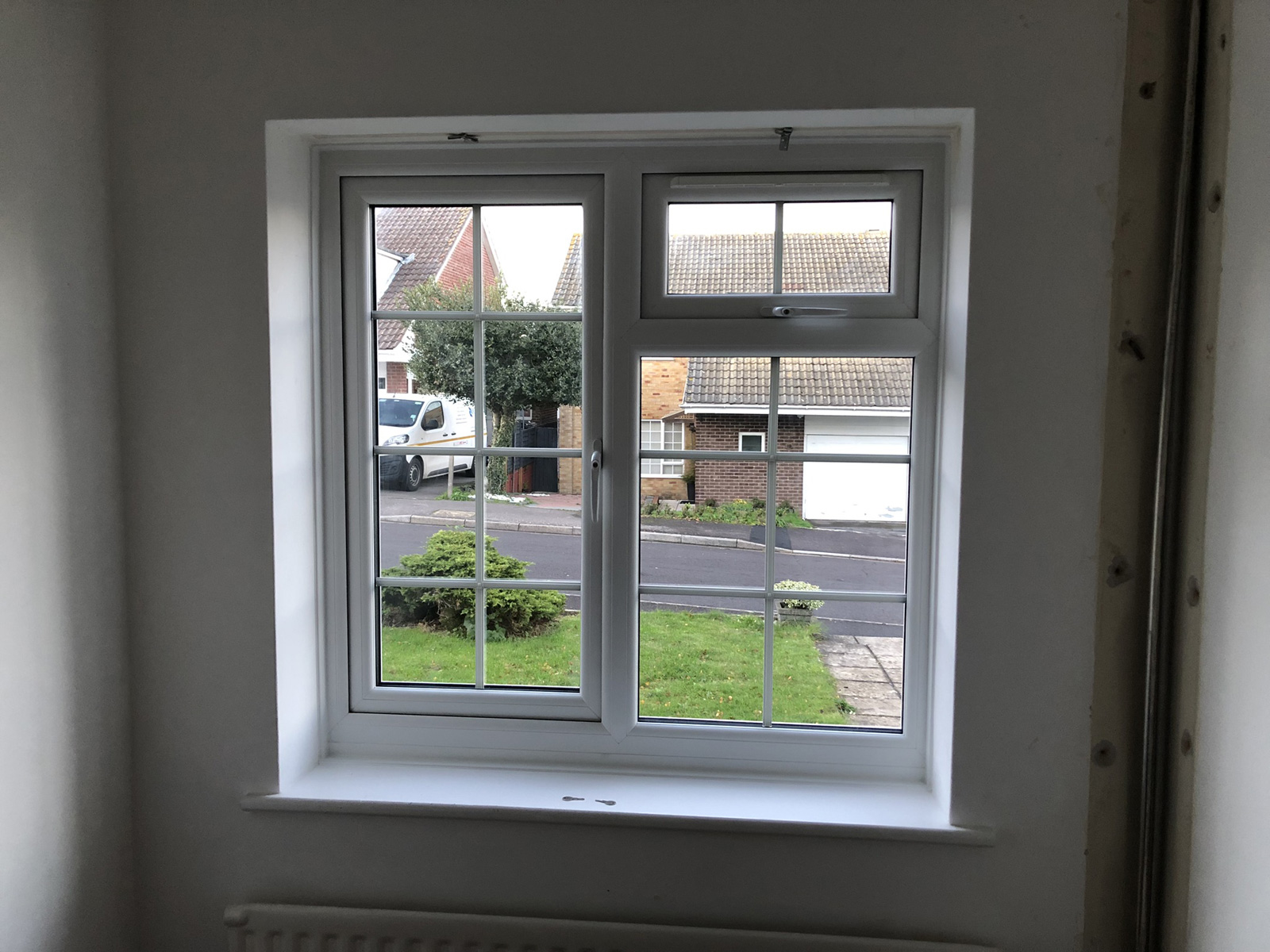
Office window after - quieter and warmer workspace for remote work
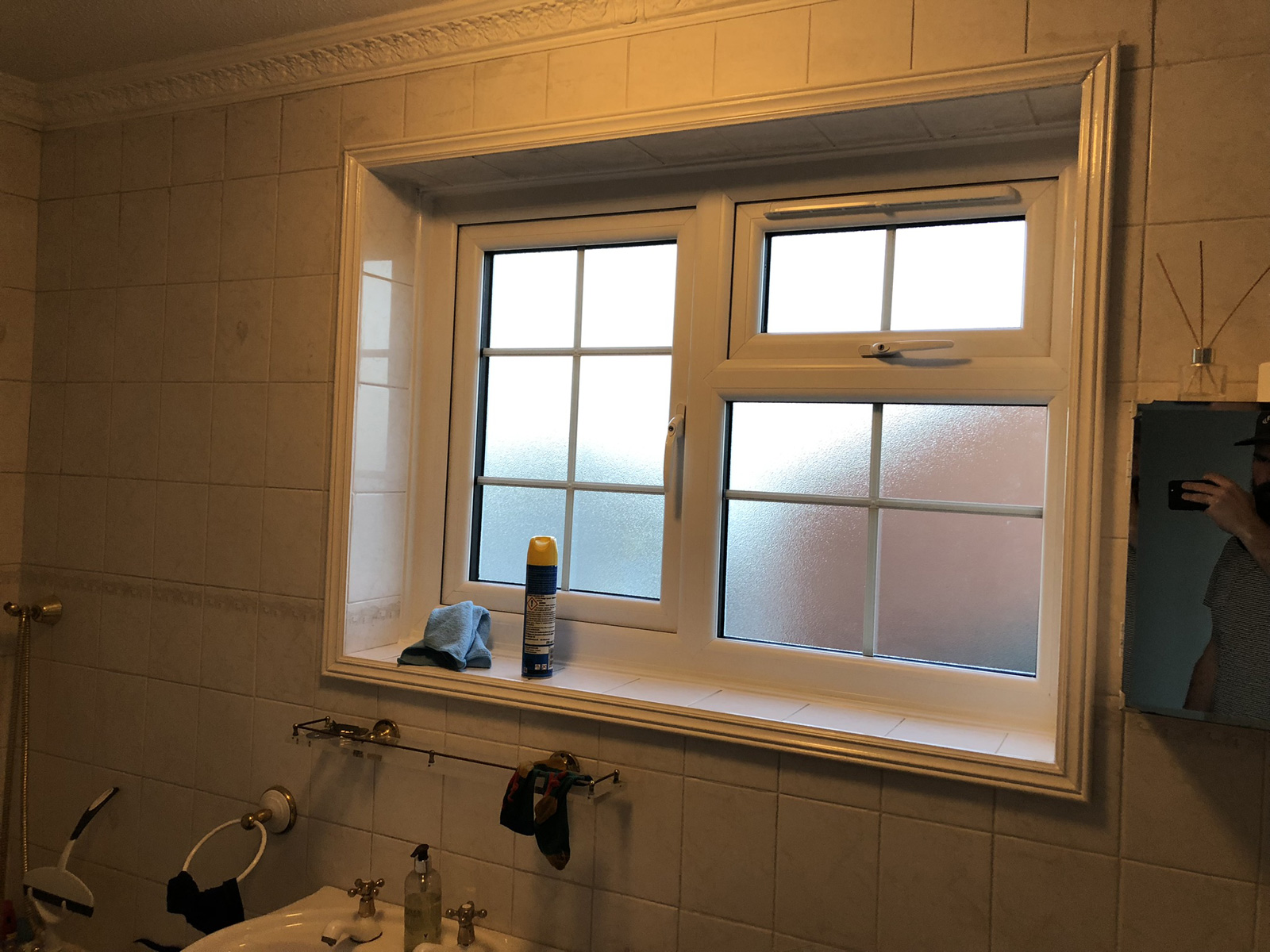
Bathroom window completed in Phase 3
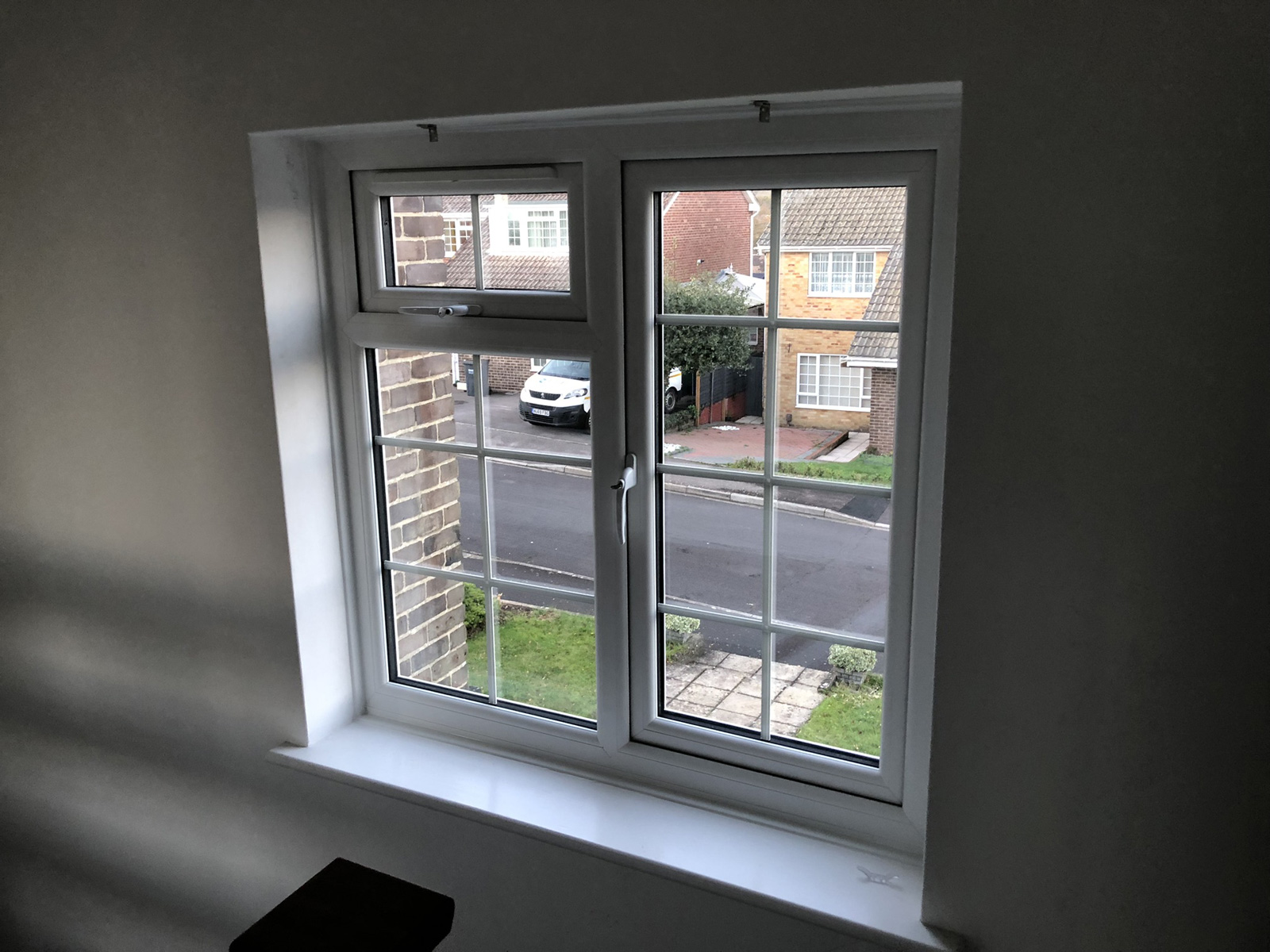
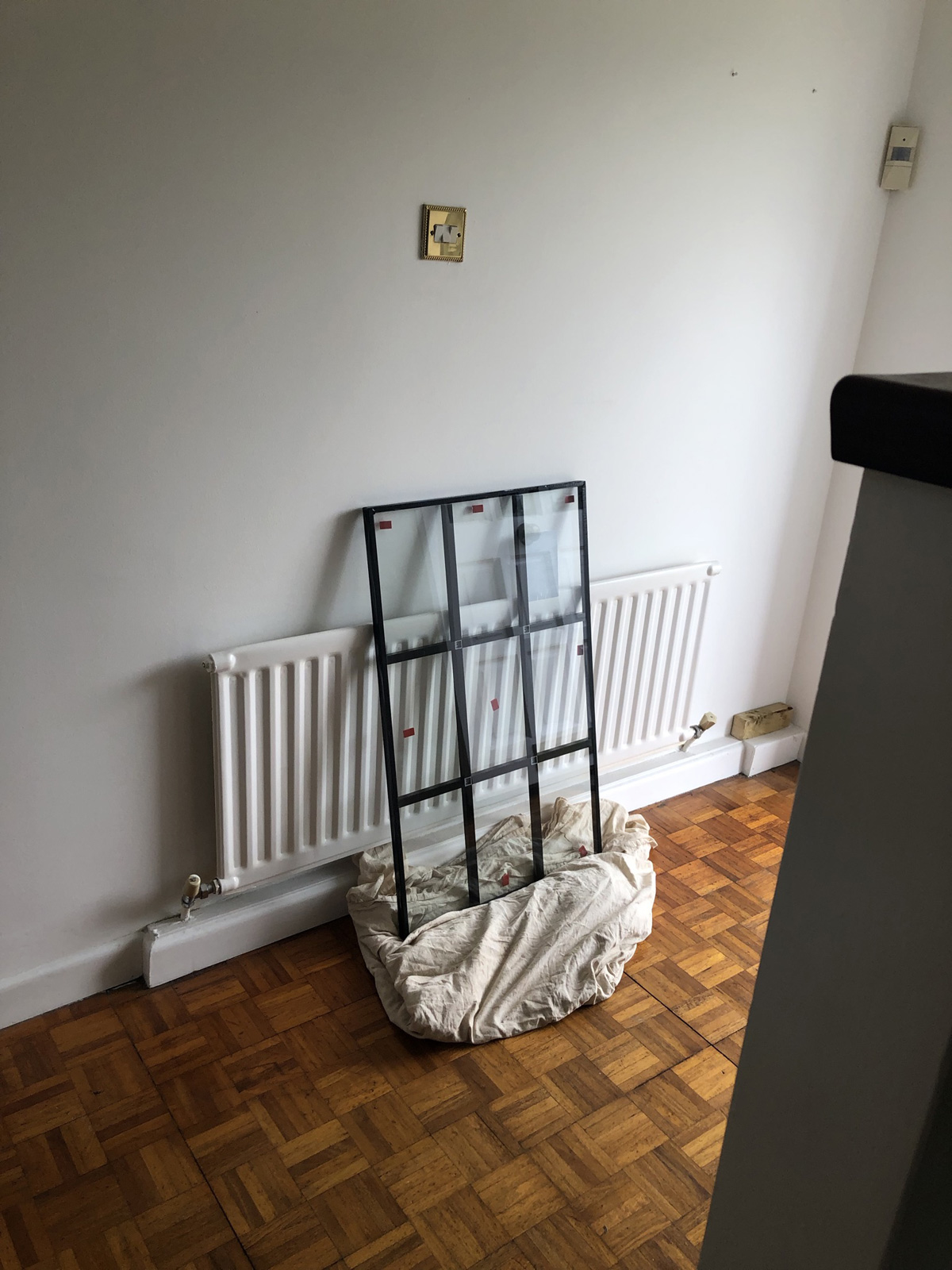
Landing window - completing the full upstairs before winter
Project Complete: £7,164 Total Across 3 Phases
Final breakdown:
- Phase 1 (January 2022): £3,814 — 4 windows + 1 door
- Phase 2 (March 2022): £1,250 — Front door
- Phase 3 (November 2022): £2,100 — 3 windows
Total: £7,164 for 7 windows and 2 doors
The Installer: 10/10 Would Use Again
We used a local firm (more accurately, regional—not strictly local but not a national chain). How did we find them? They were doing windows up the road. Seeing their work in the neighborhood gave us confidence before hiring.
Quality on the first round was excellent, so we had them back for rounds 2 and 3.
Four Issues, All Handled Excellently
Across three phases, four minor issues arose. What matters isn't that they happened—it's how they were resolved:
1. Bay window glass panel chip: The owner noticed a mark on the edge of the glass panel himself. He didn't wait for us to complain—he contacted the manufacturer directly and got a replacement. It wasn't up to his standard, so he took ownership to fix it.
2. Front door pull knob loose: The owner showed us how to tighten it with a concealed tiny allen key. Simple fix, and now we can maintain it ourselves.
3. Front door Georgian bars: The door's outer decorative bars were sealed with white silicone which looked obvious and messy against the black bars. The owner had it replaced with clear silicone for a proper finish.
4. Sticker residue on bathroom window: The team left some sticker residue. The owner popped round one evening personally with solution to clean it. Personal service rather than sending the installation team.
Overall assessment: 10/10 would use again.
Issues happened (they always do on projects like this), but the response was exceptional. The owner took personal responsibility, made proactive fixes without us having to chase, and showed genuine commitment to quality.
Energy Impact: 32.2% Combined Reduction
Here's the complexity: we can't isolate window impact alone.
Between January 2022 and January 2024, we completed:
- Windows (Jan-Nov 2022)
- Doors (March 2022, Nov 2022 side door)
- Additional loft insulation (middle section)
- Radiators with TRVs (December 2022)
All of these happened in overlapping timeframes. So the energy data shows combined impact:
Year 1 (post-loft, pre-windows): 18,539 kWh/year
Year 3 (post-radiators, pre-boiler): 12,562 kWh/year
Reduction: 5,977.65 kWh/year (32.2%)
Cost saving: £376/year at 6.29p/kWh
Windows contributed to that 32.2% reduction, but we can't say "windows alone saved X%." The improvements worked together as a system.
Retrospective: Would We Do It Differently?
The Credit Card Strategy We Didn't Use
Looking back, there's one approach we didn't consider: put the entire project on credit cards at the outset to lock in January 2022 prices for all phases.
Potential benefit: Avoid the £189 inflation penalty (plus any other increases on bathroom/landing windows)
Trade-off: Higher immediate debt vs. spreading financial burden
Would this have been better? Maybe. But hindsight is 20/20—we couldn't predict COVID-related material price spikes or vent regulation changes.
What We'd Ask Next Time
Price-lock option: If we were doing it again, we'd ask: "If we commit to all three phases now, will you guarantee prices for the later phases?"
Some installers might offer this. Some won't. But it's worth asking if you're planning phased work.
Would We Still Phase?
Yes.
The £189 penalty hurts to see quantified. But the cash flow breathing room during pregnancy, the ability to maintain reserves for unexpected baby expenses, the reduced financial stress during a major life transition—these had real value that doesn't show up in an invoice.
The timing worked out well too:
- Phase 1: All upstairs bedrooms comfortable before baby arrived (May 2022)
- Phase 2: Front door completed while baby was still small
- Phase 3: Office upgraded during heavy remote work period, entire upstairs sealed before winter
Budget constraints were real. Phasing was the practical decision given our situation. The room prioritization logic was sound—comfort where we'd spend time with a newborn, then complete upstairs before winter.
Lessons for Budget-Conscious Improvement Planning
Key Takeaways
1. Phasing has real trade-offs
Pro: Spreads financial burden, maintains cash reserves, reduces stress during major life events
Con: Exposes you to inflation risk, potential price increases between phases
2. Prioritize strategically
We prioritized rooms where we'd spend most time with a newborn, then completed upstairs before winter. Your priorities will differ—identify yours before deciding which rooms to do first.
3. Ask about price-lock options
If planning phased work, ask if the installer will guarantee prices for future phases if you commit upfront. Some may, some won't—but it's worth asking.
4. Consider credit card timing
If you have credit available, putting the full project cost on cards immediately might lock in prices while still giving you time to pay down over months. We didn't do this, but it's an option.
5. Installer quality matters more than price
We'd use our installer again without hesitation. Four issues arose, all handled excellently. Personal responsibility, proactive fixes, commitment to quality—these matter enormously on a multi-phase project.
Final Thoughts
£7,164 over 10 months. £189 inflation penalty. 7 windows and 2 doors replaced. Three phases timed around a baby's arrival.
Was phasing the optimal financial decision? No—doing it all at once in January 2022 would have saved £189 (at minimum).
Was it the right decision for our situation? Yes.
Personal finance isn't just about optimal spreadsheet outcomes. It's about balancing immediate affordability, cash flow management, life circumstances, and long-term goals. Phasing gave us breathing room when we needed it, allowed strategic prioritization of rooms that mattered most, and completed the work without derailing other plans or adding significant stress during pregnancy.
The sound improvement alone—going from "wind noise across rooms" to "barely noticeable"—was worth it. Add in thermal comfort, condensation elimination, and being part of our broader efficiency journey (loft, windows, radiators, boiler), and the investment makes sense.
Just ask yourself the price-lock question if you're planning phased work. That's the lesson we'd carry forward.