
Two years ago, every installer told me I needed at least 32kW. I bought the Vaillant Ecotech Plus 826 (26kW) instead. Here's what happened.
This is a comprehensive review based on two years of daily use, complete with energy consumption data, reliability assessment, and honest trade-offs. If you're researching the Vaillant 826 specifically or considering whether 26kW is enough for your home, this review covers everything I wish I'd known before buying.
What We're Reviewing
The Complete System
- Boiler: Vaillant Ecotech Plus 826 (26kW DHW, 19.8kW heating)
- Controls: VRT 380f thermostat + myVAILLANT gateway (VR940F)
- Outdoor Sensor: Glow-worm (£65-75 vs Vaillant VR20/VR21 £130-170, identical functionality)
- Installation: Father/son heating engineers (only team who supported 826 choice)
- Cost: £3,180 supply + install (Jan 2024), includes £200 discount for self-sourcing controls
- Warranty: 7 years extended via installer partnership
- Installation dates: Jan 16-19, 2024
House Context
- 1970s 4-bed detached house
- Loft insulated (350mm), double glazed
- Radiators oversized for low flow temperature efficiency
- Previous boiler: Potterton Netaheat 16-22kW (worked fine for decades)
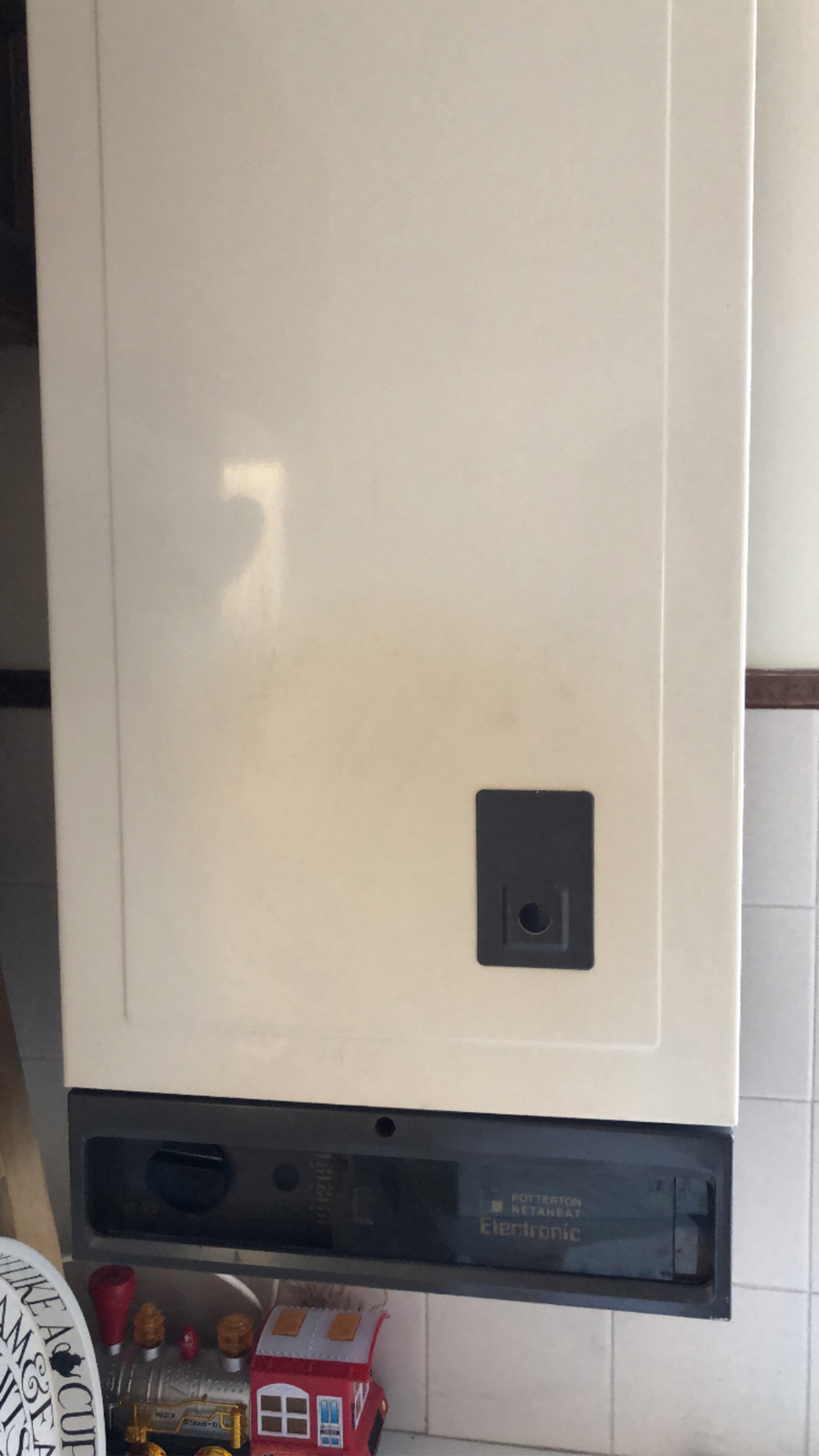

Why We Chose the 826 Over Installer Recommendations
Three installers came for quotes. All recommended a minimum of 32kW, with most suggesting 36-40kW. Their standard approach was to oversize to guarantee no undersizing complaints—it's a sound business strategy from their perspective.
Our Reasoning
1. Old Potterton was 16-22kW and handled the heating load fine for decades. Why would we suddenly need 32-40kW?
2. Modulation matters: The 826 modulates down to 2.5kW minimum, while the 840 only modulates to 4.5kW (80% higher minimum). In spring/autumn mild weather, the 826 runs continuously at low output while larger boilers cycle repeatedly, wasting energy.
3. Oversized radiators enable lower boiler output. We strategically sized radiators for 50°C flow temps vs traditional 70°C, allowing the boiler to operate at the sweet spot for condensing efficiency.
4. DHW adequate for our needs: 26kW maximum provides 12.4 l/min at 30°C temperature rise. With measured mains flow of 24 l/min, that's nearly 2× the flow rate the boiler needs.
Finding the Right Installer
The father/son team stood out because they didn't require risk disclaimers or "I told you so" warnings. The son was knowledgeable about smart controls (weather compensation, app control), which aligned perfectly with our efficiency strategy. Their 7-year warranty extension (from 2-5 years standard) showed confidence in both product and installation.
Installation Experience
Installation took place January 16-19, 2024. On Day 1, three installers arrived and offered to rush to finish in one day. I told them: "Take your time. We have heaters and an electric shower. We want the job done well, not corners cut."
Taking time enabled important discoveries:
- Kitchen door modification: Cut notch to slide out worktop
- Gas pipe discovery: Found the gas pipe had been reduced for the old boiler; connected to larger original pipe, undoing a previous bottleneck
- Overnight comfort: Connected boiler with basic heat overnight (no thermostat yet) to keep family warm between days
The boiler was already demonstrating intelligent operation overnight—modulating down as return temperature rose. Mains hot water worked well immediately, validating DHW performance from day one.
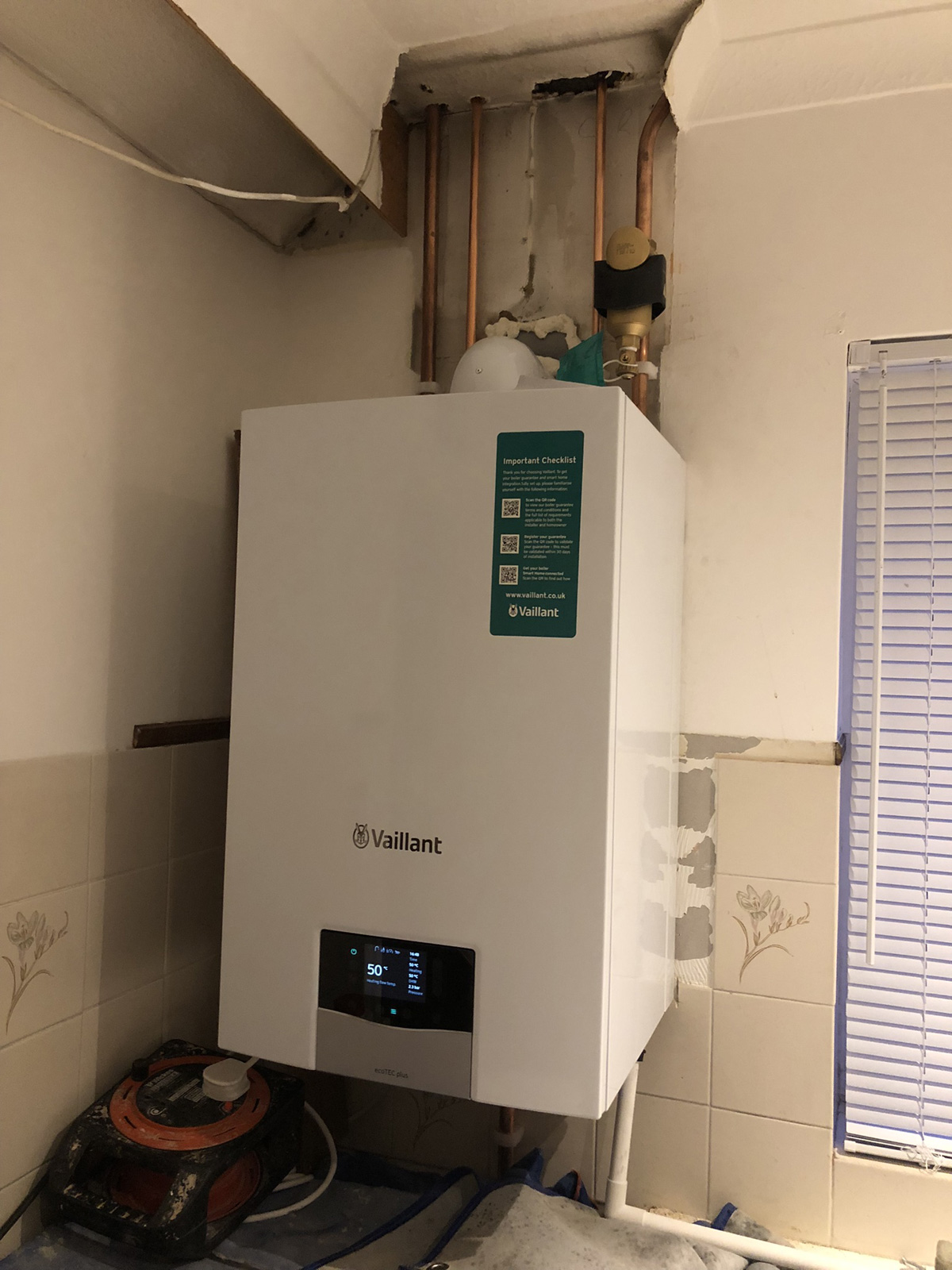

Controls Self-Sourcing Discount
I bought the gateway, H clip mounting bracket, and Glow-worm outdoor sensor separately for £294.53 total. The installer knocked £200 off the installation price for self-sourcing controls, making it a net £94.53 investment for exactly the controls I wanted.

Performance Data: The Numbers Don't Lie
I've tracked 54 months of gas consumption data from January 2021 to July 2025, covering the entire journey from loft insulation through radiator replacement, boiler upgrade, and optimization.
Energy Consumption Results
- Year 3 (pre-boiler): 12,562 kWh/year
- Most recent 12 months (post-boiler): 10,115 kWh/year
- Reduction: 2,447 kWh/year (19.5% total gas reduction)
Weather-Normalized Analysis
You can't compare years directly without weather adjustment. UK winters vary 20-30% in severity year-to-year. Using Heating Degree Days (HDD) data from Southampton:
- Weather-normalized heating improvement: 21%
- Summer improvement (DHW only): 37%
- Annual savings (boiler upgrade alone): £154/year @ 6.29p/kWh
- Total savings vs Year 1 baseline: £530/year (includes all improvements)
Real-World Validation
Every installer who recommended 32-36kW was wrong about our specific situation. The data proves a research-driven approach beat industry convention.
Flow temperatures run in the high 20s to low 30s°C (vs 60-70°C conventional), maintaining maximum condensing efficiency. Weather compensation automatically adjusts before we feel cold. The 826's excellent modulation works perfectly with the oversized radiators and low flow temperature strategy.
Smart Controls & Daily Experience
I use the myVAILLANT app almost daily. It's not over-complicated or gimmicky—the features provide genuine practical value.
What We Actually Use Daily
- Outdoor temperature monitoring: Check from app without going outside
- Schedule adjustments: Override when plans change
- Remote control: Adjust when away from home
- System status: Peace of mind when on holiday
- Room monitoring: Integrated with SwitchBot Meter Plus devices for individual room temps
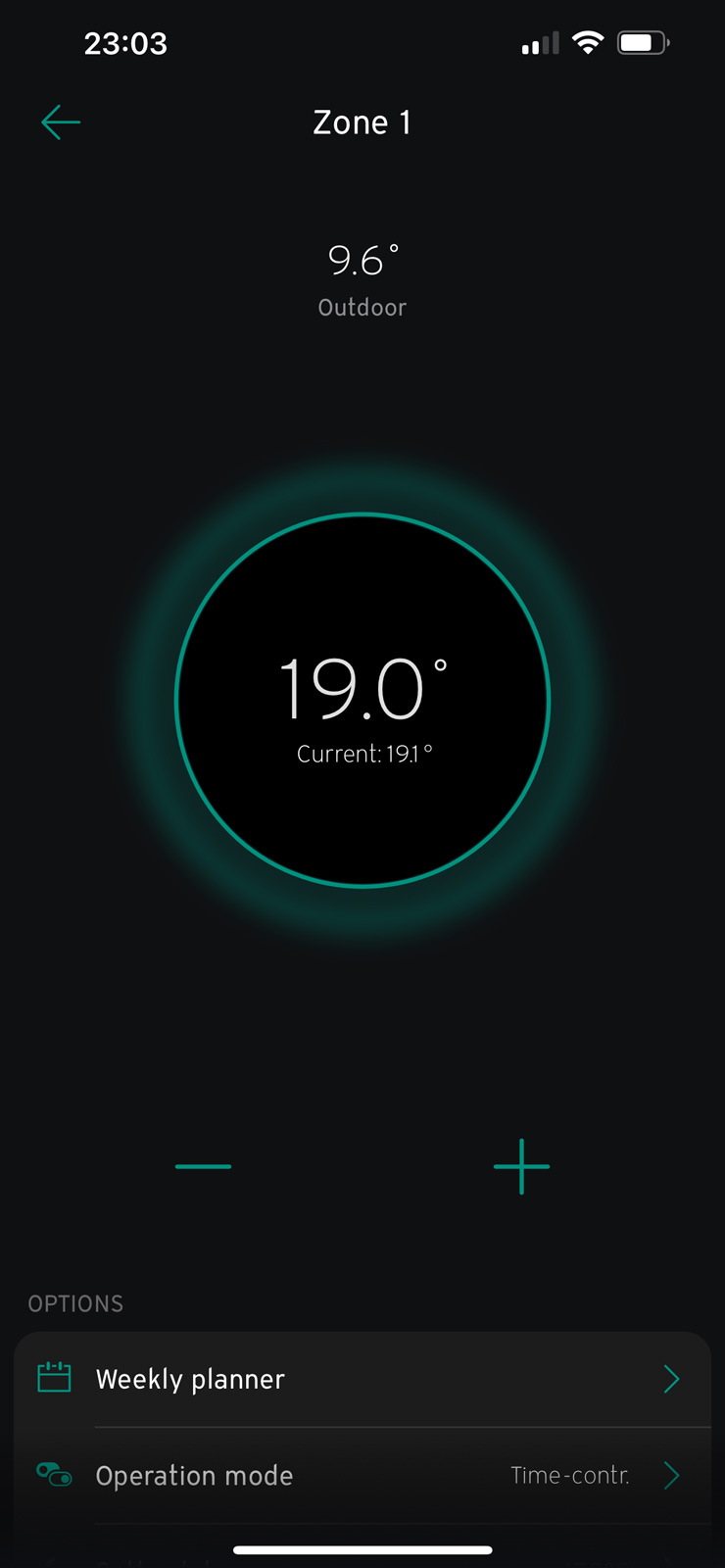
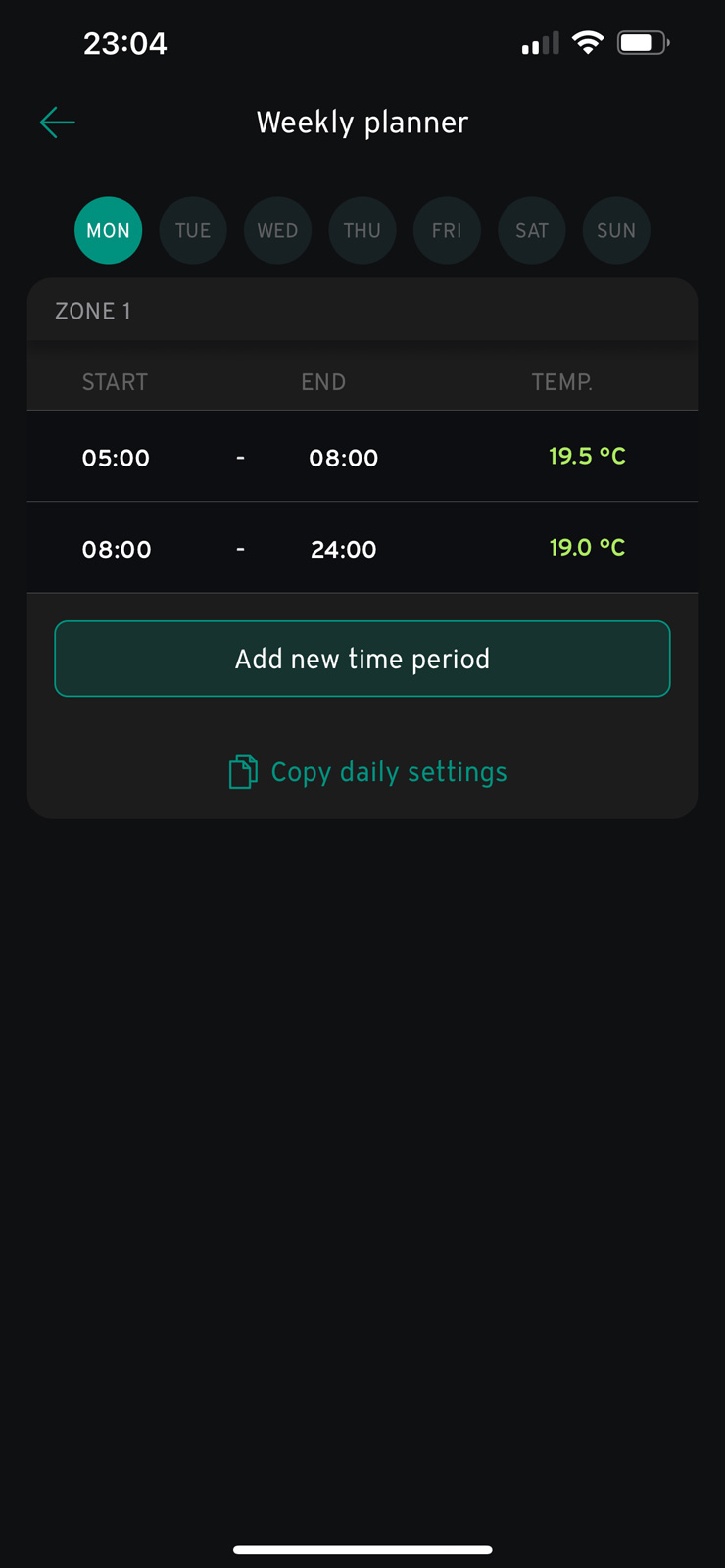
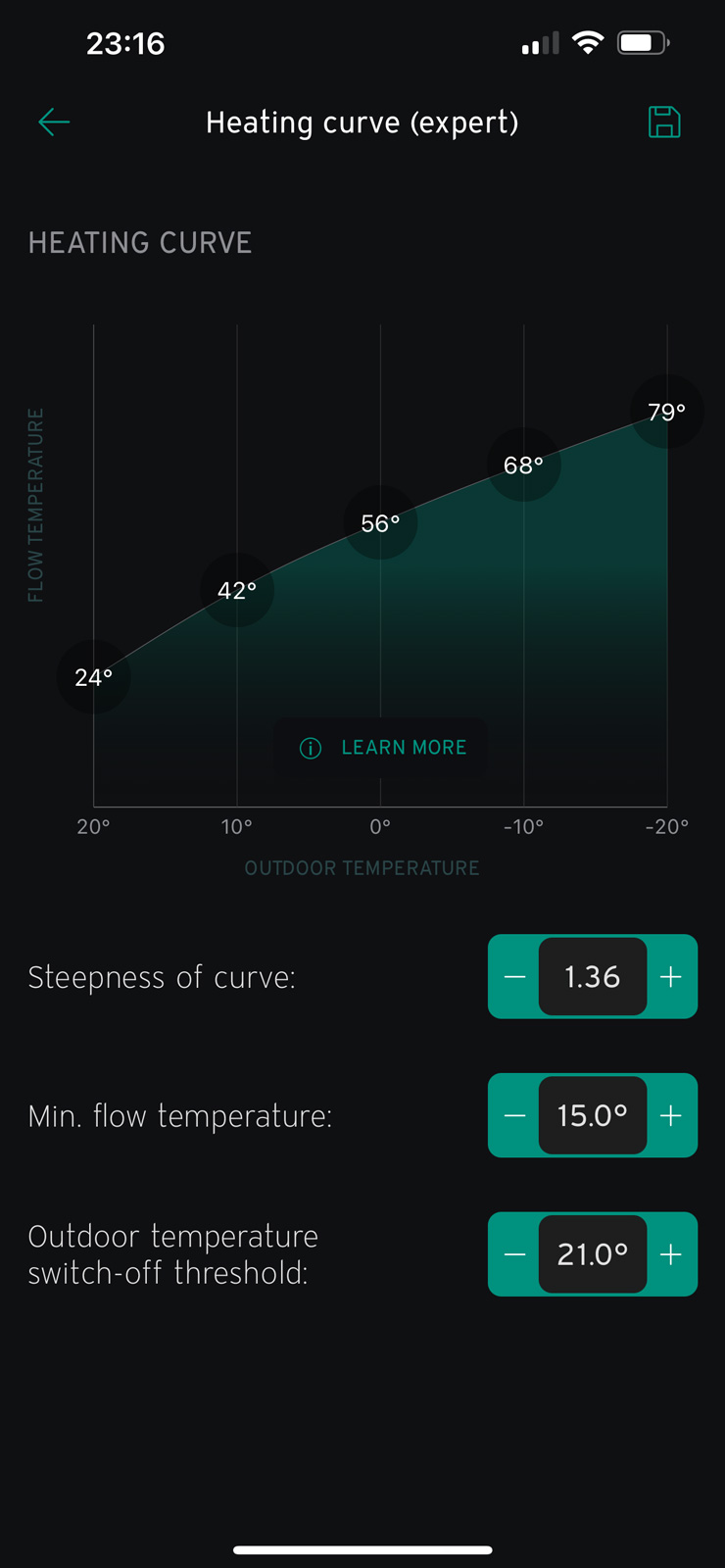
Weather Compensation in Action
The outdoor sensor + heat curve enables automatic adjustment—the boiler anticipates cold weather before you feel it. I think of it as the "slow cooker" philosophy: low and slow beats high and fast. No more thermostat battles.
My temperature scheduling strategy is moderate: 18-18.5°C baseline when out, small increases to 19°C when home. I don't fight weather compensation with extreme schedules—let the system work proactively rather than reactively.
The App Issue We Discovered
CRITICAL: The myVAILLANT app keeps auto-changing the heat curve setting. I optimized it to 1.13 through weeks of testing, then watched it climb: 1.21 → 1.36 → 1.39. This undermines optimization work.
Advice: Check your heat curve settings regularly. Don't assume the app respects your manual adjustments.
Quality of Life Trade-Offs
The kitchen is colder on winter mornings when heating has been off overnight. This is proof of efficiency—the old Potterton got hot, had scorch marks, and wasted heat into the kitchen. The new boiler doesn't waste heat anywhere. Efficiency means less waste heat, which is GOOD. Simple workaround: prop the door open when heating comes on.
Reliability & Maintenance
Zero issues since installation, approaching 2 years of operation. No breakdowns, no repairs needed, no unexpected problems. Rock solid reliability.
Servicing
- First service: Included in installation price (no fee)
- Second service: Due soon (annual servicing standard for warranty)
Warranty Coverage
The 7-year warranty via installer partnership is significantly better than standard Vaillant coverage (2-5 years depending on registration). The installer's participation in the approved installer scheme showed their confidence in both product and their installation quality.
Build Quality
Solid construction throughout, controls responsive and intuitive, no cheap plastic feel. Professional-grade components. Proper installation by a quality team equals reliable operation—no shortcuts means no problems later.
What We'd Change or Do Differently
What We Got Right
- ✅ Research-driven sizing decision (826 validated by data)
- ✅ OEM controls instead of 3rd party (Nest/Hive would dumb it down)
- ✅ Weather compensation outdoor sensor
- ✅ Self-sourcing controls for £200 discount
- ✅ Finding installer who supported our approach
- ✅ 7-year warranty extension
What We'd Change
- Monitor heat curve more closely from start: The app issue was only discovered months later
- Document first week impressions better: Would help others understand the learning curve
Nothing major—the system is performing as hoped.
For Others Considering the 826
The 826 works brilliantly IF you have:
- Well-insulated home
- Oversized or adequately-sized radiators
- Willingness to optimize controls
- Realistic DHW expectations
Don't fight your installer without research. Find an installer who'll support your approach. The 7-year warranty extension is worth seeking out.
Alternative Boilers Considered
I watched countless unboxing and installation videos across multiple manufacturers. "It was all confusing at first"—it took time to understand the market.
Viessmann
Why considered: Excellent reputation, German engineering
Why rejected: Very few local installers familiar with them. Installer availability matters for service and warranty work. The risk of callbacks from unfamiliar installers wasn't worth the potential quality gain.
Worcester Bosch
Industry standard, widely installed, reliable reputation. Vaillant's controls and warranty offering won out.
Why Vaillant Won
- 7-year warranty extended via installer partnership
- Hydrogen-ready: Future-proofed for hydrogen conversion
- OEM controls superior: 3rd party controls (Nest, Hive) dumb down boilers—they can't access modulation unless protocols align perfectly, losing the efficiency benefits you paid for. Vaillant is known for excellent OEM controls.
- Excellent reliability validated by our 2-year experience
- Local installer expertise: Father/son team knew them well
The Verdict: Would We Choose Vaillant Again?
Short answer: Yes, absolutely.
Why We're Happy With the Choice
✅ Controls work as intended. Weather compensation performs exactly as promised. App daily usage proves practical value. Smart features aren't over-complicated.
✅ Reliability excellent. Zero issues approaching 2 years. No regrets about sizing choice. Validates research-driven decision.
✅ Efficiency validated by data. 21% heating improvement (weather-normalized), 37% summer improvement, £154/year savings. Real-world performance matches theory.
✅ 826 sizing vindicated. Every installer was wrong about needing 32-36kW. The 26kW is adequate for heating, 19.8kW excellent for modulation. Mild weather performance superior to larger models. Right-sizing enables efficiency.
✅ Smart features worth the investment. Used daily, not gimmicks. Weather compensation is a game-changer. App control practical, not over-engineered.
✅ 7-year warranty provides peace of mind. Extended via installer partnership shows manufacturer confidence and reduces long-term risk.
The Reality Check
- Kitchen colder (proof of efficiency, not a problem)
- App auto-changing heat curve (monitoring required)
- Takes weeks to optimize (iteration needed)
- Not plug-and-play perfection
For Whom This Boiler Works
- Research-driven homeowners
- Well-insulated properties
- Those willing to optimize controls
- Value efficiency over raw power
- Can find supportive installer
For Whom It Might Not Work
- Want simple on/off control
- Need maximum DHW flow rates
- Can't find installer to support right-sizing
- Unwilling to iterate on settings
Key Specs Summary
Vaillant Ecotech Plus 826
Specifications
- Heating output: 19.8kW maximum
- DHW output: 26kW maximum
- Modulation: 2.5kW - 19.8kW
- Flow rate: 12.4 l/min at 30°C rise
- Efficiency: ErP A-rated
- Hydrogen-ready: Yes
Our Setup
- Warranty: 7 years (via installer)
- Installation: £3,180 (Jan 2024)
- Controls: £294.53 (self-sourced)
- Thermostat: VRT 380f
- Gateway: myVAILLANT VR940F
- Outdoor sensor: Glow-worm
Our Performance Data (2 Years)
- Gas reduction: 19.5% total, 21% heating (weather-normalized)
- Annual savings: £154/year @ 6.29p/kWh (boiler upgrade alone)
- Reliability: Zero issues in 2 years
- Daily app usage: Yes
- Would buy again: Absolutely
Final Recommendation
The Vaillant Ecotech Plus 826 is an excellent choice IF you:
- Do your research on sizing
- Commit to optimizing the controls
- Find an installer who supports your approach
- Have realistic expectations about the learning curve
Two years in, we'd make the same choice again. The data doesn't lie—research-driven decisions can challenge installer convention and win.