Why This Article Exists
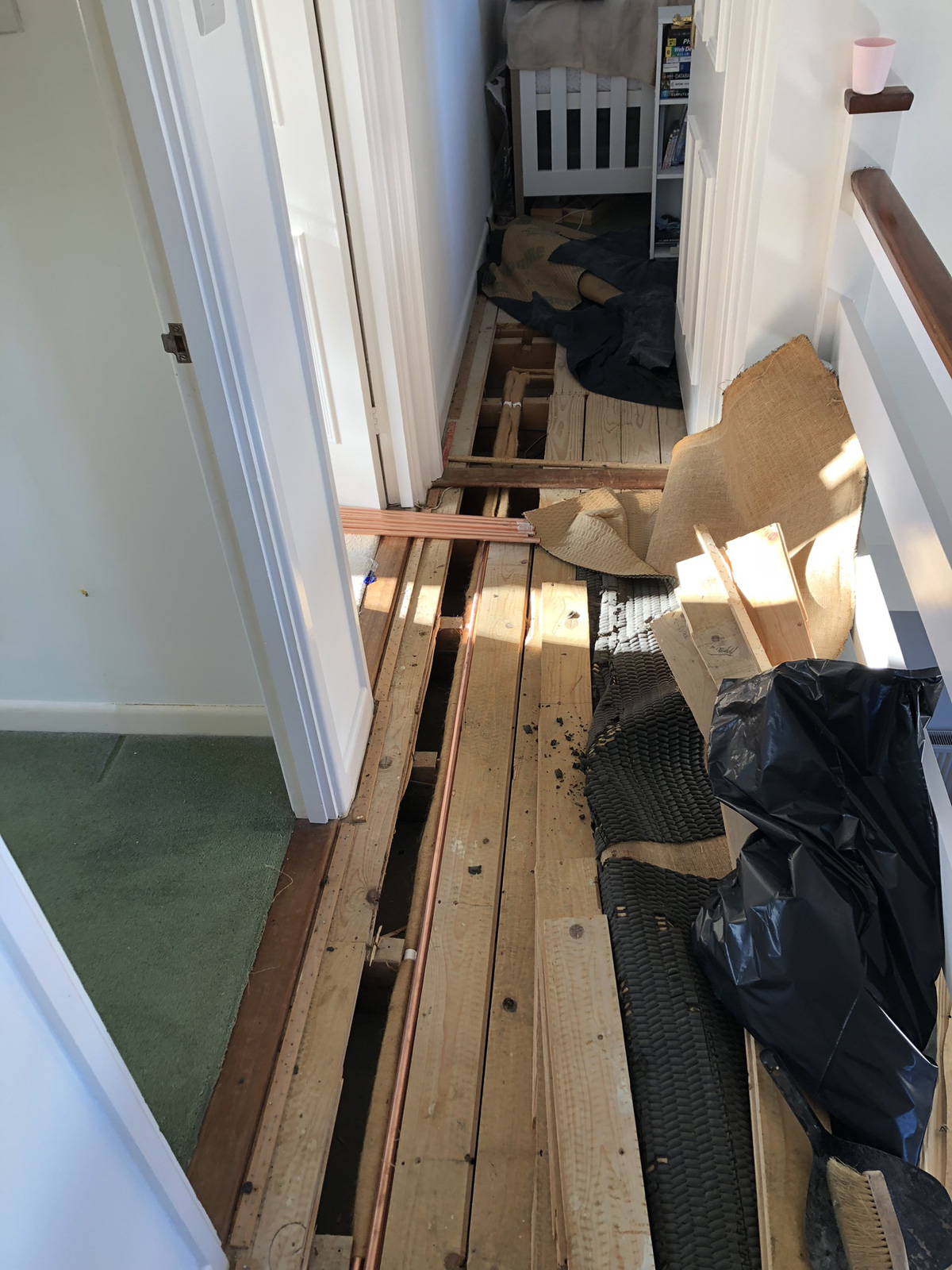
Most renovation articles sanitize the mess. They show clean success stories or pure how-to guides. They don't discuss wet vac disasters spraying black water on white walls. They don't talk about trust issues with tradespeople when personal connections complicate professional clarity. They skip the human reality.
This article doesn't. This is the version Pinterest doesn't show—the messy truth of £2,406.48 spread across radiators, plumber labor, gas valves, and Sentinel products, where both sides ended up doing extra work beyond the original scope and the strategic sequencing was right even though the process was chaotic.
The Decision: Replace ALL Radiators Before Decorating
The house is from the 1970s with dated decor and electrical work that needed attention anyway. The logic was straightforward: do disruptive work FIRST.
Don't replace carpets, then lift them for pipework later. Don't redecorate, then damage walls for radiator installation. Get the messy infrastructure work done, THEN make it pretty.
The timeline:
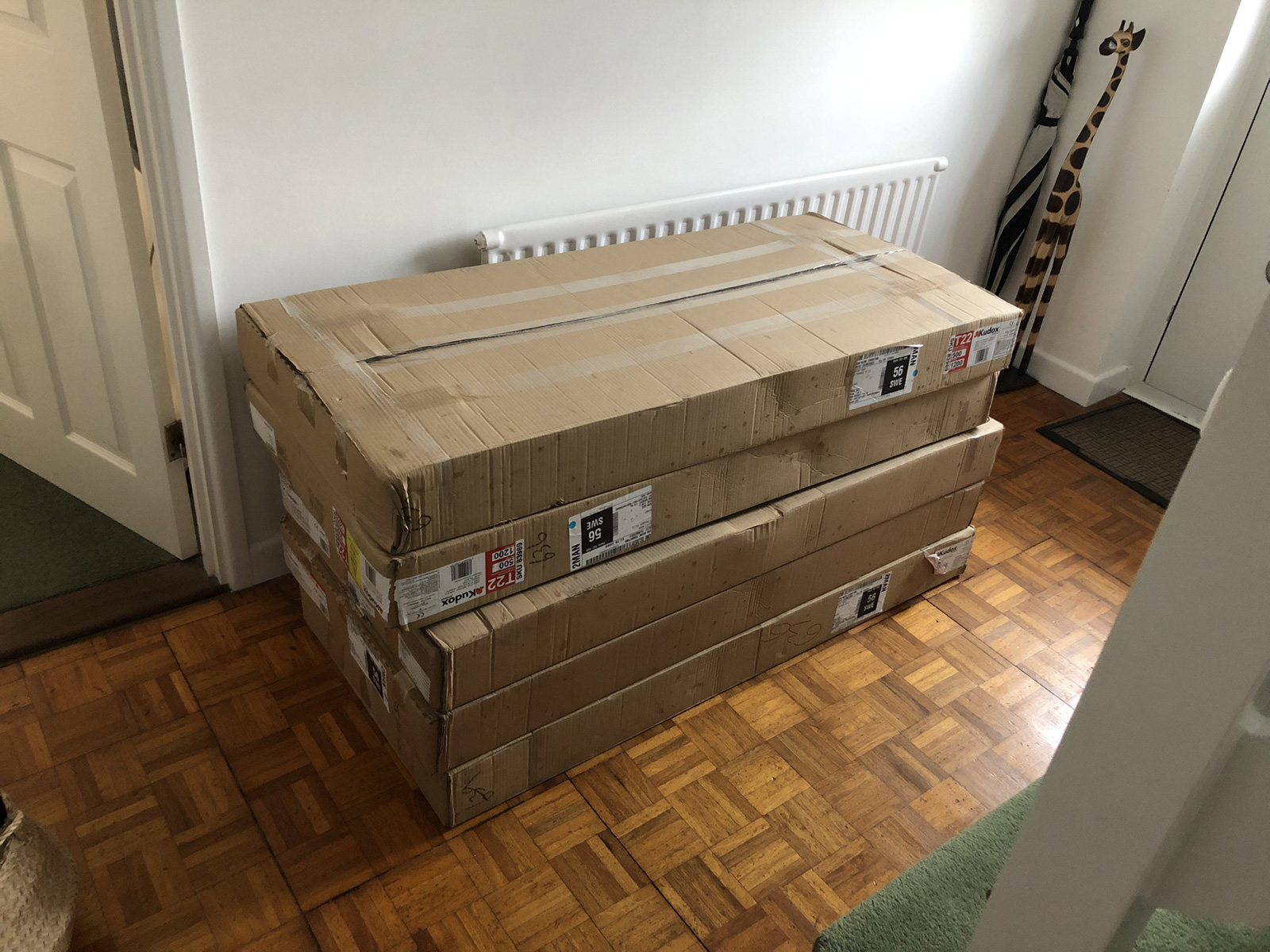
- August 2022: Radiators arrived
- September 2022: Asbestos discovered while planning
- November 2022: Asbestos professionally removed
- December 2022: Central heating replacement
The asbestos discovery validated this approach. If we'd already redecorated and then discovered asbestos during future work, we'd have damaged fresh decorations for the removal. Strategic sequencing: exploratory disruptive work first, aesthetics last.
The Plumber: Personal Connection, Professional Complications
The plumber was my wife's colleague's husband. Ex-British Gas, established independent. Found through personal connection rather than formal quotes.
The Quote and the Reality
Initial quote: £1,500 labor. This included replacing all pipework. He thought the 1970s copper shortage meant limited pipework to replace—maybe some compression fittings but mostly copper.
Reality discovered: Truwel pipes throughout. Truwel was a 1970s alternative to copper during the shortage. Much more work than anticipated.
The Video That May Not Have Played
I sent a video showing the extent of Truwel pipework. The video initially appeared not to play for him. Later in the project, he mentioned "looking at the video again"—suggesting it DID eventually play. But the timeline was unclear: did he see it before quoting or only later?
This uncertainty created trust questions that surfaced later. When you're dealing with your wife's colleague's husband, these questions get complicated. Social consequences layer over professional concerns.
The Final Payment
Final payment: £1,530—same as the quote, despite scope changing for both of us. I ended up hanging all 10 radiators after he taught me on the first one (more user work than planned). He ended up replacing far more pipework than anticipated (more plumber work than planned).
It evened out without formal negotiation. Whether that's fair depends on your perspective.
The Radiator Specifications: Strategic Oversizing
10 radiators from two suppliers: 6 from Screwfix (incredible deal pricing), 4 Kudox Premium from ToolStation. All strategically oversized to enable 50°C flow operation versus traditional 70°C. This works with weather compensation and a right-sized boiler for maximum efficiency.
Total radiator cost: £682.03
The Screwfix "Great Deal" (6 radiators - £238.33 total)
- 5× Type 22 500×1200mm @ £36.99 each inc. FREE TRV & lockshield - 6169 BTU each
- Office
- Daughters bedroom
- Living room main wall
- Dining room
- Hallway
- 1× Type 22 500×500mm @ £53.38 inc. FREE TRV & lockshield - 2571 BTU
- Sons bedroom
The ToolStation Kudox Premium Radiators (4 radiators - £443.70 total inc. valves)
- 2× Type 11 500×1800mm @ £99.74 each (inc. valves) - 4998 BTU each
- Master bedroom
- Guest bedroom
- 1× Type 21 500×900mm @ £85.96 (inc. valves) - 3532 BTU
- Landing - replaced 826 BTU radiator (4× increase)
- 1× Type 22 400×1600mm @ £158.26 (inc. valves) - 6783 BTU
- Living room bay window - half-height for clearance
What wasn't replaced: Kitchen (T21 radiator under tiled floor, saving for future renovation), downstairs bathroom (under tiled floor), and upstairs bathroom (under tiled floor).
Why These Sizes
I took a pragmatic approach: measured existing radiators, ensured all replacements were BIGGER. Not full heat loss calculations (too complex for DIY), but systematic increases focused on enabling 50°C flow temperature capability.
The old radiators lacked convector fins—they got hot but didn't heat rooms efficiently. The new radiators have convector fins (Type 11, 21, 22 classifications indicate panel and convector configurations), dramatically improving heat distribution.
Learning to Hang Radiators: The Mentorship
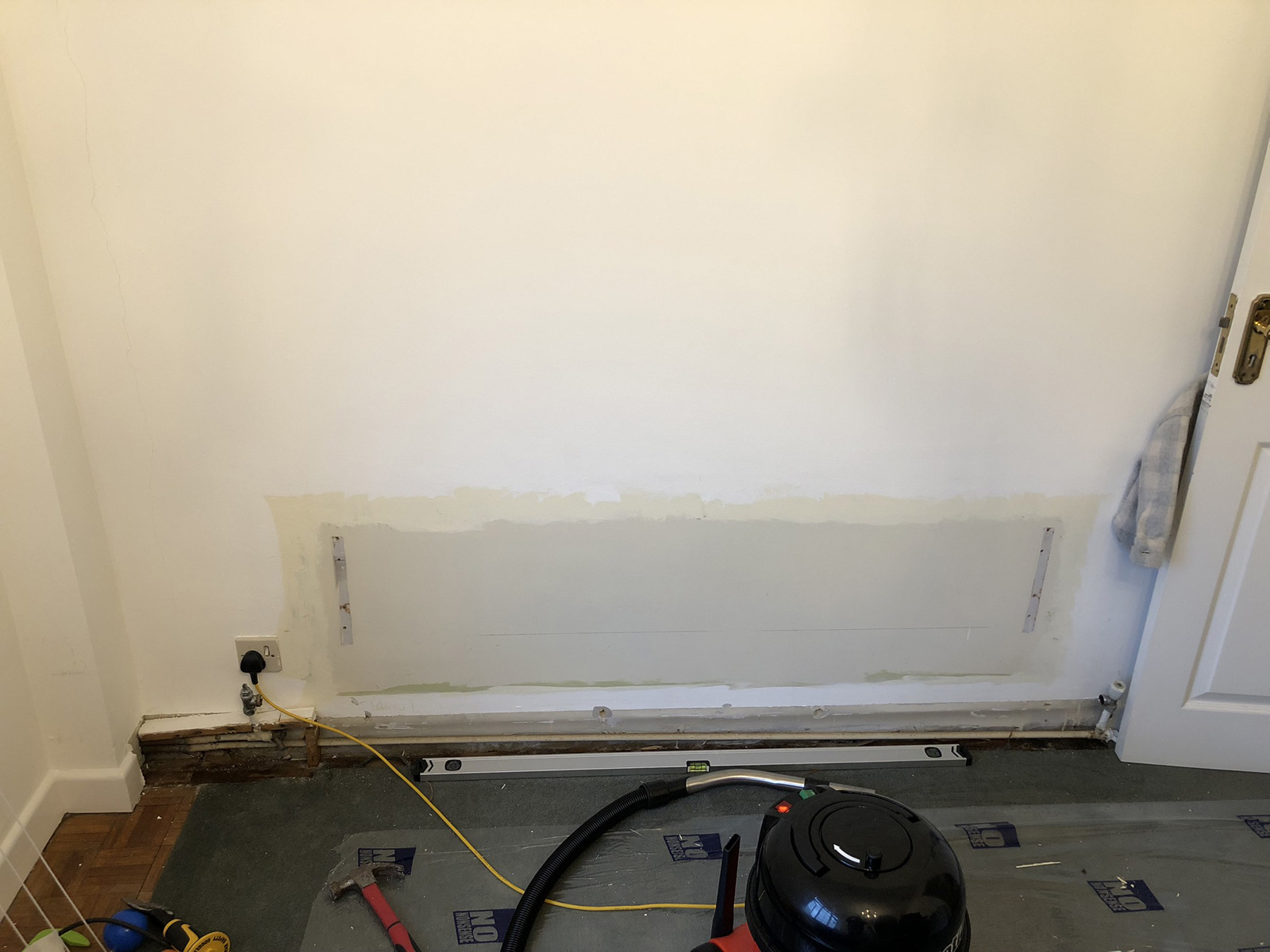
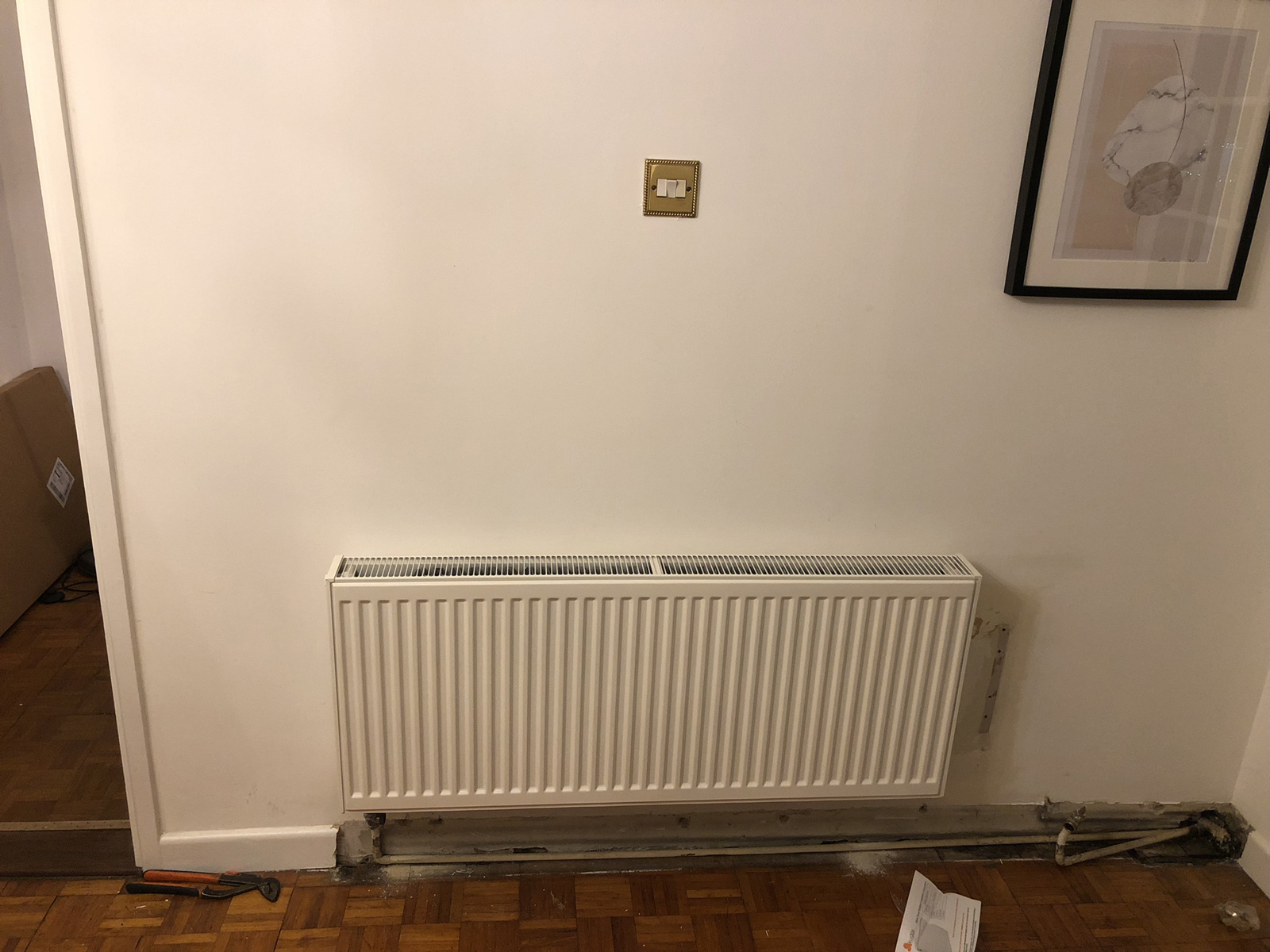
The original scope had the plumber hanging radiators—quote included installation. What actually happened: he taught me on the first radiator, then I hung all 10 myself.
The Teaching Moment
He worked through the first radiator with me, showing tips and techniques. Demonstrated how to get it right. Gave me confidence to attempt the rest. This was mentorship, not exploitation—a valuable part of the experience despite the confusion about scope.
The Process
Once I understood the method, each radiator took 5-15 minutes to hang (after being taken off the wall). Time depends on weight and size—don't rush, but it doesn't take long.
The step-by-step:
- Calculate bracket height based on radiator specs
- Mark center point and vertical line
- Calculate bracket spacing
- Mark horizontal level
- Fix brackets with spacers (walls rarely perfectly flat)
- Install rubber bits on brackets
- Sit radiator on brackets
Tools needed: Drill, masonry bits, rawl plugs, long and short levels, pencil, screws, variety of spacers for uneven walls.
Room-Specific Challenges
Most Complex Plumbing - Son's Bedroom: Pipework came in from the landing, split off into rooms either side, and dropped down into the dining room below. Multiple pipe routes made this the most complex plumbing work. But light furniture meant easy access—easiest furniture logistics.
Most Challenging Physically - Master Bedroom: Large, heavy furniture hard to move. Made moving in and out tight. Physically demanding to create workspace. But simpler plumbing than son's bedroom.
The interesting contrast: complexity comes from different sources. Son's bedroom = technical challenge, easy access. Master bedroom = physical challenge, simple plumbing.
The Wet Vac Disaster
During pipework replacement, the system needed draining. Radiator liquid needed removing. I had a wet vac ready.
Then the plumber isolated the wrong pipe into the loft. When he disconnected another pipe, radiator liquid gushed out of ALL pipes where radiators had been disconnected.
The Fortunate Preparation
Upstairs, I'd placed cups beneath pipes. Smart anticipation—saved the carpet. Contained most of the flow.
The Unfortunate Reality
Downstairs: parquet floor above concrete got wet from dripping through. Not catastrophic, but not ideal. Wood floor above concrete poses potential issues.
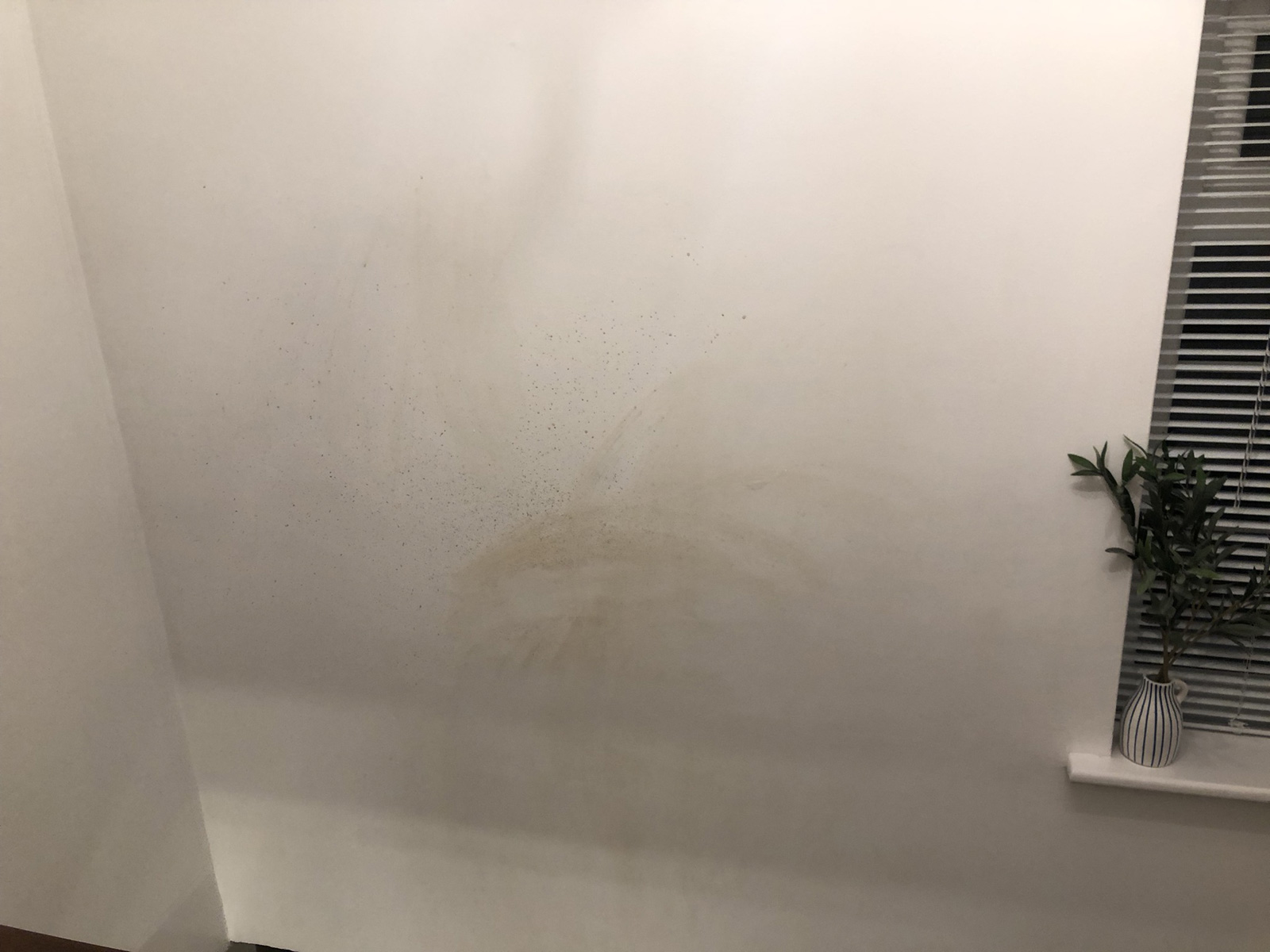
The wet vac filled up quickly from the gushing, then sprayed over the landing wall. Black radiator water on white walls. More mess to clean, more repainting needed.
Even experienced plumbers make mistakes. Isolated wrong pipe = cascading problems. Preparation helped, but you can't prepare for everything.
This is the messy reality renovation blogs don't show.
The Trust Issue: Pipework Routing
The dining room had boxing around pipes. The plumber didn't want to replace the pipe in that boxing. When I pressed, the conversation shifted to how he couldn't reuse existing copper pipes elsewhere.
I felt this was deflection. Was the routing chosen for his convenience or technical necessity? The doubt lingered.
The Internal Conflict
He was doing good work overall. Personal connection (colleague's husband). Scope changing both ways. But questioning: was I being taken advantage of? The balance: trust vs. question. When to speak up vs. let it go.
I chose not to challenge. Too close to completion. Relationship with wife's colleague to consider. Pick your battles. Final payment same as quote (£1,530). Both sides did extra work. Evened out in the end.
The Lingering Question
Would direct conversation have been better? Or would it have damaged relationships? The trade-off: social harmony vs. assertiveness. This is real-world complexity, not online advice simplicity.
The Additional Costs
Beyond plumber labor (£1,530) and radiators (£682.03):
- Gas Valve: £170.20 total (£98.20 part, £72.00 fitting) - required for boiler upgrade compatibility
- Sentinel Products: £24.25 - X800 cleaner (flush system before new water) and X100 inhibitor (protect fresh pipes from corrosion)
I purchased and added Sentinel products myself. The plumber wanted to wait until after Christmas for inhibitor. I didn't want fresh copper corroding while waiting.
Total Project Cost: £2,406.48
What this doesn't include: temporary electric heaters, repainting landing wall (wet vac spray damage), time spent balancing system, my labor hanging radiators and flushing/balancing, stress and coordination.
The Balancing Process
Balancing adjusts radiators so all rooms heat evenly—prevents some rooms overheating while others stay cold. Uses lockshield valves (hidden side of radiator).
The Method
- Heat system fully
- Feel each radiator
- Identify hottest radiators (closest to boiler)
- Restrict flow slightly to hottest
- Allow more flow to coldest
- Wait, observe, adjust again
- Repeat until balanced
This can be done incrementally—not all at once. Living with the system while adjusting. Notice which rooms lag or overshoot. Make small adjustments. This is ongoing maintenance, not one-time task.
Radiator Key (Keyring Attachable)
Keep a radiator key on your keyring for bleeding radiators and adjusting valves. Small tool, always available.
As an Amazon Associate, I earn from qualifying purchases at no extra cost to you.
The Results: Was It Worth It?
Energy Efficiency
Can't isolate radiator replacement alone—it's part of a complete system upgrade. Year 1 post-loft baseline: 18,539 kWh/year. Final (Year 5): 10,115 kWh/year. Total reduction: 45.4% (all improvements combined). Radiators + boiler + heat curve = synergistic effect.
The Strategic Sequencing Payoff
- ✅ Disruptive work done first
- ✅ Asbestos discovered and removed
- ✅ New radiators in place before boiler upgrade
- ✅ Ready for right-sized boiler (826)
- ✅ Enabled heat curve optimization
- ✅ Future kitchen renovation won't disturb heating
The Human Cost
Stress during installation. Communication tensions. Trust questions. Time spent learning. But also: new skills acquired. Mentorship relationship. Deeper system understanding.
Would Do Again?
- The outcome: Yes
- The process: With changes
- The plumber: Uncertain (colleague's husband complicates)
- The DIY element: Definitely (hanging radiators was valuable learning)
- The timing: Christmas pressure wasn't ideal
- The sequencing strategy: Absolutely right
Lessons Learned: What I'd Do Differently
Communication
- Address video issue immediately (played or didn't play?)
- Ask direct questions about routing decisions
- Don't let social connection prevent professional discussion
- Clear scope documentation (both sides doing extra = unclear expectations)
- Regular check-ins about timeline and concerns
The Video Lesson
If sending critical information (like extent of Truwel pipes), confirm receipt AND understanding. Don't assume "sent" = "received and understood". Follow up: "Did you see the video? What are your thoughts?" This could have prevented scope confusion.
The DIY Element
Hanging radiators myself was a good decision—saved money, learned skills. But should have agreed this upfront. Clarity about labor split. Not just "plumber does it" → "user does some" → "user does all" evolving organically.
The Relationship Element
Personal connections complicate professional work. Colleague's husband = social consequences for business tensions. Consider: Is this worth potential friendship/colleague strain?
Not saying don't use personal connections. But: extra care with communication and expectations.
What Went Right (Don't Forget)
- ✅ Radiators oversized correctly for future efficiency
- ✅ User learned to hang radiators (permanent skill)
- ✅ System balanced and working well
- ✅ Strategic sequencing paid off
- ✅ Asbestos discovered and removed before full project
- ✅ Final cost same as quote despite scope changes
- ✅ No catastrophic mistakes (just messy ones)
Conclusion: The Mess Was Temporary, The Efficiency Is Permanent
This isn't the Pinterest version of central heating replacement. This is wet vac disasters, trust questions, and learning on the fly. £2,406.48 total with scope that changed both ways.
The plumber taught me radiator hanging—valuable mentorship amid the chaos. Communication breakdowns created tension. But the system works, rooms heat evenly, and it's ready for optimization.
Son's bedroom: complex plumbing, easy access. Master bedroom: simple plumbing, difficult access. Every room had its character, every day had its challenge.
Most important lesson: don't let personal connections prevent professional clarity. Second lesson: sending information ≠ confirmed understanding.
The strategic sequencing was right: disruptive work first, redecorate after. This enabled the oversized radiators that enable heat curve optimization, which enabled the 21% heating efficiency improvement.
The mess was worth it. But it was still messy. And that's the reality renovation blogs don't show.